
$223.83
Add to Cart
1Kg Organic White Ginseng Root powder Tonic Reinforc Strength Ginseng Powder
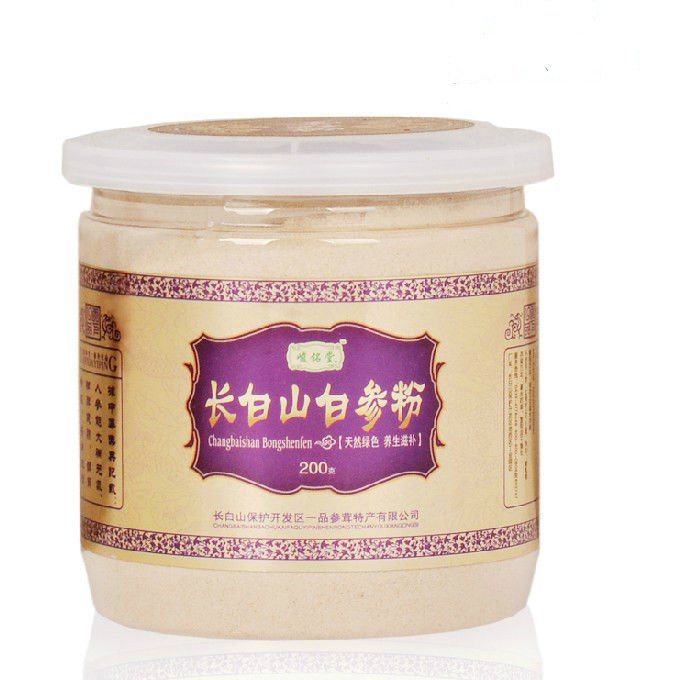
Only 1 available
Details
Shipping: Australia: free (more destinations)
Condition: Used
*The store has not been updated recently. You may want to contact the merchant to confirm the availability of the product.


Attention: for buyer from Russian Federation:The receiver name on your eCRATER address should be your full name .If not ,the post office in your country will return the item to china ,then you will lost it.The full name ,for example :Иван Иванович Иванов or the full name in English. so If the name in your eCRATER address is not your full name ,please give us by message or eCRATER noteChinese White Ginseng Root Powder 200g. about 6years oldBotanical Name:Panax GinsengPanax ginseng Powders areabout6years old.Origin:ChinaWeight :200g X5 Bottles ( 2.2 lbs )Precautions:Contraindicated for hypertension. Background (Source: Mayo)The term ginseng refers to several species of the genus Panax . For more than two thousand years, the roots of this slow-growing plant have been valued in Chinese medicine. The two most commonly used species are Asian ginseng ( Panax ginseng C.A. Meyer), which is mostly extinct in its natural range but is still cultivated, and American ginseng ( P. quinquefolius L.), which is both harvested from the wild and cultivated. Panax ginseng should not be confused with Siberian ginseng ( Eleutherococcus senticosus ). In Russia, Siberian ginseng was promoted as a cheaper alternative to ginseng and was believed to have identical benefits. However, Siberian ginseng does not contain the ginsenosides that are present in the Panax species, which are believed to be active ingredients and have been studied scientifically.General: Allheilkraut, Araliaceae (family), chikusetsu ginseng, chosen ninjin, dwarf ginseng, Eleutherococcus senticosus , five-fingers, five-leaf ginseng, ginseng radix, G115®, Ginsengwurzel, ginsenosides (Rb1, Rb2, Rc, Rd, Re, Rf and Rg1), GTTC (Ginseng and Tang-kuei Ten Combination), hakusan, hakushan, higeninjin, hongshen, hungseng, hungsheng, hunseng, insam, jenseng, jenshen, jinpi, kao-li-seng, korean ginseng, hua qi shen, kraftwurzel, man root, minjin, nhan sam, ninjin, ninzin, niuhan, Oriental ginseng, otane ninjin, panax de chine, panax notoginseng, panax vietnamensis (Vietnamese Ginseng), P. psuedoginseng Wall. var. notoginseng, P. psuedoginseng var. major, P. psuedoginseng , P. trifolius L., pannag, racine de ginseng, renshen, sanchi ginseng, san-pi, sang, schinsent, sei yang sam, seng, shanshen, shen-sai-seng, shenshaishanshen, shenghaishen, siyojin, t'ang-sne, tartar root, true ginseng, tyosenninzin, Western ginseng, Western sea ginseng, xi shen, xi yang shen, yakuyo ninjin, yakuyo ninzin, yang shen yeh-shan-seng, yuan-seng, yuansheng, zhuzishen.Panax ginseng synonyms : Asian ginseng, Asiatic ginseng, Chinese ginseng, Gincosan (a combination of 120mg Ginkgo biloba and 200mg Panax ginseng), ginseng asiatique, ginseng radix, ginseng root, Japanese ginseng, jintsam, Korean red, Korean red ginseng, ninjin, Oriental ginseng, P. ginseng, P. schinseng, red ginseng, ren shen, sang, shen.American ginseng synonyms : Anchi ginseng, Canadian ginseng, North American ginseng, Ontario ginseng, P. quincefolium, red berry, ren shen, sang, tienchi ginseng, Wisconsin ginseng.Siberian ginseng synonyms : Acanthopanax senticosus, ci wu jia, ciwujia, devil's bush, devil's shrub, eleuthera, eleuthero, eleuthero ginseng, eleutherococ, eleutherococcus, eleutherococci radix, Eleutherococcus senticosus, shigoka, touch-me-not, wild pepper, wu-jia, wu-jia-pi, ussuri, ussurian thorny pepperbrush.Evidence:These uses have been tested in humans or animals. Safety and effectiveness have not always been proven. Some of these conditions are potentially serious, and should be evaluated by a qualified healthcare provider.Uses based on scientific evidence Grade*Key to gradesA Strong scientific evidence for this useB Good scientific evidence for this useC Unclear scientific evidence for this useD Fair scientific evidence against this use (it may not work)F Strong scientific evidence against this use (it likely does not work)Mental performance: Several studies report that ginseng can modestly improve thinking or learning at daily doses between 200 and 400 milligrams of standardized extract G115®, taken by mouth daily for up to 12 weeks. Mental performance has been assessed using standardized measurements of reaction time, concentration, learning, math, and logic. Benefits have been seen both in healthy young people and in older ill patients. Effects have also been reported for the combination use of ginseng with Ginkgo biloba . Although this evidence is promising, most studies have been small and not well designed or reported. There is also a small amount of negative evidence, reporting that ginseng actually may not significantly affect thinking processes. It is not clear if people with certain conditions may benefit more than others. Therefore, although the sum total of available scientific evidence does suggest some effectiveness of short-term use of ginseng in this area, better research is necessary before a strong recommendation can be made.Type 2 diabetes (adult-onset): Several human studies report that ginseng may lower blood sugar levels in patients with type 2 diabetes, both at fasting states and after eating. Long-term effects are not clear, and it is not known what doses are safe or effective. Preliminary research suggests that ginseng may not carry a significant risk of causing dangerously low blood sugar levels (hypoglycemia). Additional studies are needed that measure long-term effects of ginseng in diabetes patients, and which examine interactions with standard prescription drugs for diabetes. People with diabetes should seek the care of a qualified healthcare practitioner, and should not use ginseng instead of more proven therapies. Effects of ginseng in type 1 diabetes ("insulin dependent") are not well studied.Cancer prevention: A small number of studies report that ginseng taken by mouth may lower the risk of being affected by various cancers, especially if ginseng powder or extract is used. However, most of these studies have been published by the same research group, and have used a type of research design (case-control) that can only be considered preliminary. Results may have been affected by other lifestyle choices in people who use ginseng, such as exercise or dietary habits. Additional trials are necessary before a clear conclusion can be reached.Chronic obstructive pulmonary disease (COPD): Ginseng was reported to improve pulmonary function and exercise capacity in patients with COPD in one study. Further research is needed to confirm these results.Congestive heart failure : Evidence from a small amount of research is unclear in this area.Coronary artery (heart) disease: Several studies from China report that ginseng in combination with various other herbs may reduce symptoms of coronary artery disease such as anginal chest pain, and may improve abnormalities seen on electrocardiograms (ECG). Most studies have not been well described or reported. Without further evidence of the effects of ginseng specifically, a firm conclusion cannot be reached.Exercise performance : Ginseng is commonly used by athletes with the intention of improving stamina. However, it remains unclear if ginseng taken by mouth significantly affects exercise performance. Numerous studies have been published in this area, with mixed results. Most research has not been well designed or reported, and cannot be considered reliable. Trials in the 1980s reported benefits, while more recent research found no effects. Better studies are necessary before a clear conclusion can be reached.Fatigue : A small amount of research using ginseng extract G115® (with or without multivitamins) reports improvements in patients with fatigue of various causes. However, these results are preliminary, and studies have not been high quality. In one study, Siberian ginseng efficacy was not demonstrated. However, the findings of possible efficacy for patients with moderate fatigue suggest that further research may be of value.Fistula (anal) : Preliminary evidence in infants with peri-anal abscess or fistula-in-ano suggests that a treatment of GTTC (Ginseng and Tang-kuei Ten Combination) may accelerate recovery. Further research is needed to confirm these results.Immune system enhancement : A small number of studies report that ginseng may stimulate activity of immune cells in the body (T-lymphocytes and neutrophils), improve the effectiveness of antibiotics in people with acute bronchitis, and enhance the body's response to influenza vaccines. Most research in this area has been published by the same lead author. Additional studies, which examine the effects of ginseng on specific types of infections, are necessary before a clear conclusion can be reached.Intracranial pressure (ICP) : Preliminary study of Xuesaitong injection (XSTI, a preparation of Panax Notoginseng) reports that it may help to decrease intracranial pressure and benefit coma patients. Further study is needed to confirm these results.High blood pressure : Preliminary research suggests that ginseng may lower blood pressure (systolic and diastolic). It is not clear what doses are safe or effective. Well-conducted studies are needed to confirm these early results.Low white blood cell counts : Poorly described preliminary research reports improved blood counts in patients with aplastic anemia using ginseng in combination with other herbs, and improved white blood cell counts in patients with neutropenia using high doses of ginsenosides. Reliable studies are needed before a conclusion can be reached. Notably, there are reports of blood cell counts dropping after ginseng use.Menopausal symptoms : Evidence from a small amount of research is unclear in this area. Some studies report improvements in depression and sense of well-being, without changes in hormone levels.Methicillin-resistant Staphylococcus aureus (MRSA)In patients treated with Hochu-ekki-to, which contains ginseng and several other herbs, urinary MRSA has been reported to decrease after a 10-week treatment p
You may also be interested in:
-
$22.15
-
$27.21
-
$41.30
-
$11.88
-
$8.38
-
$37.62
-
$41.14
-
$11.88
-
$12.52
-
$27.91


 CN, Fujian
