
$246.76
Add to Cart
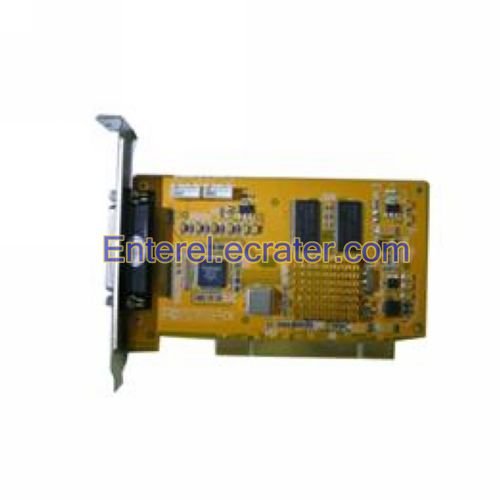
4 Channel CIF H.264 DVR Video Capture Card TN-1704


More than 10 available
Details
Shipping: Australia: free (more destinations)
Condition: Brand new
*The store has not been updated recently. You may want to contact the merchant to confirm the availability of the product.
Specifications:
* A card to complete 4-channel CIF format for encoding audio and video synchronization
* This card is a video conversion chip combiner entirely independently developed by the company, and has applied for patent
* Uses adaptive technology, generally supportive of the market a variety of different chipsets, motherboards and graphics cards, to maximize the performance of the motherboard, effectively reduce the user selection of the troubled board
* Constant 100 million electronic versions of hard-coded card is compatible with mixed interpolation, SDK software interface consistency in the definition of a good, DVR application software simply replace the SDK documentation and update driver
* This card is PHILIPS mainstream PNX170X chips with speeds equal to twice the original PNX150X chips
* Video Compression Standards: H.264
* Encoding Resolution: PAL: 352 x 288 (CIF) NTSC: 320 x 240 (CIF)
* Video Input: 4-channel composite analog video signal, NTSC, PAL standard adjustable, BNC socket, 1.0Vp-p
* Impedance: 75Ω
* Video Compression Rate: 20K ~ 4M bps
* Stream Type: Video streaming / Composite flow
* Video Frame Rate: PAL: 1 ~ 25 frame / sec; NTSC: 1 ~ 30 frame / sec
* Preview Resolution: 704 x 576, the number of 500 horizontal lines, vertical lines 400
* Audio Compression Standard: G.726
* Audio Sampling Frequency: 8KHz
* Audio: 4-channel audio inputs, RCA socket
* Humidity: 10% ~ 90% RH
* Temperature: 0 ℃ ~ +50 ℃
* Size: Approx. 134.8 x 80.3mm2
* Power Consumption: ≤ 5W
Details:
4 Channel CIF H.264 DVR Video Capture Card TN-1704
* 4 Channel CIF H.264 DVR Video Capture Card
How to Select a Video Capture Card:
* Determine the type of PC expansion slot that you will plug your video capture card into your computer. The three major PC adapter interfaces for video capture cards are PCI, PCI-Express (or PCI-e), and USB. This is important because you will need to see which one will fit your PC. If you are not sure use the reference link at the end of this article to motherboards.org about PC Expansion Slots
* Determine the type of video format that the video capture card will be receiving. The two standard video formats are Standard Definition (SD) and High Definition (HD). Video capture cards vary in the types of definition as well as the format of HD content. Also some video capture cards do hardware encoding which formats the video content into PC readable files. Check if the video capture card is software or hardware encoding as this can affect your PC system resources such as CPU and Memory requirements
* Choose the number of tuners for the video capture card. Most of the early video capture cards could only capture one video source at a time. Now manufacturers sell dual tuners or multi-tuner video capture cards that allow more than one video source to capture per PC expansion slot.
* Other media type considerations. Some video capture cards can take FM audio signals which allow to capture streaming audio. Also another consideration are remote controls that allow to change channels with your video capture card. Make an assessment of all of your requirements before purchasing
Package Included:
* 1 x DVR Card
* A card to complete 4-channel CIF format for encoding audio and video synchronization
* This card is a video conversion chip combiner entirely independently developed by the company, and has applied for patent
* Uses adaptive technology, generally supportive of the market a variety of different chipsets, motherboards and graphics cards, to maximize the performance of the motherboard, effectively reduce the user selection of the troubled board
* Constant 100 million electronic versions of hard-coded card is compatible with mixed interpolation, SDK software interface consistency in the definition of a good, DVR application software simply replace the SDK documentation and update driver
* This card is PHILIPS mainstream PNX170X chips with speeds equal to twice the original PNX150X chips
* Video Compression Standards: H.264
* Encoding Resolution: PAL: 352 x 288 (CIF) NTSC: 320 x 240 (CIF)
* Video Input: 4-channel composite analog video signal, NTSC, PAL standard adjustable, BNC socket, 1.0Vp-p
* Impedance: 75Ω
* Video Compression Rate: 20K ~ 4M bps
* Stream Type: Video streaming / Composite flow
* Video Frame Rate: PAL: 1 ~ 25 frame / sec; NTSC: 1 ~ 30 frame / sec
* Preview Resolution: 704 x 576, the number of 500 horizontal lines, vertical lines 400
* Audio Compression Standard: G.726
* Audio Sampling Frequency: 8KHz
* Audio: 4-channel audio inputs, RCA socket
* Humidity: 10% ~ 90% RH
* Temperature: 0 ℃ ~ +50 ℃
* Size: Approx. 134.8 x 80.3mm2
* Power Consumption: ≤ 5W
Details:
4 Channel CIF H.264 DVR Video Capture Card TN-1704
* 4 Channel CIF H.264 DVR Video Capture Card
How to Select a Video Capture Card:
* Determine the type of PC expansion slot that you will plug your video capture card into your computer. The three major PC adapter interfaces for video capture cards are PCI, PCI-Express (or PCI-e), and USB. This is important because you will need to see which one will fit your PC. If you are not sure use the reference link at the end of this article to motherboards.org about PC Expansion Slots
* Determine the type of video format that the video capture card will be receiving. The two standard video formats are Standard Definition (SD) and High Definition (HD). Video capture cards vary in the types of definition as well as the format of HD content. Also some video capture cards do hardware encoding which formats the video content into PC readable files. Check if the video capture card is software or hardware encoding as this can affect your PC system resources such as CPU and Memory requirements
* Choose the number of tuners for the video capture card. Most of the early video capture cards could only capture one video source at a time. Now manufacturers sell dual tuners or multi-tuner video capture cards that allow more than one video source to capture per PC expansion slot.
* Other media type considerations. Some video capture cards can take FM audio signals which allow to capture streaming audio. Also another consideration are remote controls that allow to change channels with your video capture card. Make an assessment of all of your requirements before purchasing
Package Included:
* 1 x DVR Card
You may also be interested in:
-
$5.56
-
$16.73

-
$15.01

-
$13.94
-
$136.61

-
$319.25

-
$130.82

-
$13.94
-
$4.49
-
$1.49


 CN, Guangdong
