
$103.09
Add to Cart
Sansevieria snake plant Flower Rare Plant Live Rare Plant Exotic For Your Garden
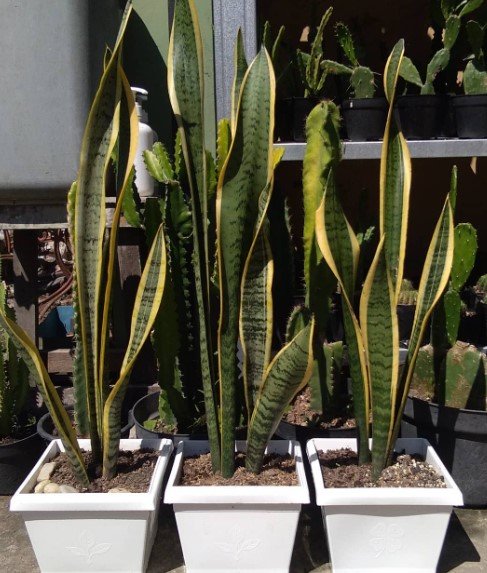
Sansevieria snake plant Flower Rare Plant Live Rare Plant Exotic For Your Garden
Sansevieria, commonly known as the Snake Plant or Mother-in-Law's Tongue, is a popular and resilient houseplant. Here’s a detailed look at this hardy plant:
### **Appearance**
- **Leaves**: Snake Plants have long, upright, sword-like leaves that are typically green with horizontal or vertical stripes in varying shades of green, gray, or silver. Some varieties also feature yellow or white edges.
- **Growth**: They generally grow vertically, reaching heights of 2 to 3 feet (60 to 90 cm) depending on the variety and growing conditions.
### **Varieties**
- **Sansevieria trifasciata**: One of the most common types, known for its tall, rigid leaves and dark green stripes.
- **Sansevieria cylindrica**: Features cylindrical leaves that are often braided or twisted.
- **Sansevieria laurentii**: Has yellow or white margins on its green leaves.
- **Sansevieria 'Moonshine'**: Notable for its silvery-gray foliage.
### **Care**
- **Light**: Snake Plants are very adaptable and can tolerate low light conditions, but they grow best in bright, indirect light. They can also handle some direct sunlight, but too much can scorch the leaves.
- **Water**: Overwatering is a common issue. Allow the soil to dry out between waterings. Water sparingly, and make sure the pot has good drainage. In winter, reduce watering as the plant's growth slows down.
- **Soil**: Use well-draining soil, such as a cactus or succulent mix. Good drainage is crucial to prevent root rot.
- **Temperature**: Snake Plants prefer temperatures between 60-80°F (15-27°C). They can tolerate lower temperatures but should be protected from frost and cold drafts.
### **Propagation**
- **Leaf Cuttings**: You can propagate Snake Plants from leaf cuttings. Allow the cut end to dry for a day or two, then place it in soil or water until roots develop.
- **Division**: Another method is to divide the plant at the root level, separating the offsets or pups that grow around the base of the main plant.
### **Toxicity**
- **Toxicity**: Snake Plants are mildly toxic if ingested, causing nausea or gastrointestinal upset. Keep them out of reach of pets and small children.
### **Maintenance**
- **Cleaning**: Wipe the leaves occasionally with a damp cloth to remove dust and keep them looking their best.
- **Pests**: Snake Plants are relatively pest-resistant but can occasionally suffer from mealybugs, spider mites, or scale. Treat any infestations promptly with appropriate methods.
### **Benefits**
- **Air Purification**: Snake Plants are known for their air-purifying qualities. They can help remove toxins like formaldehyde and benzene from the air and are well-suited for improving indoor air quality.
Sansevieria is a versatile and low-maintenance plant, making it a great choice for both novice and experienced plant enthusiasts. Its striking appearance and ease of care have made it a favorite for indoor environments.
In the photo is not factual item...
The size live plant item depends on stock...
Thank you
Sansevieria, commonly known as the Snake Plant or Mother-in-Law's Tongue, is a popular and resilient houseplant. Here’s a detailed look at this hardy plant:
### **Appearance**
- **Leaves**: Snake Plants have long, upright, sword-like leaves that are typically green with horizontal or vertical stripes in varying shades of green, gray, or silver. Some varieties also feature yellow or white edges.
- **Growth**: They generally grow vertically, reaching heights of 2 to 3 feet (60 to 90 cm) depending on the variety and growing conditions.
### **Varieties**
- **Sansevieria trifasciata**: One of the most common types, known for its tall, rigid leaves and dark green stripes.
- **Sansevieria cylindrica**: Features cylindrical leaves that are often braided or twisted.
- **Sansevieria laurentii**: Has yellow or white margins on its green leaves.
- **Sansevieria 'Moonshine'**: Notable for its silvery-gray foliage.
### **Care**
- **Light**: Snake Plants are very adaptable and can tolerate low light conditions, but they grow best in bright, indirect light. They can also handle some direct sunlight, but too much can scorch the leaves.
- **Water**: Overwatering is a common issue. Allow the soil to dry out between waterings. Water sparingly, and make sure the pot has good drainage. In winter, reduce watering as the plant's growth slows down.
- **Soil**: Use well-draining soil, such as a cactus or succulent mix. Good drainage is crucial to prevent root rot.
- **Temperature**: Snake Plants prefer temperatures between 60-80°F (15-27°C). They can tolerate lower temperatures but should be protected from frost and cold drafts.
### **Propagation**
- **Leaf Cuttings**: You can propagate Snake Plants from leaf cuttings. Allow the cut end to dry for a day or two, then place it in soil or water until roots develop.
- **Division**: Another method is to divide the plant at the root level, separating the offsets or pups that grow around the base of the main plant.
### **Toxicity**
- **Toxicity**: Snake Plants are mildly toxic if ingested, causing nausea or gastrointestinal upset. Keep them out of reach of pets and small children.
### **Maintenance**
- **Cleaning**: Wipe the leaves occasionally with a damp cloth to remove dust and keep them looking their best.
- **Pests**: Snake Plants are relatively pest-resistant but can occasionally suffer from mealybugs, spider mites, or scale. Treat any infestations promptly with appropriate methods.
### **Benefits**
- **Air Purification**: Snake Plants are known for their air-purifying qualities. They can help remove toxins like formaldehyde and benzene from the air and are well-suited for improving indoor air quality.
Sansevieria is a versatile and low-maintenance plant, making it a great choice for both novice and experienced plant enthusiasts. Its striking appearance and ease of care have made it a favorite for indoor environments.
In the photo is not factual item...
The size live plant item depends on stock...
Thank you


 ID, DI Yogyakarta
