
$63.04
On Hold
Asparagus plumosus nana Flower Rare Plant Live Garden Plant rare Home Plant FREESHIPPING
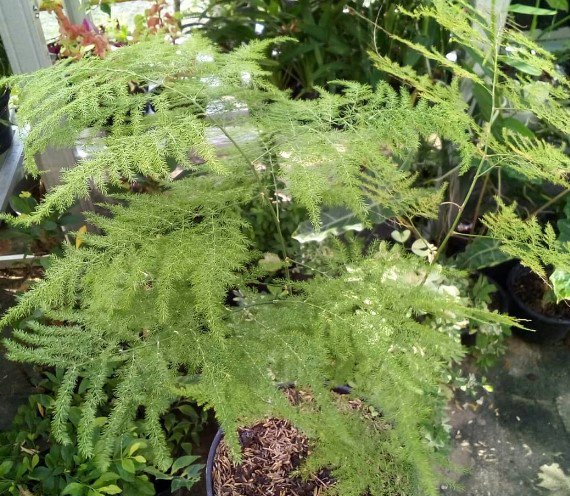
Asparagus plumosus nana Flower Rare Plant Live Garden Plant rare Home Plant FREESHIPPING
Asparagus plumosus nana, commonly known as the **Lace Fern** or **Sprenger's Asparagus Fern**, is a delightful plant valued for its delicate, feathery foliage. Despite its common name, it's not a true fern but belongs to the Asparagus family. Here’s a detailed look at this attractive plant:
### **Appearance**
- **Foliage**: The Lace Fern features finely divided, feathery leaves that resemble the foliage of ferns, giving it a soft, lacy appearance. The leaves are actually cladodes (modified stems) that perform the photosynthetic function.
- **Growth Habit**: It has a graceful, trailing or cascading growth habit, making it ideal for hanging baskets or as a decorative accent in arrangements. The plant can grow up to 3 feet (90 cm) long, depending on the growing conditions and container size.
- **Size**: While the plant itself is typically 2-3 feet (60-90 cm) in length, it can spread out as it grows.
### **Care Requirements**
- **Light**: Asparagus plumosus nana prefers bright, indirect light. It can tolerate some direct sunlight, especially in the morning, but too much direct afternoon sun can scorch its delicate foliage. In lower light conditions, it may grow more slowly.
- **Water**: Keep the soil consistently moist but not soggy. Water when the top inch of soil feels dry. It’s important to avoid letting the plant sit in standing water, which can lead to root rot.
- **Soil**: Use a well-draining potting mix. A standard potting mix mixed with some perlite or sand for improved drainage is suitable. Ensure the container has good drainage holes.
- **Temperature**: It thrives in temperatures ranging from 60-75°F (15-24°C). It is sensitive to cold and should be protected from temperatures below 50°F (10°C). It can tolerate a range of indoor temperatures but prefers consistent warmth.
- **Humidity**: This plant enjoys higher humidity levels. If grown indoors, consider placing it in a more humid room, such as a bathroom, or use a humidity tray or a room humidifier.
- **Fertilizer**: Feed with a balanced, water-soluble fertilizer every 4-6 weeks during the growing season (spring and summer). Reduce feeding during the fall and winter months.
### **Propagation**
- **From Offsets**: The Lace Fern can be propagated by division. Carefully separate offsets or smaller plants from the main root system and replant them in new pots.
- **From Seeds**: It can also be propagated from seeds, although this method is less common and requires more patience. Sow seeds in a moist, well-draining mix and keep them warm and humid until they germinate.
### **Other Considerations**
- **Pruning**: Regularly trim back any dead or yellowing foliage to maintain the plant’s appearance and promote new growth.
- **Pests**: Watch for common houseplant pests like spider mites, aphids, or scale. Keeping the plant clean and well-maintained can help prevent pest issues.
- **Uses**: The Lace Fern is often used in floral arrangements due to its delicate foliage, and it also makes an attractive indoor hanging plant or tabletop specimen.
Asparagus plumosus nana is a charming plant that adds a touch of elegance to any indoor space. Its graceful foliage and relatively easy care make it a popular choice for home and office environments.
In the photo is not factual item...
The size live plant item depends on stock...
Thank you
Asparagus plumosus nana, commonly known as the **Lace Fern** or **Sprenger's Asparagus Fern**, is a delightful plant valued for its delicate, feathery foliage. Despite its common name, it's not a true fern but belongs to the Asparagus family. Here’s a detailed look at this attractive plant:
### **Appearance**
- **Foliage**: The Lace Fern features finely divided, feathery leaves that resemble the foliage of ferns, giving it a soft, lacy appearance. The leaves are actually cladodes (modified stems) that perform the photosynthetic function.
- **Growth Habit**: It has a graceful, trailing or cascading growth habit, making it ideal for hanging baskets or as a decorative accent in arrangements. The plant can grow up to 3 feet (90 cm) long, depending on the growing conditions and container size.
- **Size**: While the plant itself is typically 2-3 feet (60-90 cm) in length, it can spread out as it grows.
### **Care Requirements**
- **Light**: Asparagus plumosus nana prefers bright, indirect light. It can tolerate some direct sunlight, especially in the morning, but too much direct afternoon sun can scorch its delicate foliage. In lower light conditions, it may grow more slowly.
- **Water**: Keep the soil consistently moist but not soggy. Water when the top inch of soil feels dry. It’s important to avoid letting the plant sit in standing water, which can lead to root rot.
- **Soil**: Use a well-draining potting mix. A standard potting mix mixed with some perlite or sand for improved drainage is suitable. Ensure the container has good drainage holes.
- **Temperature**: It thrives in temperatures ranging from 60-75°F (15-24°C). It is sensitive to cold and should be protected from temperatures below 50°F (10°C). It can tolerate a range of indoor temperatures but prefers consistent warmth.
- **Humidity**: This plant enjoys higher humidity levels. If grown indoors, consider placing it in a more humid room, such as a bathroom, or use a humidity tray or a room humidifier.
- **Fertilizer**: Feed with a balanced, water-soluble fertilizer every 4-6 weeks during the growing season (spring and summer). Reduce feeding during the fall and winter months.
### **Propagation**
- **From Offsets**: The Lace Fern can be propagated by division. Carefully separate offsets or smaller plants from the main root system and replant them in new pots.
- **From Seeds**: It can also be propagated from seeds, although this method is less common and requires more patience. Sow seeds in a moist, well-draining mix and keep them warm and humid until they germinate.
### **Other Considerations**
- **Pruning**: Regularly trim back any dead or yellowing foliage to maintain the plant’s appearance and promote new growth.
- **Pests**: Watch for common houseplant pests like spider mites, aphids, or scale. Keeping the plant clean and well-maintained can help prevent pest issues.
- **Uses**: The Lace Fern is often used in floral arrangements due to its delicate foliage, and it also makes an attractive indoor hanging plant or tabletop specimen.
Asparagus plumosus nana is a charming plant that adds a touch of elegance to any indoor space. Its graceful foliage and relatively easy care make it a popular choice for home and office environments.
In the photo is not factual item...
The size live plant item depends on stock...
Thank you


 ID, Jawa Timur
