
$20.80
Add to Cart
350 Seeds Royal Empress
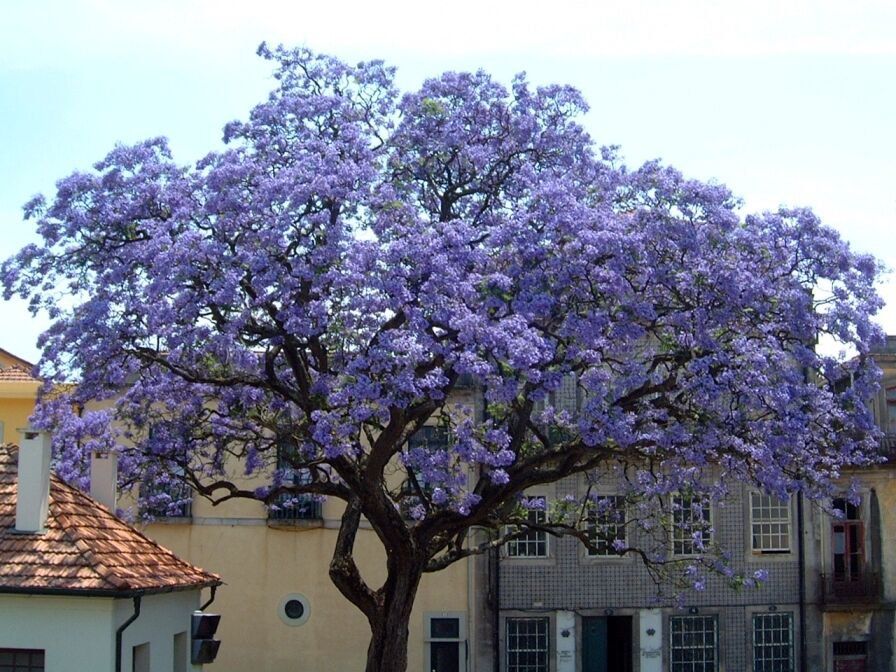


Common Names: Royal Paulownia, Princess Tree, Foxglove Tree, Sapphire Dragon, Kawakami, Kiri Tree, Rattlebox Tree, Sapphire Princess
Zone: 5 to 8
Growth Rate: Very Fast
Plant Type: Flowering Tree
Family: Scrophulariaceae
Native Range: Central and western China
Height: 30 to 40 feet
Spread: 30 to 40 feet
Shape: Round; vase shape
Bloom Time: April
Bloom Color: Pinkish-lavender
Flower/Fruit: Clusters of fragrant, tubular, funnel-shaped, pinkish-lavender flowers.
Fall Color: None
Sun: Full Sun
Drought Tolerance: Moderate
Water: Dry to medium
Maintenance: Medium
Site Requirements /Soil Tolerances: Easily grown in average, medium, well-drained soils in full sun. Prefers sandy humus loams with good drainage. Tolerates a wide range of soils including poor, dry ones, but dislikes unamended heavy clay soils. Tolerates light shade but is generally intolerant of shady conditions.
Culture: Blooms on old wood (buds form in summer for the following spring bloom). Overwintering flower buds are ornamentally attractive but may be damaged in very cold winters, particularly when temperatures dip below 0 degrees F. Best sited in locations protected from strong winds. Paulownia may be grown as non-flowering foliage plants by administering annual hard dormant season pruning. Tree forms may be pollarded (annually prune branches back to the trunk) and shrub forms may be coppiced (annually prune stems to the ground). Such hard dormant season pruning encourage the development of much larger leaves (up to 24” long) at the expense of the spring flowers. Can also be grown in containers as a foliage plant.
Uses: Beautiful specimen flowering tree for lawns and gardens.
Sowing Paulownia Seeds:
The seeds of Paulownia are very small.
For best results, please follow the instructions in the order provided.
Germination: Surface sow indoors under a grow light. Use a dome lid and mist regularly to keep moist. Requires light for germination. Artificial light is recommended.
Zone: 5 to 8
Growth Rate: Very Fast
Plant Type: Flowering Tree
Family: Scrophulariaceae
Native Range: Central and western China
Height: 30 to 40 feet
Spread: 30 to 40 feet
Shape: Round; vase shape
Bloom Time: April
Bloom Color: Pinkish-lavender
Flower/Fruit: Clusters of fragrant, tubular, funnel-shaped, pinkish-lavender flowers.
Fall Color: None
Sun: Full Sun
Drought Tolerance: Moderate
Water: Dry to medium
Maintenance: Medium
Site Requirements /Soil Tolerances: Easily grown in average, medium, well-drained soils in full sun. Prefers sandy humus loams with good drainage. Tolerates a wide range of soils including poor, dry ones, but dislikes unamended heavy clay soils. Tolerates light shade but is generally intolerant of shady conditions.
Culture: Blooms on old wood (buds form in summer for the following spring bloom). Overwintering flower buds are ornamentally attractive but may be damaged in very cold winters, particularly when temperatures dip below 0 degrees F. Best sited in locations protected from strong winds. Paulownia may be grown as non-flowering foliage plants by administering annual hard dormant season pruning. Tree forms may be pollarded (annually prune branches back to the trunk) and shrub forms may be coppiced (annually prune stems to the ground). Such hard dormant season pruning encourage the development of much larger leaves (up to 24” long) at the expense of the spring flowers. Can also be grown in containers as a foliage plant.
Uses: Beautiful specimen flowering tree for lawns and gardens.
Sowing Paulownia Seeds:
The seeds of Paulownia are very small.
For best results, please follow the instructions in the order provided.
Germination: Surface sow indoors under a grow light. Use a dome lid and mist regularly to keep moist. Requires light for germination. Artificial light is recommended.


 ID, Jawa Tengah
