
$54.37
Add to Cart
Japanese Artemisia Princeps Beautifying Yomogi Soap
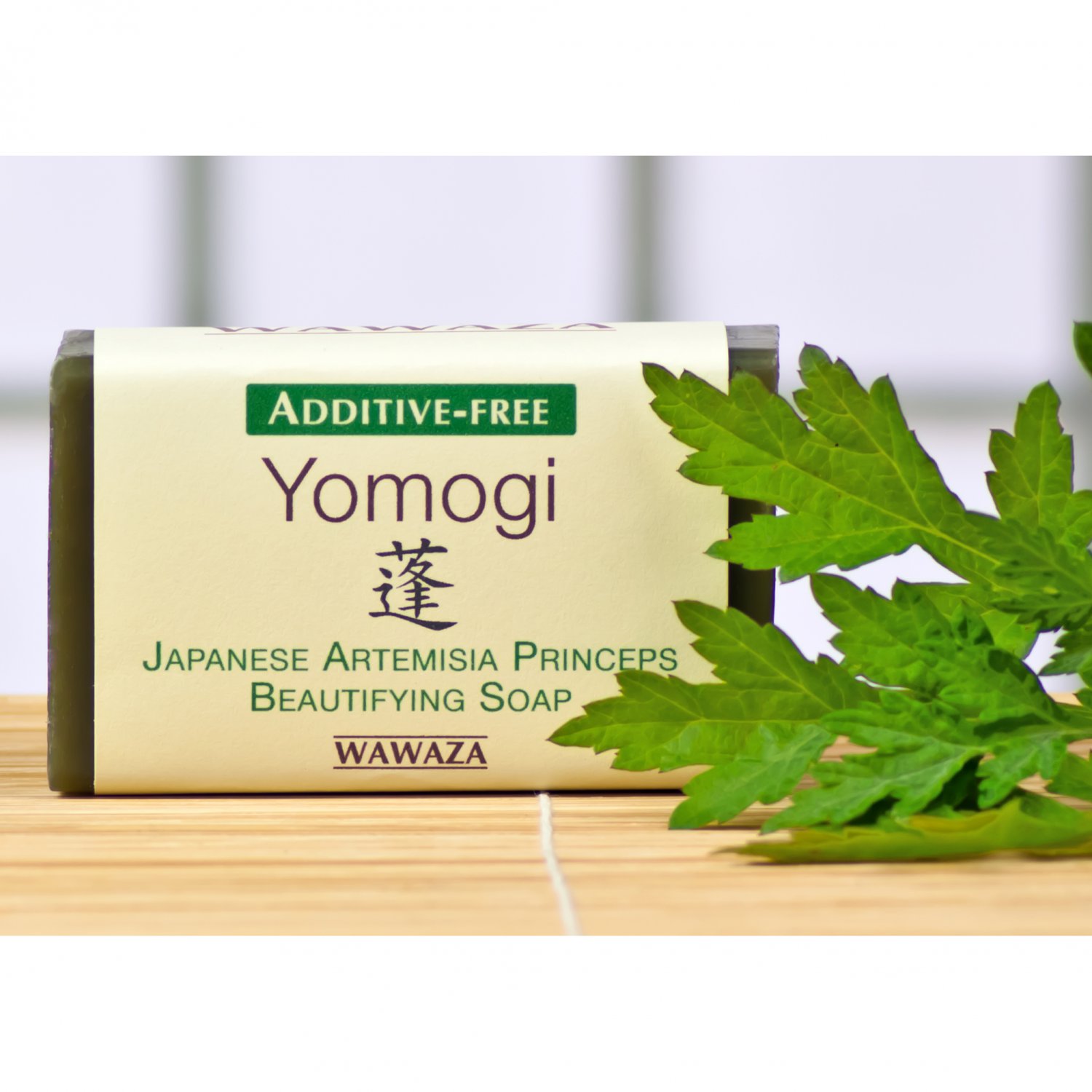
More than 10 available, 3 sold
Details
Shipping: Australia: $6.00 (more destinations)
Condition: Brand new
Mild, all-around Japanese traditional soap for brightening and revitalizing skin from the inside out.
Conditions the skin and alleviates dryness and itchiness. Helps clear blemishes, darkened pores, and age spots.
Rich, creamy lather. Refreshing natural essential oil (cineole) gives off a fresh, spring-like fragrance.
Aged for 90 days. Made with wild-harvested yomogi leaves.
❖ Additive-Free • All-Natural
No preservatives, colorings, or artificial fragrances.
Ingredients: Saponified oils of soybean, nano-hana (rappi flower), and rice bran. Powdered yomogi (Artemisia princeps) leaves.
Net Weight: 100 grams
Product of Japan
❖ About Yomogi
Yomogi, also known as Japanese mugwort, grows in the wild almost everywhere in Japan. It is a member of the aster family of plants, which also includes chrysanthemum, daisy, and sunflower.
Benefits and Uses
Japanese use the yomogi leaves for making tea (yomogi-cha) and sweet mochi rice cakes (yomogi-mochi).
Yomogi leaves are also in soaps, skin-beautifying baths (yomogi-yu), and steam saunas for ladies (yomogi-mushi.)
Yomogi leaves contain numerous beneficial compounds with anti-aging and anti-inflammatory properties. Cosmetic manufacturers use its extract as an ingredient in skin care formulations.
Other benefits include relieving cramps and irregular periods, increasing reproductive health, and breast and cervical cancer prevention.
History
Japanese have appreciated the benefits of yomogi for a very long time and consider it a "wonder plant."
The 7th-century Empress Suiko, Japan's first female monarch who had a passion for herbal cures, decreed the 5th day of the 5th month of every year to be the day for collecting irises and yomogi leaves.
The tradition is known as Medicine Hunt (kusuri-gari) and is observed every year on May 5th to this day.
Conditions the skin and alleviates dryness and itchiness. Helps clear blemishes, darkened pores, and age spots.
Rich, creamy lather. Refreshing natural essential oil (cineole) gives off a fresh, spring-like fragrance.
Aged for 90 days. Made with wild-harvested yomogi leaves.
❖ Additive-Free • All-Natural
No preservatives, colorings, or artificial fragrances.
Ingredients: Saponified oils of soybean, nano-hana (rappi flower), and rice bran. Powdered yomogi (Artemisia princeps) leaves.
Net Weight: 100 grams
Product of Japan
❖ About Yomogi
Yomogi, also known as Japanese mugwort, grows in the wild almost everywhere in Japan. It is a member of the aster family of plants, which also includes chrysanthemum, daisy, and sunflower.
Benefits and Uses
Japanese use the yomogi leaves for making tea (yomogi-cha) and sweet mochi rice cakes (yomogi-mochi).
Yomogi leaves are also in soaps, skin-beautifying baths (yomogi-yu), and steam saunas for ladies (yomogi-mushi.)
Yomogi leaves contain numerous beneficial compounds with anti-aging and anti-inflammatory properties. Cosmetic manufacturers use its extract as an ingredient in skin care formulations.
Other benefits include relieving cramps and irregular periods, increasing reproductive health, and breast and cervical cancer prevention.
History
Japanese have appreciated the benefits of yomogi for a very long time and consider it a "wonder plant."
The 7th-century Empress Suiko, Japan's first female monarch who had a passion for herbal cures, decreed the 5th day of the 5th month of every year to be the day for collecting irises and yomogi leaves.
The tradition is known as Medicine Hunt (kusuri-gari) and is observed every year on May 5th to this day.


 JP, Miyazaki
