
$136.14
Add to Cart
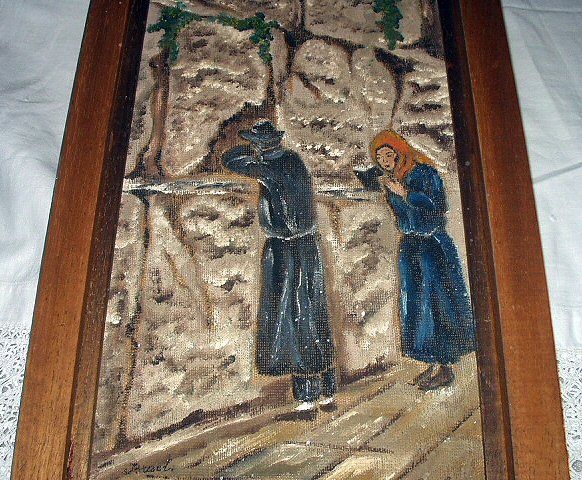
1965 Handpainted Artist Signed Painting-The Wailing Wall,Israel-Religious Wood Framed


Huge Storewide Summer Sale Through August. REDUCED 30% OFF FROM $115.00.
1965 Handpainted Artist Signed Painting-The Wailing Wall,Israel-Wood Framed 2/3'rds Yardlong Picture.
What is the Wailing Wall?
The Wailing Wall or Western Wall is the remains of the great Jewish temple, which had stood for close to 500 years. Herod began rebuilding and adding on to the temple in approximately 19 B.C.E., and the total work was not finished until fifty years later. The temple itself was destroyed by the Romans only a few years after its completion, circa 70 C.E.
It is thought by Jews to be the most sacred of places, because the temple itself was thought to be the place where God resides on earth. Praying at the Wailing Wall signifies being in the presence of the Divine. Jews from all countries, and as well as tourists of other religious backgrounds, come to pray at the wall, where it is said one immediately has the “ear of god.” Those who cannot pray at the wall can send prayers or ask for the Kaddish to be said for departed loved ones. Prayers sent in are placed into the cracks of the walls and are called tzetzels. There is usually a small charge for this service.
The name "Wailing Wall" is actually a Christian term. The Jews refer to the wall as the Western Wall or Kotel HaMaaravi. Though the Wailing Wall has been considered the holiest of places on earth for Jews, it has also been the source of grief and war.
During the crusades, Jerusalem was held for a short time by European crusaders. It belonged to Spain, then to Turkey. During Spanish occupation, Judaism was a punishable offense, because Catholics mistakenly attributed the death of Christ to the Jews. When Jews were not being exiled from Jerusalem, or put to death, they were certainly not given access to the wall.
In the 16th century, Jews regained access to the Wailing Wall to pray and assemble there. This permission was granted by the Arab Sultan, Selim, who is also credited with finding the first archaeological evidence that the wall existed, buried under refuse.
Relative harmony in worshipping at the wall persisted until the 19th century. Then, Jewish leaders wanted control of the Wailing Wall and attempts were made by both Muslims and Jews to purchase it. Eventually, Arab leaders kept control, and forbid Jews to gather there. This was a source of much pain to the Jews, to be denied access to their central religious site.
Struggle for use of the Wailing Wall continued through the 20th century, with bitterness among both religious groups. Islam holds some claim to the religious site, as does Judaism, because it is often believed that the prophet Muhammad ascended into heaven either near or at the Wailing Wall.
With the establishment of Israel, control of the Wailing Wall returned to the Jews in 1967. There is still much underlying bitterness regarding this place where the holiest of holies resides, however, which in part contributes to continued poor relationships between Arabic countries and Israel.
While enmity remains, the Wailing Wall has also been the site of reconciliation between Jews and Catholics. Pope John Paul II was the first pope to pray at the wall, as well as in a synagogue where he apologized for centuries of Catholic persecution of Jews, referring to them as the Catholics' “elder brothers.”
Today the Wailing Wall can be visited at any time of the day, though visitors are thoroughly searched. Women of any religion, in respect for Judaic law, should wear modest clothing, and there are separate entrances for men and women, though they can regroup at the Wall.
Only the bottom seven layers of the original stones of the Wailing Wall remain, but the both the Kotel tunnels and the sheer length of the wall impress visitors. The excavated cornerstones are close to 50 tons (approximately 45t). Many non-Jews describe a feeling of the sacred when viewing the wall. Whether viewed by the religious or non-religious, the Wailing Wall is an awesome structure, significantly rich in history both good and bad.
NOTE: THE ABOVE INFORMATION POSTED BY: http://www.wisegeek.com/what-is-the-wailing-wall.htm
Beautiful representation of this spiritual symbol. Would make a nice addition to any home.
This long framed picture was purchased that made a pilgrimage to the wall in 1965. On the back is a tag that reads: ISRAEL ARTS, BRIGTAN & NATAN 153, KAZENELSON STR., GIVATAYIM - ISRAEL. This is a Handpainting of The Wailing Wall a souvenir from my Trip to Israel on 1965.
The painting depicts a man and a woman at the wall, the man leaning and praying on the wall and the woman reading from the bible. Lovely colors still vibrant all these years.
The painting appears to be created from a woven weaved canvas cloth. This painting is SIGNED: ISRAEL, Y. BROSH, ?.
Nice long light weight wood that was from that area. The wood border raises up to the painting. Overall the frame measures 11 inches wide by 22-1/2 inches high. Back of frame the painting measures approximately 8 inches wide by 19-3/4 inches high. Original old kraft paper on the back with a hang hook at the top.
PLEASE MAKE SURE TO VIEW OUR OTHER MANY FRAMED AND UNFRAMED PRINTS WE HAVE LISTED. WE GLADLY COMBINE ORDERS FOR ADDED SHIPPING SAVINGS!!
THANKS FOR VISITING DOGWOOD TRAIL ANTIQUES.
WE GLADLY SELL WORLDWIDE ~ JUST ASK FOR SHIPPING QUOTE!!
1965 Handpainted Artist Signed Painting-The Wailing Wall,Israel-Wood Framed 2/3'rds Yardlong Picture.
What is the Wailing Wall?
The Wailing Wall or Western Wall is the remains of the great Jewish temple, which had stood for close to 500 years. Herod began rebuilding and adding on to the temple in approximately 19 B.C.E., and the total work was not finished until fifty years later. The temple itself was destroyed by the Romans only a few years after its completion, circa 70 C.E.
It is thought by Jews to be the most sacred of places, because the temple itself was thought to be the place where God resides on earth. Praying at the Wailing Wall signifies being in the presence of the Divine. Jews from all countries, and as well as tourists of other religious backgrounds, come to pray at the wall, where it is said one immediately has the “ear of god.” Those who cannot pray at the wall can send prayers or ask for the Kaddish to be said for departed loved ones. Prayers sent in are placed into the cracks of the walls and are called tzetzels. There is usually a small charge for this service.
The name "Wailing Wall" is actually a Christian term. The Jews refer to the wall as the Western Wall or Kotel HaMaaravi. Though the Wailing Wall has been considered the holiest of places on earth for Jews, it has also been the source of grief and war.
During the crusades, Jerusalem was held for a short time by European crusaders. It belonged to Spain, then to Turkey. During Spanish occupation, Judaism was a punishable offense, because Catholics mistakenly attributed the death of Christ to the Jews. When Jews were not being exiled from Jerusalem, or put to death, they were certainly not given access to the wall.
In the 16th century, Jews regained access to the Wailing Wall to pray and assemble there. This permission was granted by the Arab Sultan, Selim, who is also credited with finding the first archaeological evidence that the wall existed, buried under refuse.
Relative harmony in worshipping at the wall persisted until the 19th century. Then, Jewish leaders wanted control of the Wailing Wall and attempts were made by both Muslims and Jews to purchase it. Eventually, Arab leaders kept control, and forbid Jews to gather there. This was a source of much pain to the Jews, to be denied access to their central religious site.
Struggle for use of the Wailing Wall continued through the 20th century, with bitterness among both religious groups. Islam holds some claim to the religious site, as does Judaism, because it is often believed that the prophet Muhammad ascended into heaven either near or at the Wailing Wall.
With the establishment of Israel, control of the Wailing Wall returned to the Jews in 1967. There is still much underlying bitterness regarding this place where the holiest of holies resides, however, which in part contributes to continued poor relationships between Arabic countries and Israel.
While enmity remains, the Wailing Wall has also been the site of reconciliation between Jews and Catholics. Pope John Paul II was the first pope to pray at the wall, as well as in a synagogue where he apologized for centuries of Catholic persecution of Jews, referring to them as the Catholics' “elder brothers.”
Today the Wailing Wall can be visited at any time of the day, though visitors are thoroughly searched. Women of any religion, in respect for Judaic law, should wear modest clothing, and there are separate entrances for men and women, though they can regroup at the Wall.
Only the bottom seven layers of the original stones of the Wailing Wall remain, but the both the Kotel tunnels and the sheer length of the wall impress visitors. The excavated cornerstones are close to 50 tons (approximately 45t). Many non-Jews describe a feeling of the sacred when viewing the wall. Whether viewed by the religious or non-religious, the Wailing Wall is an awesome structure, significantly rich in history both good and bad.
NOTE: THE ABOVE INFORMATION POSTED BY: http://www.wisegeek.com/what-is-the-wailing-wall.htm
Beautiful representation of this spiritual symbol. Would make a nice addition to any home.
This long framed picture was purchased that made a pilgrimage to the wall in 1965. On the back is a tag that reads: ISRAEL ARTS, BRIGTAN & NATAN 153, KAZENELSON STR., GIVATAYIM - ISRAEL. This is a Handpainting of The Wailing Wall a souvenir from my Trip to Israel on 1965.
The painting depicts a man and a woman at the wall, the man leaning and praying on the wall and the woman reading from the bible. Lovely colors still vibrant all these years.
The painting appears to be created from a woven weaved canvas cloth. This painting is SIGNED: ISRAEL, Y. BROSH, ?.
Nice long light weight wood that was from that area. The wood border raises up to the painting. Overall the frame measures 11 inches wide by 22-1/2 inches high. Back of frame the painting measures approximately 8 inches wide by 19-3/4 inches high. Original old kraft paper on the back with a hang hook at the top.
PLEASE MAKE SURE TO VIEW OUR OTHER MANY FRAMED AND UNFRAMED PRINTS WE HAVE LISTED. WE GLADLY COMBINE ORDERS FOR ADDED SHIPPING SAVINGS!!
THANKS FOR VISITING DOGWOOD TRAIL ANTIQUES.
WE GLADLY SELL WORLDWIDE ~ JUST ASK FOR SHIPPING QUOTE!!


