
$111.91
On Hold
Sweet Tamarind Plant Rare Fruit Garden Plant Home Live Plant Rare Garden #MPS
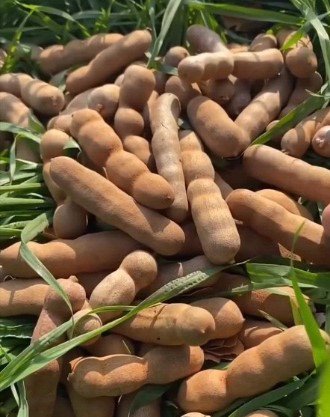
Sweet Tamarind Plant Rare Fruit Garden Plant Home Live Plant Rare Garden #MPS
The Tamarind tree (Tamarindus indica) is a tropical tree native to Africa but widely cultivated in various tropical and subtropical regions around the world. It is known for its tangy and slightly sweet fruit, which is used in culinary dishes, beverages, and traditional medicine. Here’s a comprehensive overview of the Tamarind plant:
1. **Appearance**: Tamarind trees are large, slow-growing trees that can reach heights of 40-80 feet (12-24 meters). They have dense, spreading canopies with pinnate (feather-like) leaves that are bright green in color. The leaves fold up at night.
2. **Fruit**: The Tamarind fruit is a pod-like structure that contains an edible pulp surrounding seeds. The pulp is tart and tangy, with a unique sweet-sour flavor. It is brown in color when mature and becomes brittle as it ripens. Each pod may contain 1-12 seeds, depending on the variety.
3. **Climate**: Tamarind trees thrive in tropical and subtropical climates. They prefer hot, dry climates but can tolerate a wide range of temperatures and soil conditions. They are sensitive to frost and cannot tolerate prolonged periods of cold.
4. **Sunlight**: Tamarind trees require full sun to thrive and produce fruit. They should be planted in a location that receives at least 6-8 hours of direct sunlight daily.
5. **Soil**: Tamarind trees are adaptable to a variety of soil types but prefer well-draining soil rich in organic matter. They can tolerate slightly acidic to neutral soils (pH 5.5-7.5).
6. **Watering**: Tamarind trees are drought-tolerant once established but benefit from regular watering, especially during dry periods and when the fruit is developing. Avoid overwatering, as they are susceptible to root rot in waterlogged soil.
7. **Fertilizing**: Feed Tamarind trees with a balanced fertilizer formulated for fruit trees. Apply fertilizer in spring and summer to support healthy growth and fruit production.
8. **Propagation**: Tamarind trees are typically propagated from seeds. Seeds should be scarified (scratched) and soaked in water overnight before planting to improve germination rates. Grafted trees may also be available for more predictable fruit quality.
9. **Pruning**: Prune Tamarind trees to maintain their shape and remove dead or diseased branches. Pruning can also improve air circulation and sunlight penetration into the canopy.
10. **Uses**: Tamarind fruit pulp is used in various culinary preparations, including sauces, chutneys, curries, beverages (such as Tamarind juice), and candies. It is also used in traditional medicine for its digestive properties and as a natural remedy for various ailments.
Tamarind trees are valued not only for their culinary uses but also for their ornamental value and shade-providing capabilities. They can be grown in large containers or directly in the ground in suitable climates, making them a versatile addition to gardens and landscapes in tropical and subtropical regions.
In the photo is not factual item...
The size live plant item depends on stock...
Thank you
The Tamarind tree (Tamarindus indica) is a tropical tree native to Africa but widely cultivated in various tropical and subtropical regions around the world. It is known for its tangy and slightly sweet fruit, which is used in culinary dishes, beverages, and traditional medicine. Here’s a comprehensive overview of the Tamarind plant:
1. **Appearance**: Tamarind trees are large, slow-growing trees that can reach heights of 40-80 feet (12-24 meters). They have dense, spreading canopies with pinnate (feather-like) leaves that are bright green in color. The leaves fold up at night.
2. **Fruit**: The Tamarind fruit is a pod-like structure that contains an edible pulp surrounding seeds. The pulp is tart and tangy, with a unique sweet-sour flavor. It is brown in color when mature and becomes brittle as it ripens. Each pod may contain 1-12 seeds, depending on the variety.
3. **Climate**: Tamarind trees thrive in tropical and subtropical climates. They prefer hot, dry climates but can tolerate a wide range of temperatures and soil conditions. They are sensitive to frost and cannot tolerate prolonged periods of cold.
4. **Sunlight**: Tamarind trees require full sun to thrive and produce fruit. They should be planted in a location that receives at least 6-8 hours of direct sunlight daily.
5. **Soil**: Tamarind trees are adaptable to a variety of soil types but prefer well-draining soil rich in organic matter. They can tolerate slightly acidic to neutral soils (pH 5.5-7.5).
6. **Watering**: Tamarind trees are drought-tolerant once established but benefit from regular watering, especially during dry periods and when the fruit is developing. Avoid overwatering, as they are susceptible to root rot in waterlogged soil.
7. **Fertilizing**: Feed Tamarind trees with a balanced fertilizer formulated for fruit trees. Apply fertilizer in spring and summer to support healthy growth and fruit production.
8. **Propagation**: Tamarind trees are typically propagated from seeds. Seeds should be scarified (scratched) and soaked in water overnight before planting to improve germination rates. Grafted trees may also be available for more predictable fruit quality.
9. **Pruning**: Prune Tamarind trees to maintain their shape and remove dead or diseased branches. Pruning can also improve air circulation and sunlight penetration into the canopy.
10. **Uses**: Tamarind fruit pulp is used in various culinary preparations, including sauces, chutneys, curries, beverages (such as Tamarind juice), and candies. It is also used in traditional medicine for its digestive properties and as a natural remedy for various ailments.
Tamarind trees are valued not only for their culinary uses but also for their ornamental value and shade-providing capabilities. They can be grown in large containers or directly in the ground in suitable climates, making them a versatile addition to gardens and landscapes in tropical and subtropical regions.
In the photo is not factual item...
The size live plant item depends on stock...
Thank you
You may also be interested in:
-
$21.68
-
$13.82

-
$21.68
-
$15.03
-
$12.49

-
$8.23

-
$6.83
-
$9.60
-
$21.68
-
$12.47


 ID, Jawa Timur
