
$41.96
On Hold
Syngonium Batik Rare Flower Garden Plant Home Live Plant Rare Garden #MPS
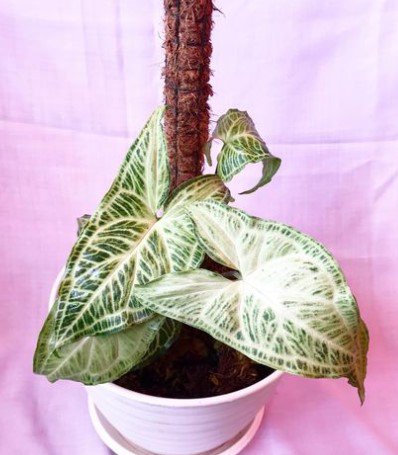
Syngonium Batik Rare Flower Garden Plant Home Live Plant Rare Garden #MPS
Syngonium 'Batik' is a cultivar of Syngonium podophyllum, known for its unique and attractive foliage. Here’s what you should know about Syngonium 'Batik':
1. **Appearance**:
- **Leaves**: The leaves of Syngonium 'Batik' are arrowhead-shaped and typically feature a distinctive pattern of light green or silver-green variegation with darker green spots or blotches. The variegation resembles a batik fabric pattern, which gives the plant its name.
- **Growth habit**: It grows as a compact plant with a climbing or trailing habit, making it suitable for hanging baskets or as a tabletop plant. The vines can be trained to climb up a support or left to trail over the edge of a pot.
2. **Hardiness**: Syngonium 'Batik' is relatively easy to care for and adapts well to indoor environments.
3. **Care**:
- **Light**: Prefers bright, indirect light. Avoid direct sunlight, which can scorch the leaves or cause the variegation to fade. It can tolerate lower light conditions, but the variegation may become less pronounced.
- **Water**: Keep the soil evenly moist during the growing season (spring and summer), allowing the top inch or so of soil to dry out between waterings. Reduce watering in the winter months when growth slows down.
- **Humidity**: Appreciates higher humidity levels, but it can adapt to normal household humidity. Regular misting or using a humidity tray can help maintain adequate moisture levels.
- **Temperature**: Thrives in average room temperatures between 65-75°F (18-24°C). Avoid exposing it to temperatures below 55°F (13°C).
- **Soil**: Use a well-draining potting mix rich in organic matter. A mix formulated for tropical plants or aroid plants is suitable.
4. **Fertilization**: Feed Syngonium 'Batik' with a balanced liquid fertilizer diluted to half strength every 4-6 weeks during the growing season (spring and summer). Reduce feeding in the fall and winter when growth slows down.
5. **Propagation**: Propagate Syngonium 'Batik' through stem cuttings. Cut a stem with a few nodes and place it in water or moist potting mix until roots develop. Once rooted, transplant into a pot with potting soil.
6. **Maintenance**: Prune Syngonium 'Batik' occasionally to maintain its shape and remove any yellow or damaged leaves. Wipe the leaves with a damp cloth periodically to remove dust and improve the plant's ability to photosynthesize.
7. **Caution**: All parts of Syngonium plants, including 'Batik', contain calcium oxalate crystals, which can cause skin irritation and are toxic if ingested. Keep it out of reach of pets and children.
Syngonium 'Batik' is valued for its attractive variegated foliage and is a great choice for adding color and texture to indoor spaces. With proper care, it will thrive and continue to display its unique batik-like patterned leaves.
In the photo is not factual item...
The size live plant item depends on stock...
Thank you
Syngonium 'Batik' is a cultivar of Syngonium podophyllum, known for its unique and attractive foliage. Here’s what you should know about Syngonium 'Batik':
1. **Appearance**:
- **Leaves**: The leaves of Syngonium 'Batik' are arrowhead-shaped and typically feature a distinctive pattern of light green or silver-green variegation with darker green spots or blotches. The variegation resembles a batik fabric pattern, which gives the plant its name.
- **Growth habit**: It grows as a compact plant with a climbing or trailing habit, making it suitable for hanging baskets or as a tabletop plant. The vines can be trained to climb up a support or left to trail over the edge of a pot.
2. **Hardiness**: Syngonium 'Batik' is relatively easy to care for and adapts well to indoor environments.
3. **Care**:
- **Light**: Prefers bright, indirect light. Avoid direct sunlight, which can scorch the leaves or cause the variegation to fade. It can tolerate lower light conditions, but the variegation may become less pronounced.
- **Water**: Keep the soil evenly moist during the growing season (spring and summer), allowing the top inch or so of soil to dry out between waterings. Reduce watering in the winter months when growth slows down.
- **Humidity**: Appreciates higher humidity levels, but it can adapt to normal household humidity. Regular misting or using a humidity tray can help maintain adequate moisture levels.
- **Temperature**: Thrives in average room temperatures between 65-75°F (18-24°C). Avoid exposing it to temperatures below 55°F (13°C).
- **Soil**: Use a well-draining potting mix rich in organic matter. A mix formulated for tropical plants or aroid plants is suitable.
4. **Fertilization**: Feed Syngonium 'Batik' with a balanced liquid fertilizer diluted to half strength every 4-6 weeks during the growing season (spring and summer). Reduce feeding in the fall and winter when growth slows down.
5. **Propagation**: Propagate Syngonium 'Batik' through stem cuttings. Cut a stem with a few nodes and place it in water or moist potting mix until roots develop. Once rooted, transplant into a pot with potting soil.
6. **Maintenance**: Prune Syngonium 'Batik' occasionally to maintain its shape and remove any yellow or damaged leaves. Wipe the leaves with a damp cloth periodically to remove dust and improve the plant's ability to photosynthesize.
7. **Caution**: All parts of Syngonium plants, including 'Batik', contain calcium oxalate crystals, which can cause skin irritation and are toxic if ingested. Keep it out of reach of pets and children.
Syngonium 'Batik' is valued for its attractive variegated foliage and is a great choice for adding color and texture to indoor spaces. With proper care, it will thrive and continue to display its unique batik-like patterned leaves.
In the photo is not factual item...
The size live plant item depends on stock...
Thank you
You may also be interested in:
-
$11.18

-
$12.49
-
$11.18

-
$8.59
-
$13.58
-
$12.02

-
$16.10
-
$15.39

-
$5.71

-
$5.71


 ID, Jawa Timur
