
$111.51
On Hold
Labisia Turtle Back Plant Rare Flower Home Rare Live Plant For Your Home Garden
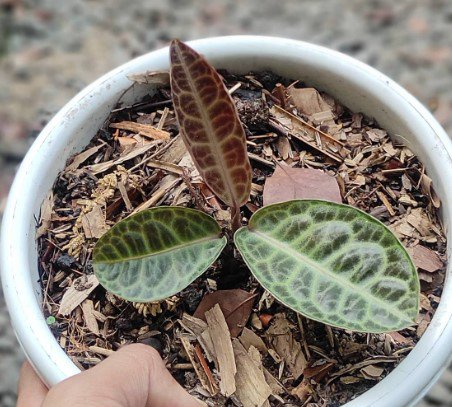
Labisia Turtle Back Plant Rare Flower Home Rare Live Plant For Your Home Garden
"Labisia Turtle" is a specific cultivar of Labisia pumila, a plant native to Southeast Asia, particularly found in countries like Malaysia, Thailand, and Indonesia. Labisia pumila is a member of the Primulaceae family and is commonly known as "Kacip Fatimah" or "Selusuh Fatimah" in Malay.
### Characteristics of Labisia pumila:
1. **Appearance**: Labisia pumila is a small, herbaceous plant with glossy, dark green leaves that are lanceolate or elliptic in shape. The plant typically grows low to the ground and forms dense clusters.
2. **Flowers**: The flowers of Labisia pumila are small, white to pinkish in color, and arranged in racemes or spikes. They have a mild fragrance.
3. **Traditional Uses**: In traditional medicine, Labisia pumila has been used for various purposes, including postpartum recovery, as an aphrodisiac, and for general health benefits. It is believed to have properties that support women's health and wellness.
### Cultivar "Labisia Turtle":
"Labisia Turtle" is likely a cultivar or variety of Labisia pumila that has been specifically selected or bred for certain characteristics, such as growth habit, leaf color or shape, or flower appearance. Specific details about this cultivar might include:
- **Growth Habit**: It may have a compact or trailing growth habit, making it suitable for ground cover or container planting.
- **Leaf Characteristics**: The leaves may exhibit unique markings, variegation, or colors compared to the standard Labisia pumila.
- **Cultural Requirements**: Like the species, "Labisia Turtle" would likely prefer a warm, humid environment with well-draining soil. It may benefit from partial shade or filtered light.
### Care Tips for Labisia pumila (including "Labisia Turtle"):
- **Light**: Provide bright, indirect light or partial shade. Avoid direct sunlight, especially during the hottest part of the day.
- **Watering**: Keep the soil evenly moist but not waterlogged. Water when the top inch of soil feels dry to the touch.
- **Soil**: Use a well-draining potting mix or soil enriched with organic matter. Labisia pumila prefers slightly acidic to neutral soil pH.
- **Fertilizing**: Feed with a balanced liquid fertilizer during the growing season (spring and summer) to promote healthy growth.
- **Pruning**: Trim back any leggy growth or spent flowers to encourage compact growth and maintain a tidy appearance.
- **Winter Care**: In cooler climates, protect Labisia pumila from cold drafts or temperatures below 50°F (10°C). It may benefit from being brought indoors or provided with additional protection during winter.
### Conclusion:
"Labisia Turtle" is a specific cultivar of Labisia pumila that likely retains the traditional medicinal and ornamental qualities of the species. By providing it with the appropriate care, you can enjoy its unique foliage and potential health benefits in your garden or indoor space.
In the photo is not factual item...
The size live plant item depends on stock...
Thank you
"Labisia Turtle" is a specific cultivar of Labisia pumila, a plant native to Southeast Asia, particularly found in countries like Malaysia, Thailand, and Indonesia. Labisia pumila is a member of the Primulaceae family and is commonly known as "Kacip Fatimah" or "Selusuh Fatimah" in Malay.
### Characteristics of Labisia pumila:
1. **Appearance**: Labisia pumila is a small, herbaceous plant with glossy, dark green leaves that are lanceolate or elliptic in shape. The plant typically grows low to the ground and forms dense clusters.
2. **Flowers**: The flowers of Labisia pumila are small, white to pinkish in color, and arranged in racemes or spikes. They have a mild fragrance.
3. **Traditional Uses**: In traditional medicine, Labisia pumila has been used for various purposes, including postpartum recovery, as an aphrodisiac, and for general health benefits. It is believed to have properties that support women's health and wellness.
### Cultivar "Labisia Turtle":
"Labisia Turtle" is likely a cultivar or variety of Labisia pumila that has been specifically selected or bred for certain characteristics, such as growth habit, leaf color or shape, or flower appearance. Specific details about this cultivar might include:
- **Growth Habit**: It may have a compact or trailing growth habit, making it suitable for ground cover or container planting.
- **Leaf Characteristics**: The leaves may exhibit unique markings, variegation, or colors compared to the standard Labisia pumila.
- **Cultural Requirements**: Like the species, "Labisia Turtle" would likely prefer a warm, humid environment with well-draining soil. It may benefit from partial shade or filtered light.
### Care Tips for Labisia pumila (including "Labisia Turtle"):
- **Light**: Provide bright, indirect light or partial shade. Avoid direct sunlight, especially during the hottest part of the day.
- **Watering**: Keep the soil evenly moist but not waterlogged. Water when the top inch of soil feels dry to the touch.
- **Soil**: Use a well-draining potting mix or soil enriched with organic matter. Labisia pumila prefers slightly acidic to neutral soil pH.
- **Fertilizing**: Feed with a balanced liquid fertilizer during the growing season (spring and summer) to promote healthy growth.
- **Pruning**: Trim back any leggy growth or spent flowers to encourage compact growth and maintain a tidy appearance.
- **Winter Care**: In cooler climates, protect Labisia pumila from cold drafts or temperatures below 50°F (10°C). It may benefit from being brought indoors or provided with additional protection during winter.
### Conclusion:
"Labisia Turtle" is a specific cultivar of Labisia pumila that likely retains the traditional medicinal and ornamental qualities of the species. By providing it with the appropriate care, you can enjoy its unique foliage and potential health benefits in your garden or indoor space.
In the photo is not factual item...
The size live plant item depends on stock...
Thank you
You may also be interested in:
-
$6.96

-
$8.35

-
$12.45
-
$7.08

-
$8.96
-
$10.36
-
$11.56
-
$10.16
-
$5.69
-
$16.73


 ID, YOGYAKARTA
