
$186.28
Add to Cart
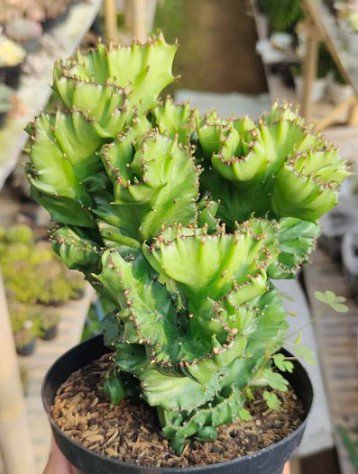
Euphorbia lactea cristata green Flower Houseplant Live Plant - Plant for Your Home Garden
Euphorbia lactea cristata green Flower Houseplant Live Plant - Plant for Your Home Garden
Euphorbia lactea, commonly known as "Dragon Bones," "Mottled Spurge," or "White Ghost," is a striking succulent plant that belongs to the Euphorbiaceae family. Here are some care tips for Euphorbia lactea:
1. **Light**: Euphorbia lactea prefers bright, indirect light. It can tolerate some direct sunlight, especially in the morning or late afternoon, but prolonged exposure to intense sunlight can scorch the plant. Inadequate light may cause the plant to become leggy and lose its compact form.
2. **Temperature**: This plant prefers warm temperatures between 65-85°F (18-29°C) during the growing season. It can tolerate temperatures down to 50°F (10°C) but should be protected from frost.
3. **Watering**: Euphorbia lactea is drought-tolerant and should be watered sparingly. Allow the soil to dry out completely between waterings, especially during the dormant winter months. Overwatering can lead to root rot and other issues.
4. **Soil**: Use a well-draining cactus or succulent potting mix for Euphorbia lactea. You can also create your own mix by combining regular potting soil with perlite, coarse sand, or pumice to improve drainage.
5. **Potting**: Choose a pot with drainage holes to prevent water from pooling at the bottom. The pot size should allow for some room for the plant's roots to grow but avoid using an excessively large pot as Euphorbia lactea prefers slightly snug conditions.
6. **Fertilizing**: Feed Euphorbia lactea with a diluted, balanced fertilizer once a month during the active growing season (spring and summer). Avoid fertilizing during the fall and winter when growth slows down.
7. **Handling**: Handle Euphorbia lactea with care as its sap can be toxic and irritating to the skin and eyes. Wear gloves and avoid contact with the sap when pruning or handling the plant.
8. **Pests and Diseases**: Monitor for common pests such as spider mites, mealybugs, and scale insects. Treat any infestations promptly with insecticidal soap or a suitable pesticide. Proper air circulation and avoiding overwatering can help prevent fungal diseases.
9. **Propagation**: Euphorbia lactea can be propagated from stem cuttings. Allow the cut end to dry and callous for a few days before planting in a well-draining soil mix. Be cautious when handling cuttings due to the toxic sap.
10. **Pruning**: Prune Euphorbia lactea to maintain its shape and remove any dead or damaged parts. Use sharp, clean tools and wear gloves to avoid contact with the sap.
By following these care tips, you can enjoy growing and maintaining a healthy Euphorbia lactea in your home or garden. Adjust care based on your specific growing conditions and environment to optimize its growth and appearance.
In the photo is not factual item...
The size live plant item depends on stock...
Thank you
Euphorbia lactea, commonly known as "Dragon Bones," "Mottled Spurge," or "White Ghost," is a striking succulent plant that belongs to the Euphorbiaceae family. Here are some care tips for Euphorbia lactea:
1. **Light**: Euphorbia lactea prefers bright, indirect light. It can tolerate some direct sunlight, especially in the morning or late afternoon, but prolonged exposure to intense sunlight can scorch the plant. Inadequate light may cause the plant to become leggy and lose its compact form.
2. **Temperature**: This plant prefers warm temperatures between 65-85°F (18-29°C) during the growing season. It can tolerate temperatures down to 50°F (10°C) but should be protected from frost.
3. **Watering**: Euphorbia lactea is drought-tolerant and should be watered sparingly. Allow the soil to dry out completely between waterings, especially during the dormant winter months. Overwatering can lead to root rot and other issues.
4. **Soil**: Use a well-draining cactus or succulent potting mix for Euphorbia lactea. You can also create your own mix by combining regular potting soil with perlite, coarse sand, or pumice to improve drainage.
5. **Potting**: Choose a pot with drainage holes to prevent water from pooling at the bottom. The pot size should allow for some room for the plant's roots to grow but avoid using an excessively large pot as Euphorbia lactea prefers slightly snug conditions.
6. **Fertilizing**: Feed Euphorbia lactea with a diluted, balanced fertilizer once a month during the active growing season (spring and summer). Avoid fertilizing during the fall and winter when growth slows down.
7. **Handling**: Handle Euphorbia lactea with care as its sap can be toxic and irritating to the skin and eyes. Wear gloves and avoid contact with the sap when pruning or handling the plant.
8. **Pests and Diseases**: Monitor for common pests such as spider mites, mealybugs, and scale insects. Treat any infestations promptly with insecticidal soap or a suitable pesticide. Proper air circulation and avoiding overwatering can help prevent fungal diseases.
9. **Propagation**: Euphorbia lactea can be propagated from stem cuttings. Allow the cut end to dry and callous for a few days before planting in a well-draining soil mix. Be cautious when handling cuttings due to the toxic sap.
10. **Pruning**: Prune Euphorbia lactea to maintain its shape and remove any dead or damaged parts. Use sharp, clean tools and wear gloves to avoid contact with the sap.
By following these care tips, you can enjoy growing and maintaining a healthy Euphorbia lactea in your home or garden. Adjust care based on your specific growing conditions and environment to optimize its growth and appearance.
In the photo is not factual item...
The size live plant item depends on stock...
Thank you
You may also be interested in:
-
$52.95
-
$38.55

-
$81.61
-
$1,659.23

-
$143.30

-
$229.28

-
$14.32

-
$12,955.00

-
$22.93

-
$1,046.10


 ID, yogyakarta
