
$257.93
On Hold
agave titanota Rare Plant Live Garden Plant rare Home Plant FREESHIPPING
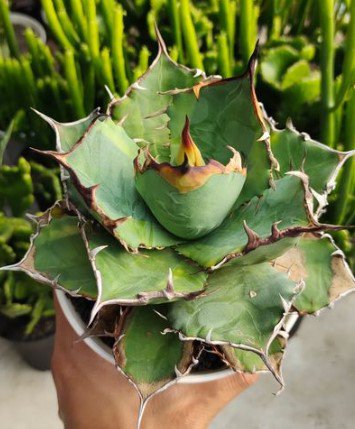
agave titanota Rare Plant Live Garden Plant rare Home Plant FREESHIPPING
Caring for an Agave plant involves several key steps to ensure its health and growth. Here are some general guidelines:
1. **Light**: Agaves prefer bright, indirect sunlight. They can tolerate some direct sunlight, especially morning sunlight, but intense, prolonged direct sunlight can scorch their leaves.
2. **Watering**: Agaves are succulents, so they are drought-tolerant once established. Water thoroughly but infrequently, allowing the soil to dry out completely between waterings. In winter, reduce watering as the plant goes dormant.
3. **Soil**: Use well-draining soil mix specifically formulated for succulents or cacti. You can also mix your own by combining regular potting soil with perlite or coarse sand to improve drainage.
4. **Temperature and Humidity**: Agaves prefer warmer temperatures and are generally tolerant of a wide range of temperatures, as long as they are not exposed to prolonged frost or freezing temperatures. They prefer low to moderate humidity levels.
5. **Fertilizing**: During the growing season (spring and summer), you can fertilize your agave with a balanced, diluted fertilizer once a month. Avoid fertilizing during fall and winter when the plant is dormant.
6. **Potting**: Choose a pot with drainage holes to prevent water from accumulating at the roots. Agaves prefer slightly crowded conditions, so don’t pot them in excessively large containers.
7. **Pruning**: Remove any dead or damaged leaves by cutting them at the base with clean, sharp scissors or pruning shears. This helps keep the plant healthy and tidy.
8. **Pests and Diseases**: Agaves are generally resistant to pests and diseases, especially if they are grown in well-draining soil and not overwatered. However, watch out for common pests like mealybugs or scale, and treat them promptly if detected.
9. **Propagation**: Agaves can be propagated by removing offsets, or pups, that grow around the base of mature plants. Wait until the pups are several inches tall before carefully cutting them away and replanting them in their own pots.
By following these care guidelines, you can help your Agave plant thrive and remain healthy for years to come.
In the photo is not factual item...
The size live plant item depends on stock...
Thank you
Caring for an Agave plant involves several key steps to ensure its health and growth. Here are some general guidelines:
1. **Light**: Agaves prefer bright, indirect sunlight. They can tolerate some direct sunlight, especially morning sunlight, but intense, prolonged direct sunlight can scorch their leaves.
2. **Watering**: Agaves are succulents, so they are drought-tolerant once established. Water thoroughly but infrequently, allowing the soil to dry out completely between waterings. In winter, reduce watering as the plant goes dormant.
3. **Soil**: Use well-draining soil mix specifically formulated for succulents or cacti. You can also mix your own by combining regular potting soil with perlite or coarse sand to improve drainage.
4. **Temperature and Humidity**: Agaves prefer warmer temperatures and are generally tolerant of a wide range of temperatures, as long as they are not exposed to prolonged frost or freezing temperatures. They prefer low to moderate humidity levels.
5. **Fertilizing**: During the growing season (spring and summer), you can fertilize your agave with a balanced, diluted fertilizer once a month. Avoid fertilizing during fall and winter when the plant is dormant.
6. **Potting**: Choose a pot with drainage holes to prevent water from accumulating at the roots. Agaves prefer slightly crowded conditions, so don’t pot them in excessively large containers.
7. **Pruning**: Remove any dead or damaged leaves by cutting them at the base with clean, sharp scissors or pruning shears. This helps keep the plant healthy and tidy.
8. **Pests and Diseases**: Agaves are generally resistant to pests and diseases, especially if they are grown in well-draining soil and not overwatered. However, watch out for common pests like mealybugs or scale, and treat them promptly if detected.
9. **Propagation**: Agaves can be propagated by removing offsets, or pups, that grow around the base of mature plants. Wait until the pups are several inches tall before carefully cutting them away and replanting them in their own pots.
By following these care guidelines, you can help your Agave plant thrive and remain healthy for years to come.
In the photo is not factual item...
The size live plant item depends on stock...
Thank you


 ID, Jawa Timur
