
$14.47
Add to Cart
Chocolate Vine Purple Bouquet Edible 5 Seeds
More than 10 available
Details
Shipping: Australia: $32.00 (more destinations)
Condition: Brand new
Returns: 14 days, buyer pays return shipping (more)
Akebia quinata 'Purple Bouquet': This common varietal is desirable
primarily because of its compact size, which will grow to be about
half the height of other varieties. It boasts the same chocolate-
scented deep purple flowers.
LAST SEEDS OF HARVEST
Germination Rate 98%
Germination Date 2/11/23
The most important factor when it comes to a successfully blooming
chocolate vine is ample sunlight. If the vine is growing in a woodland
environment or is shaded the majority of the day by larger trees or
structures, you will have a difficult time getting it to bloom.
In addition to lots of sunlight, you'll want to make sure your chocolate
vine gets the right nutrients. Phosphorus is also important to a successfully
blooming chocolate vine. If you think your soil may lack this nutrient, you
can fertilize your plant with a phosphorus-rich fertilizer blend or add
some bone meal to your soil and see if that helps.
The chocolate vine gets its moniker both from the rich purplish-brown blooms that cover the vine, as well as the delicate chocolate scent of the flowers. Chocolate-scented flowers are unusual among hardy perennials, so this one attribute may endear this flowering vine to growers.
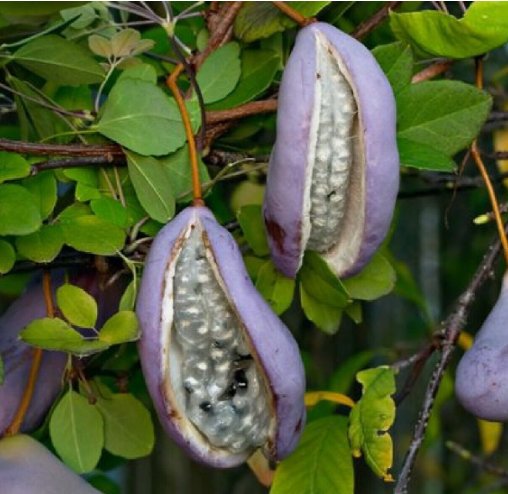
The vine produces glossy dark green leaves that are oval-shaped and grow in
clusters of five. The dangling flowers boast three petals and emerge in the
spring (March to May), sometimes followed by fruits that resemble eggplants
late in the summer. The fruit chocolate vines produce is edible if you choose
to harvest it, you may recognize they resemble kiwi, with tiny black seeds
embedded in the pulp.
Expect this vine to grow quickly and vigorously, adding as much as 40 feet a
growing season. This plant has no serious pest or disease issues, which is one
reason for its reputation as an invasive grower
Germination
Scarification: Soak in water, let stand in water for 24 hours.
Stratification: cold stratify for 30 days.
Germination: sow seed 1/16" deep, tamp the soil, lightly mulch the seed bed.
primarily because of its compact size, which will grow to be about
half the height of other varieties. It boasts the same chocolate-
scented deep purple flowers.
LAST SEEDS OF HARVEST
Germination Rate 98%
Germination Date 2/11/23
The most important factor when it comes to a successfully blooming
chocolate vine is ample sunlight. If the vine is growing in a woodland
environment or is shaded the majority of the day by larger trees or
structures, you will have a difficult time getting it to bloom.
In addition to lots of sunlight, you'll want to make sure your chocolate
vine gets the right nutrients. Phosphorus is also important to a successfully
blooming chocolate vine. If you think your soil may lack this nutrient, you
can fertilize your plant with a phosphorus-rich fertilizer blend or add
some bone meal to your soil and see if that helps.
The chocolate vine gets its moniker both from the rich purplish-brown blooms that cover the vine, as well as the delicate chocolate scent of the flowers. Chocolate-scented flowers are unusual among hardy perennials, so this one attribute may endear this flowering vine to growers.
The vine produces glossy dark green leaves that are oval-shaped and grow in
clusters of five. The dangling flowers boast three petals and emerge in the
spring (March to May), sometimes followed by fruits that resemble eggplants
late in the summer. The fruit chocolate vines produce is edible if you choose
to harvest it, you may recognize they resemble kiwi, with tiny black seeds
embedded in the pulp.
Expect this vine to grow quickly and vigorously, adding as much as 40 feet a
growing season. This plant has no serious pest or disease issues, which is one
reason for its reputation as an invasive grower
Germination
Scarification: Soak in water, let stand in water for 24 hours.
Stratification: cold stratify for 30 days.
Germination: sow seed 1/16" deep, tamp the soil, lightly mulch the seed bed.


 ID, east java
