
$1,394.09
Add to Cart
Brass Zippo Lighter Bradford Pa Usa Native American & Marcus Garvey Hero Coin
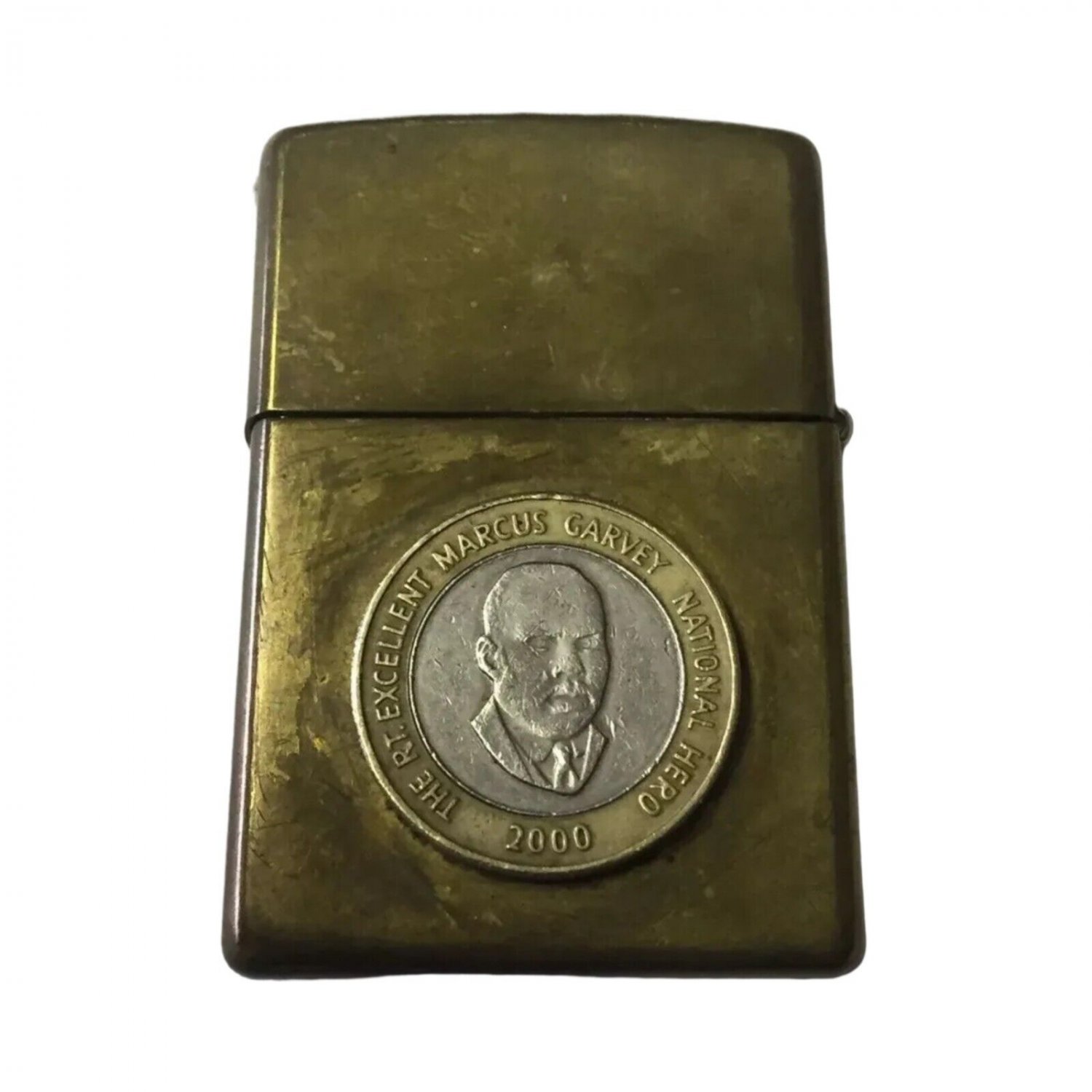


Brass Zippo Lighter Bradford Pa Usa Native American & Marcus Garvey Hero Coin. This beautiful brass Zippo lighter is a must-have for any collector of Tobacciana. The design features a Native American Indian on one side and a Marcus Garvey coin on the other side, making it a unique and rare piece. The Zippo brand is known for its high quality and durability, and this lighter is no exception. It has been previously owned, adding to its charm and character. Don't miss out on the opportunity to own this one-of-a-kind collectible. The lighter has a Native American Indian cigars logo and a coin from 2000 The Art. Excellent Marcus Garvey National Hero. Dating: D XII April 1996 In working condition. Will be shipped with no refill for protection in transport. Marcus Garvey Marcus Mosiah Garvey Jr. was born on August 17, 1887, in Saint Anns Bay, Jamaica. His father was a stonemason, and his mother was a domestic servant. As a young man, Garvey travelled and worked in several Latin American countries before relocating to London, England. He studied at Birkbeck College (University of London) and worked as a messenger and handyman for theAfrican TimesandOrient Review, a journal that emphasized Pan-African nationalism. Garvey was known as the founder of the Universal Negro Improvement Association (Unia). Formed in Jamaica in July 1914, the Unia aimed to achieve Black nationalism through the celebration of African history and culture. Through the Unia, Garvey also pushed to support the "back to Africa" movement, and created the Black Star Line to act as the Black owned passenger line that would carry patrons back and forth to Africa. He also fostered restaurants and shopping centers to encourage black economic independence. In addition to his support of Pan-Africanism, Marcus Garvey was a Black nationalist and believed in racial separatism. This made him a controversial figure in and out of the Black community, especially as he challenged major thought leaderW.E.B Du Bois. In 1922, Marcus Garvey was charged with mail fraud in connection with a ship on the Black Star Line,Orion. Further pressure from J. Edgar Hoover and his department's investigations, negative press, andcomplaints from stock holders soon led to Garvey gaining a reputation as a swindler. He also gained much criticism when he met with white supremacists like the Ku Klux Klan. Garvey was convicted of the mail fraud charges and sent to Atlanta Federal Penitentiary. While serving his prison sentence President Calvin Coolidge commuted his remaining time amidst protests from Black Americans. In 1927, he was deported from the United States to Jamaica, where he continued his Unia work and political activism before moving to London in 1935. He died on June 10, 1940, after multiple strokes. Despite his controversial reputation, Garveys legacy continued to instill pride and inspiration among many black people throughout the diaspora. His ideology has influenced members of the Nation of Islam, theBlack Power movement, and the Rastafari movement.


