
$51.34
Add to Cart
Wonderful Epipremnum Aureum Njoy Garden Plant
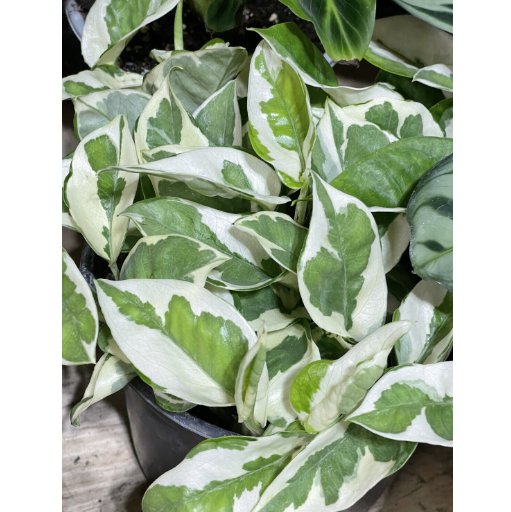


Houseplant ~ Epipremnum Aureum ~ NJOY~ (1) 4-8" Live Rooted Plant~ variegated.
Njoy Pothos is a cultivar of the Marble Queen Pothos and has become very popular. Like all pothos, it’s one of the easiest plants to grow.
Epipremnum aureum N’Joy is a vining plant with striking white and green variegation on its leaves, making it a great addition to any indoor garden.
Growing Njoy Pothos is remarkably easy, even for someone with no previous experience cultivating an indoor garden..
Native to the rainforests of French Polynesia in the South Pacific, any pothos plant will tolerate low light levels and prefers infrequent watering.
Interestingly, however, Njoy Pothos plant can also be grown indefinitely in water, such as a fish tank.
Like all members of the pothos family, Njoy Pothos plants are also remarkably effective at filtering contaminants such as benzene and formaldehyde from indoor environments.
The combination of the ease of maintenance, attractive foliage, and health benefits make Njoy Pothos a great choice for a home or office houseplant.
Njoy Pothos Care
While the pothos family of plants originates in the tropical rainforests of the South Pacific, it is very easy to enjoy pothos in your home.
Njoy Pothos plant care is simple: keep it warm, keep it out of the full sun, and don’t overwater.
With this guide to Njoy plant care, you should have no trouble getting this attractive vine to thrive.
Light
In the rainforests of French Polynesia, pothos vines grow in the shade of the tree canopy.
Thus, Njoy Pothos light requirements are for bright, indirect light, or 10,000-20,000 lux.
Njoy plant light needs can easily be met by keeping the plant close to a window in an east or north-facing room.
If all you have is a south or west exposure, find a spot out of the full sun. The stronger rays of the afternoon sun can damage Njoy Pothos foliage.
Njoy Pothos will tolerate lower light levels as well, and artificial lights such as those in an office will provide sufficient lux to keep them happy.
Watering
In the rainforest, pothos plants are used to the soil that drains quickly, leaving them in dry soil.
Thus, Njoy Pothos watering should only be done when the top half of the soil is dry.
Water Njoy Pothos by letting the pot soak until all the soil is moistened, and then empty the saucer of any water that remains. Never let the soil get waterlogged, as that will lead to fungal diseases such as root rot.
However, it’s also possible to eliminate any watering needs for your Njoy Pothos by growing it hydroponically with its roots in a fish tank.
Temperature
The ideal Njoy Pothos temperature range is 60 to 80ºF (18 to 30ºC), as it is a tropical native.
You should be easily able to provide this temperature for Njoy Pothos in any heated space, so don’t worry about using supplemental heating.
However, Njoy Pothos has limited temperature tolerance below 50ºF (10ºC), so keep it away from air conditioning vents that may blast out cooler air. Too-low temperatures may damage the leaves or trigger dormancy.
Njoy Pothos has no frost hardiness at all, so if you took your plant outdoors to enjoy some steamy summer weather, bring it in before temperatures fall.
Humidity
Pothos plants are used to a humidity level as high as 80% in their rainforest home. However,
Njoy Pothos humidity requirements are pretty flexible.
While the ideal humidity for Njoy plant is between 60-80%, even levels as low as 30% will not damage the plant.
In most homes, you will not need to provide supplementary sources of humidity. However, if the air is too dry, the leaves of your Njoy Pothos will start to look a little crispy around the edges.
It’s easy to spritz them every few days with a spray bottle. Use distilled water as the salts and chemicals in tap water can damage the foliage.
Soil
Njoy Pothos soil has to be well-draining as it will not tolerate sitting in wet soil. The pH level for Njoy plant should be 6.1-6.6, or mildly acidic.
A specialty aroid soil will not need any amendments to make it the perfect soil for Njoy plant. If you cannot find it, however, you can easily make your own soil mix.
Combine equal parts of potting soil, perlite, and peat moss for a well-draining, light mix that your Njoy Pothos will thrive in.
If you substitute a well-rotted compost for the potting soil, you won’t even have to fertilize it.
Fertilizer
It’s a good idea to use fertilizer for variegated Pothos Njoy for the most lush leaves possible.
You can use any indoor plant fertilizer as your Njoy Pothos fertilizer. A balanced fertilizer ratio of 10-10-10 will work very well.
If using a liquid fertilizer, dilute it to half the recommended strength and feed once a month in spring and summer. Do it when the soil is moist after watering.
If you used compost or added slow-release fertilizer granules when potting your Njoy Pothos, you will not need to do any additional feeding.
If you are growing your Njoy Pothos hydroponically in a fish tank, it will get its nutrients from the water.
Potting & Repotting
Since Njoy Pothos grows slowly, you will not need to repot more than every 2 or 3 years.
It’s time for Njoy Pothos repotting when roots start growing out of the drainage holes and the water runs right through when watering.
If it becomes rootbound, there will not be sufficient soil to hold even the limited moisture it needs to grow.
When repotting Njoy plant, move up one pot size, or at most 2 inches in diameter. Always ensure that it has good drainage holes.
Use fresh potting soil and water it well to help it settle into its new home.
Pruning
Njoy Pothos pruning is necessary to train the vine and maintain a tidy appearance as it sprawls. This should be done during the spring and summer growing season.
If you want a short, bushy plant, cut the end to encourage lateral growth. You should train it up a sphagnum moss pole to keep it growing upright.
However, if you need a long, trailing vine to wend its way across the top of your kitchen cupboards, just cut out any stems that get in the way.
When cutting Njoy plant, use sharp scissors and cut the stem just above a leaf node.
Of course, always trim out dead or damaged leaves.
It goes by many nicknames, including "devil's ivy," because it is so hard to kill, and can grow in the dark. Golden pothos has poisonous sap, so it should be kept away from pets and children.
In newly-renovated homes, the golden pothos has been shown to absorb benzene, trichloroethylene and formaldehyde, although you cannot rely on the plant alone to remove all harmful gases from a room. Nevertheless, they have tenacious vitality, and can quickly convert formaldehyde into sugars or amino acids, while decomposing any benzene emitted by photocopiers and printers, making it no surprise that this plant is often seen in homes and offices.
Ships to the US mainland only.
No shipping to PR.
PACKAGE
1 x Starter Plant
Njoy Pothos is a cultivar of the Marble Queen Pothos and has become very popular. Like all pothos, it’s one of the easiest plants to grow.
Epipremnum aureum N’Joy is a vining plant with striking white and green variegation on its leaves, making it a great addition to any indoor garden.
Growing Njoy Pothos is remarkably easy, even for someone with no previous experience cultivating an indoor garden..
Native to the rainforests of French Polynesia in the South Pacific, any pothos plant will tolerate low light levels and prefers infrequent watering.
Interestingly, however, Njoy Pothos plant can also be grown indefinitely in water, such as a fish tank.
Like all members of the pothos family, Njoy Pothos plants are also remarkably effective at filtering contaminants such as benzene and formaldehyde from indoor environments.
The combination of the ease of maintenance, attractive foliage, and health benefits make Njoy Pothos a great choice for a home or office houseplant.
Njoy Pothos Care
While the pothos family of plants originates in the tropical rainforests of the South Pacific, it is very easy to enjoy pothos in your home.
Njoy Pothos plant care is simple: keep it warm, keep it out of the full sun, and don’t overwater.
With this guide to Njoy plant care, you should have no trouble getting this attractive vine to thrive.
Light
In the rainforests of French Polynesia, pothos vines grow in the shade of the tree canopy.
Thus, Njoy Pothos light requirements are for bright, indirect light, or 10,000-20,000 lux.
Njoy plant light needs can easily be met by keeping the plant close to a window in an east or north-facing room.
If all you have is a south or west exposure, find a spot out of the full sun. The stronger rays of the afternoon sun can damage Njoy Pothos foliage.
Njoy Pothos will tolerate lower light levels as well, and artificial lights such as those in an office will provide sufficient lux to keep them happy.
Watering
In the rainforest, pothos plants are used to the soil that drains quickly, leaving them in dry soil.
Thus, Njoy Pothos watering should only be done when the top half of the soil is dry.
Water Njoy Pothos by letting the pot soak until all the soil is moistened, and then empty the saucer of any water that remains. Never let the soil get waterlogged, as that will lead to fungal diseases such as root rot.
However, it’s also possible to eliminate any watering needs for your Njoy Pothos by growing it hydroponically with its roots in a fish tank.
Temperature
The ideal Njoy Pothos temperature range is 60 to 80ºF (18 to 30ºC), as it is a tropical native.
You should be easily able to provide this temperature for Njoy Pothos in any heated space, so don’t worry about using supplemental heating.
However, Njoy Pothos has limited temperature tolerance below 50ºF (10ºC), so keep it away from air conditioning vents that may blast out cooler air. Too-low temperatures may damage the leaves or trigger dormancy.
Njoy Pothos has no frost hardiness at all, so if you took your plant outdoors to enjoy some steamy summer weather, bring it in before temperatures fall.
Humidity
Pothos plants are used to a humidity level as high as 80% in their rainforest home. However,
Njoy Pothos humidity requirements are pretty flexible.
While the ideal humidity for Njoy plant is between 60-80%, even levels as low as 30% will not damage the plant.
In most homes, you will not need to provide supplementary sources of humidity. However, if the air is too dry, the leaves of your Njoy Pothos will start to look a little crispy around the edges.
It’s easy to spritz them every few days with a spray bottle. Use distilled water as the salts and chemicals in tap water can damage the foliage.
Soil
Njoy Pothos soil has to be well-draining as it will not tolerate sitting in wet soil. The pH level for Njoy plant should be 6.1-6.6, or mildly acidic.
A specialty aroid soil will not need any amendments to make it the perfect soil for Njoy plant. If you cannot find it, however, you can easily make your own soil mix.
Combine equal parts of potting soil, perlite, and peat moss for a well-draining, light mix that your Njoy Pothos will thrive in.
If you substitute a well-rotted compost for the potting soil, you won’t even have to fertilize it.
Fertilizer
It’s a good idea to use fertilizer for variegated Pothos Njoy for the most lush leaves possible.
You can use any indoor plant fertilizer as your Njoy Pothos fertilizer. A balanced fertilizer ratio of 10-10-10 will work very well.
If using a liquid fertilizer, dilute it to half the recommended strength and feed once a month in spring and summer. Do it when the soil is moist after watering.
If you used compost or added slow-release fertilizer granules when potting your Njoy Pothos, you will not need to do any additional feeding.
If you are growing your Njoy Pothos hydroponically in a fish tank, it will get its nutrients from the water.
Potting & Repotting
Since Njoy Pothos grows slowly, you will not need to repot more than every 2 or 3 years.
It’s time for Njoy Pothos repotting when roots start growing out of the drainage holes and the water runs right through when watering.
If it becomes rootbound, there will not be sufficient soil to hold even the limited moisture it needs to grow.
When repotting Njoy plant, move up one pot size, or at most 2 inches in diameter. Always ensure that it has good drainage holes.
Use fresh potting soil and water it well to help it settle into its new home.
Pruning
Njoy Pothos pruning is necessary to train the vine and maintain a tidy appearance as it sprawls. This should be done during the spring and summer growing season.
If you want a short, bushy plant, cut the end to encourage lateral growth. You should train it up a sphagnum moss pole to keep it growing upright.
However, if you need a long, trailing vine to wend its way across the top of your kitchen cupboards, just cut out any stems that get in the way.
When cutting Njoy plant, use sharp scissors and cut the stem just above a leaf node.
Of course, always trim out dead or damaged leaves.
It goes by many nicknames, including "devil's ivy," because it is so hard to kill, and can grow in the dark. Golden pothos has poisonous sap, so it should be kept away from pets and children.
In newly-renovated homes, the golden pothos has been shown to absorb benzene, trichloroethylene and formaldehyde, although you cannot rely on the plant alone to remove all harmful gases from a room. Nevertheless, they have tenacious vitality, and can quickly convert formaldehyde into sugars or amino acids, while decomposing any benzene emitted by photocopiers and printers, making it no surprise that this plant is often seen in homes and offices.
Ships to the US mainland only.
No shipping to PR.
PACKAGE
1 x Starter Plant
You may also be interested in:
-
$25.25
-
$18.19
-
$16.72
-
$22.05
-
$23.62
-
$21.68
-
$18.19
-
$16.79

-
$18.19
-
$16.79


 ID, Maluku
