
$142.34
Add to Cart
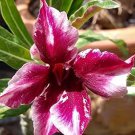
Wonderful Rose Bush Gypsy Orange Red Summer Blooms Flower Garden Plant


Orange or orange-red Hybrid Tea.
Registration name: Gypsy (hybrid tea, Swim & Weeks, 1972)
Exhibition name: Gypsy
Bred by Swim & Weeks (United States, 1972).
Introduced in United States by Conard-Pyle (Star Roses) as 'Gypsy'.
Introduced in Australia by Roy H. Rumsey Pty. Ltd. in 1976 as 'Gypsy'.
Hybrid Tea.
Orange or orange-red. Mild, spice fragrance. Average diameter 4". Large, full (26-40 petals), high-centered to cupped bloom form. Blooms in flushes throughout the season.
Tall, upright, well-branched. Large, semi-glossy, dark green foliage.
Height: 4' to 5' (120 to 150cm).
USDA zone 7b through 10b. Can be used for cut flower or garden. Vigorous. flowers drop off cleanly. heat tolerant. Disease susceptibility: disease resistant, very mildew resistant. Spring Pruning: Remove old canes and dead or diseased wood and cut back canes that cross. In warmer climates, cut back the remaining canes by about one-third. In colder areas, you'll probably find you'll have to prune a little more than that. Requires spring freeze protection (see glossary - Spring freeze protection)
Ships to the US mainland only.
No shipping to PR.
PACKAGE
1 x Starter Plant
Registration name: Gypsy (hybrid tea, Swim & Weeks, 1972)
Exhibition name: Gypsy
Bred by Swim & Weeks (United States, 1972).
Introduced in United States by Conard-Pyle (Star Roses) as 'Gypsy'.
Introduced in Australia by Roy H. Rumsey Pty. Ltd. in 1976 as 'Gypsy'.
Hybrid Tea.
Orange or orange-red. Mild, spice fragrance. Average diameter 4". Large, full (26-40 petals), high-centered to cupped bloom form. Blooms in flushes throughout the season.
Tall, upright, well-branched. Large, semi-glossy, dark green foliage.
Height: 4' to 5' (120 to 150cm).
USDA zone 7b through 10b. Can be used for cut flower or garden. Vigorous. flowers drop off cleanly. heat tolerant. Disease susceptibility: disease resistant, very mildew resistant. Spring Pruning: Remove old canes and dead or diseased wood and cut back canes that cross. In warmer climates, cut back the remaining canes by about one-third. In colder areas, you'll probably find you'll have to prune a little more than that. Requires spring freeze protection (see glossary - Spring freeze protection)
Ships to the US mainland only.
No shipping to PR.
PACKAGE
1 x Starter Plant
You may also be interested in:
-
$11.29

-
$11.17

-
$11.99
-
$13.90

-
$13.94

-
$13.94

-
$11.71

-
$11.17

-
$11.98

-
$6.61



 ID, Maluku
