
$54.17
Add to Cart
Wonderful Echeveria Peacockii Blue Peacock Succulent Garden Plant
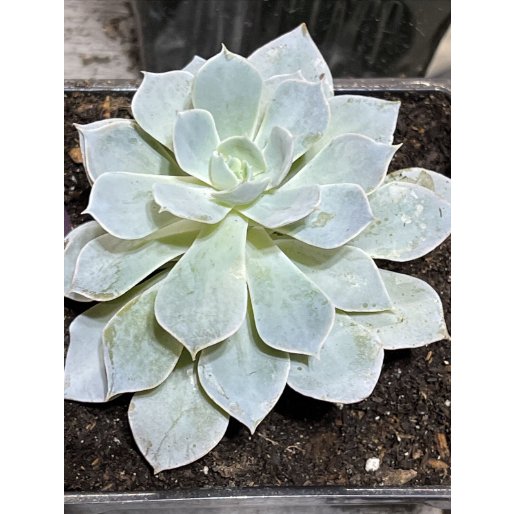


Peacock echeveria is a common succulent plant. In an environment with ideal temperature variation and ample sunlight, it has pretty blue leaf surfaces and pink leaf margins. When light is insufficient, the powder on its leaf surfaces disappears and the leaves turn green. It is often propagated by leaf cuttings and is fast-growing and easily-caespitose.
Succulent plants are popular for their low maintenance, cost, and different but interesting shapes. As potted plants, they can be planted in window sills or office tables for decoration. They can also be planted in well-drained and ventilated corners outdoors to form a unique tropical landscape. They don't need much care and are a perfect choice for busy people.
Condition Requirement Water and Hardiness
Peacock echeveria grows in mild temperature in spring and fall, and cannot resist extreme cold. If you are not in hardiness zones 9-10, grow it as a potted plant rather than directly in garden soil.
When the temperature is higher than 86 ℉ in summer, peacock echeveria may become dormant. When the temperature is lower than 41 ℉ in winter, move it indoors to avoid irreversible frostbite or death. Its growing season is in spring and fall, and it needs a little water. In summer and winter, when it is dormant, watering should be reduced.
Sunlight
Generally speaking, peacock echeveria needs bright, transparent, scattered light. Without enough sunlight over time, the plant becomes spindley, the tissue becomes brittle, and the color fades slowly. The plant's shape becomes loose, it turns green and yellow, and its resistance to disease decreases.
Strong summer sunlight may burn its leaves and stems. When exposed to the sun, it tends to grow slowly or not at all. Its leaves grow compactly and stems shorten, which results in a shorter plant. In some succulent plants, old leaves wither in summer and new leaves tend to be short and compact, showing a bare rod shape. In summer, set up a sunshade or move the potted plant indoors.
Soil
Loose, ventilated soil is very important for the growth of peacock echeveria. Generally speaking, the soil is divided into three layers. From top to bottom: the top deco layer, the middle planting layer, and the lower hydrophobic layer. Each requires different types of soils.
The top deco soil is paved on the soil surface for the decoration and fixation of plants. Some can prevent diseases and insect pests. When it's completely dry, it's time to water. There are many types of soil that can be used as top deco soil, such as white pebble, akadama soil, kiryuu sands, kanuma soil, etc. Choose it according to specific pots and plants.
The middle layer soil fixes plants in place and provides nutrients for plants to grow. You can buy succulent planting soil from a store, or buy soil materials to mix yourself. The common soil formulation for this layer is peat moss:perlite:volcanic rock:vermiculite = 4:2:2:2.
The soil of the lower hydrophobic layer is placed at the bottom of the flowerpot or garden hole to evacuate the excess water in the succulent root system and prevent the root system from rotting due to water accumulation. The hydrophobic layer can be made of ceramsite, volcanic stone, or other large-scale culture media. Coal slag or charcoal are also good choices. If it is planted in the garden, make sure the bottom drainage layer has good water permeability.
Care Guide Planting
When planting, add the hydrophobic layer to the flowerpot first, and then a small amount of soil of the planting layer. Then spread out the roots and put them in. Cover the root with planting soil slowly. Add the top decorative layer, and finally, water once. To plant in the garden, dig a pit 1.5-2 times the size of the root system first, and then follow the above steps.
In order to make it grow better and faster, or if the roots are too dense or unhealthy, it needs to be repotted. Repot in spring and fall. Before repotting, stop watering a few days in advance. Once the soil is dried, you can gently knock the pot outside. Or you can use a knife to separate the soil from the pot. Gently pull the plant up slightly to ease it out of the pot, and then follow the steps described above.
Though you can plant different colors of succulent plants together, avoid planting succulent plants with different growth habits together. Some succulents need water in the summer, while others don't. If they are planted together, one will become sick due to excessive watering, while the other may wither due to insufficient water.
Water
For many novices, the most difficult problem is how much to water. Peacock echeveria doesn't need much water. Don't water to a schedule; instead, pay attention to the state of the plant and the weather conditions. Learn to water a succulent plant correctly from the following five tips.
A. Weather. In hot weather or low temperatures, succulent plants become dormant. Reduce watering, usually once every 1-2 weeks. Since the growth of the plant is stagnates when dormant, its absorption of water and nutrients is quite slow. At the same time, keep the environment dry and ventilated. Frequent watering can cause succulent plants to die due to black rot.
B. Time. In summer, water in the evening to avoid the noon sun, because high heat makes the newly watered soil stuffy, which makes the root system prone to black rot. Timing does not matter in other seasons.
C. State of the succulent. Succulent plants show obvious symptoms when they need water. For example, healthy leaves of Astridia velutina or Lithops sp. wrinkle and even curl up when they are short of water. For some succulent varieties, such as Monilaria obconica and Phyllobolus resurgens, leaves droop and slouch when they are thirsty. That's the signal of water shortage sent by the succulent plant.
D. Soil. You can also determine whether to water by observing the moisture of the soil. For potted succulent plants, you can weigh the pot in your hand to judge the amount of water left in the soil, because the weight of the soil is quite different when there's sufficient or insufficient water. In addition, if there's a gap between the outer edge of the soil and the inner edge of the pot, or the soil surface cracks, that is also a sign of water shortage.
E. Pot. Pots with good air permeability lose water faster, so the frequency can be higher. For porcelain pots or pot without drainage holes, watering frequency should be lower.
Fertilizer
Most succulent plants are used to growing in the wild, where the environment is poor, so they do not need fertilization in their growth cycle. You can add a little slow-release fertilizer in early summer, but it's fine if you do not apply fertilizer at all. Don't fertilize during dormancy, because too many nutrients that it can't absorb may damages its growth.
Pruning
In order to keep a beautiful shape, large succulent plants may need pruning. For example, for echeveria planted in the garden, redundant branches or branches that are too dense need to be cut off in spring and fall. This depends on the plant's purpose and your preference. Tools for pruning mainly include knives, scissors, and some medicines (such as sulfur powder).
In order to propagate new plants, cut some leaves in spring and fall. Select a stout stem with 5-6 leaves. Cut it off with a knife, then smear the wound with sulfur powder, and plant it after the wound is healed. Slightly wet the soil used for planting.
Propagation
There are many ways to propagate succulents. Seeds can be collected for sowing, but they are difficult to germinate. It is more common to use leaves for cutting propagation, generally in spring and fall. Select a whole leaf of a healthy plant, cut it off with a knife, and lay it flat on slightly humid soil with the leaf base close to the soil. Provide it with suitable temperature (77 ℉) and light (bright, scattered light). In a week or two, a bud will grow at the leaf base.
Ships to the US mainland only.
No shipping to PR.
PACKAGE
1 x Starter Plant
Succulent plants are popular for their low maintenance, cost, and different but interesting shapes. As potted plants, they can be planted in window sills or office tables for decoration. They can also be planted in well-drained and ventilated corners outdoors to form a unique tropical landscape. They don't need much care and are a perfect choice for busy people.
Condition Requirement Water and Hardiness
Peacock echeveria grows in mild temperature in spring and fall, and cannot resist extreme cold. If you are not in hardiness zones 9-10, grow it as a potted plant rather than directly in garden soil.
When the temperature is higher than 86 ℉ in summer, peacock echeveria may become dormant. When the temperature is lower than 41 ℉ in winter, move it indoors to avoid irreversible frostbite or death. Its growing season is in spring and fall, and it needs a little water. In summer and winter, when it is dormant, watering should be reduced.
Sunlight
Generally speaking, peacock echeveria needs bright, transparent, scattered light. Without enough sunlight over time, the plant becomes spindley, the tissue becomes brittle, and the color fades slowly. The plant's shape becomes loose, it turns green and yellow, and its resistance to disease decreases.
Strong summer sunlight may burn its leaves and stems. When exposed to the sun, it tends to grow slowly or not at all. Its leaves grow compactly and stems shorten, which results in a shorter plant. In some succulent plants, old leaves wither in summer and new leaves tend to be short and compact, showing a bare rod shape. In summer, set up a sunshade or move the potted plant indoors.
Soil
Loose, ventilated soil is very important for the growth of peacock echeveria. Generally speaking, the soil is divided into three layers. From top to bottom: the top deco layer, the middle planting layer, and the lower hydrophobic layer. Each requires different types of soils.
The top deco soil is paved on the soil surface for the decoration and fixation of plants. Some can prevent diseases and insect pests. When it's completely dry, it's time to water. There are many types of soil that can be used as top deco soil, such as white pebble, akadama soil, kiryuu sands, kanuma soil, etc. Choose it according to specific pots and plants.
The middle layer soil fixes plants in place and provides nutrients for plants to grow. You can buy succulent planting soil from a store, or buy soil materials to mix yourself. The common soil formulation for this layer is peat moss:perlite:volcanic rock:vermiculite = 4:2:2:2.
The soil of the lower hydrophobic layer is placed at the bottom of the flowerpot or garden hole to evacuate the excess water in the succulent root system and prevent the root system from rotting due to water accumulation. The hydrophobic layer can be made of ceramsite, volcanic stone, or other large-scale culture media. Coal slag or charcoal are also good choices. If it is planted in the garden, make sure the bottom drainage layer has good water permeability.
Care Guide Planting
When planting, add the hydrophobic layer to the flowerpot first, and then a small amount of soil of the planting layer. Then spread out the roots and put them in. Cover the root with planting soil slowly. Add the top decorative layer, and finally, water once. To plant in the garden, dig a pit 1.5-2 times the size of the root system first, and then follow the above steps.
In order to make it grow better and faster, or if the roots are too dense or unhealthy, it needs to be repotted. Repot in spring and fall. Before repotting, stop watering a few days in advance. Once the soil is dried, you can gently knock the pot outside. Or you can use a knife to separate the soil from the pot. Gently pull the plant up slightly to ease it out of the pot, and then follow the steps described above.
Though you can plant different colors of succulent plants together, avoid planting succulent plants with different growth habits together. Some succulents need water in the summer, while others don't. If they are planted together, one will become sick due to excessive watering, while the other may wither due to insufficient water.
Water
For many novices, the most difficult problem is how much to water. Peacock echeveria doesn't need much water. Don't water to a schedule; instead, pay attention to the state of the plant and the weather conditions. Learn to water a succulent plant correctly from the following five tips.
A. Weather. In hot weather or low temperatures, succulent plants become dormant. Reduce watering, usually once every 1-2 weeks. Since the growth of the plant is stagnates when dormant, its absorption of water and nutrients is quite slow. At the same time, keep the environment dry and ventilated. Frequent watering can cause succulent plants to die due to black rot.
B. Time. In summer, water in the evening to avoid the noon sun, because high heat makes the newly watered soil stuffy, which makes the root system prone to black rot. Timing does not matter in other seasons.
C. State of the succulent. Succulent plants show obvious symptoms when they need water. For example, healthy leaves of Astridia velutina or Lithops sp. wrinkle and even curl up when they are short of water. For some succulent varieties, such as Monilaria obconica and Phyllobolus resurgens, leaves droop and slouch when they are thirsty. That's the signal of water shortage sent by the succulent plant.
D. Soil. You can also determine whether to water by observing the moisture of the soil. For potted succulent plants, you can weigh the pot in your hand to judge the amount of water left in the soil, because the weight of the soil is quite different when there's sufficient or insufficient water. In addition, if there's a gap between the outer edge of the soil and the inner edge of the pot, or the soil surface cracks, that is also a sign of water shortage.
E. Pot. Pots with good air permeability lose water faster, so the frequency can be higher. For porcelain pots or pot without drainage holes, watering frequency should be lower.
Fertilizer
Most succulent plants are used to growing in the wild, where the environment is poor, so they do not need fertilization in their growth cycle. You can add a little slow-release fertilizer in early summer, but it's fine if you do not apply fertilizer at all. Don't fertilize during dormancy, because too many nutrients that it can't absorb may damages its growth.
Pruning
In order to keep a beautiful shape, large succulent plants may need pruning. For example, for echeveria planted in the garden, redundant branches or branches that are too dense need to be cut off in spring and fall. This depends on the plant's purpose and your preference. Tools for pruning mainly include knives, scissors, and some medicines (such as sulfur powder).
In order to propagate new plants, cut some leaves in spring and fall. Select a stout stem with 5-6 leaves. Cut it off with a knife, then smear the wound with sulfur powder, and plant it after the wound is healed. Slightly wet the soil used for planting.
Propagation
There are many ways to propagate succulents. Seeds can be collected for sowing, but they are difficult to germinate. It is more common to use leaves for cutting propagation, generally in spring and fall. Select a whole leaf of a healthy plant, cut it off with a knife, and lay it flat on slightly humid soil with the leaf base close to the soil. Provide it with suitable temperature (77 ℉) and light (bright, scattered light). In a week or two, a bud will grow at the leaf base.
Ships to the US mainland only.
No shipping to PR.
PACKAGE
1 x Starter Plant
You may also be interested in:
-
$27.38
-
$21.65
-
$18.63
-
$26.74
-
$17.61
-
$17.61
-
$17.12
-
$19.82
-
$18.23
-
$16.61


 ID, Maluku
