
$64.21
Add to Cart
Wonderful Epiphyllum anguliger Fishbone Succulent Garden Plant


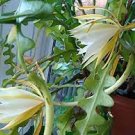
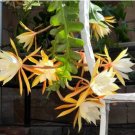
Fishbone cactus (Epiphyllum anguliger) is a succulent epiphyte that grows well in low-soil situations. Perfect for new and inexperienced gardeners, this easy-to-grow plant will thrive with little attention. Its common name refers to its zigzag-shaped leaves. Fishbone cactus rarely blooms, but when it does, it grows soft pink flowers that only last for one night.
Fishbone cactus
The common name, fishbone cactus, was given due to the apparent similarity between the cactus stems and fish skeleton. The specific epithet in its Latin name, is derived from 'anguliger', meaning 'angle bearing'.
Zig zag cactus
Another common name, Zig-zag cactus, also comes from the specific look of the stems and the zig-zag pattern of the stems' tooths.
Although the plant is grown all over the world in conservatories and as a house plant, fishbone cactus is endemic to the evergreen forests of Mexico, meaning that naturally it is found nowhere else on Earth. It was first obtained from the collector T. Hartweg in 1846 by the Horticultural Society of London, which distributed it further.
The drooping, endlessly interesting stems of the fishbone cactus make it the perfect plant for hanging containers in rooms or on patios. The foliage lasts for much of the year, but the decorative flowers appear only in the heat of summer. Outdoors, this succulent can grow in containers placed in shady sub-tropical rock gardens as a sprawling accent plant.
Water
Fishbone cactus is a tropical succulent that likes a lot more moisture than most cacti. Water whenever the top of its soil dries out, making sure that it drains properly. Don't use cold water, as the chill can shock the plant. In winter, cut back on water, replenishing only when the first inch of soil dries out.
Fertilization
Mix a good liquid succulent fertilizer in with your fishbone cactus's water once a month to provicde it with the food it needs. Do this during the growing period only; do not fertilize in winter.
Ships to the US mainland only.
No shipping to PR.
PACKAGE
1 x Starter Plant
Fishbone cactus
The common name, fishbone cactus, was given due to the apparent similarity between the cactus stems and fish skeleton. The specific epithet in its Latin name, is derived from 'anguliger', meaning 'angle bearing'.
Zig zag cactus
Another common name, Zig-zag cactus, also comes from the specific look of the stems and the zig-zag pattern of the stems' tooths.
Although the plant is grown all over the world in conservatories and as a house plant, fishbone cactus is endemic to the evergreen forests of Mexico, meaning that naturally it is found nowhere else on Earth. It was first obtained from the collector T. Hartweg in 1846 by the Horticultural Society of London, which distributed it further.
The drooping, endlessly interesting stems of the fishbone cactus make it the perfect plant for hanging containers in rooms or on patios. The foliage lasts for much of the year, but the decorative flowers appear only in the heat of summer. Outdoors, this succulent can grow in containers placed in shady sub-tropical rock gardens as a sprawling accent plant.
Water
Fishbone cactus is a tropical succulent that likes a lot more moisture than most cacti. Water whenever the top of its soil dries out, making sure that it drains properly. Don't use cold water, as the chill can shock the plant. In winter, cut back on water, replenishing only when the first inch of soil dries out.
Fertilization
Mix a good liquid succulent fertilizer in with your fishbone cactus's water once a month to provicde it with the food it needs. Do this during the growing period only; do not fertilize in winter.
Ships to the US mainland only.
No shipping to PR.
PACKAGE
1 x Starter Plant
You may also be interested in:
-
$7.11
-
$7.33
-
$14.97
-
$13.85
-
$12.93
-
$12.73
-
$12.49
-
$5.71
-
$5.93
-
$7.97


 ID, Maluku
