
$59.95
On Hold
5 Fresh Seeds Haemanthus sanguineus x nortieri - Very Rare Bulb South Africa - #LVGG


Haemanthus sanguineus x nortieri - 5 seeds
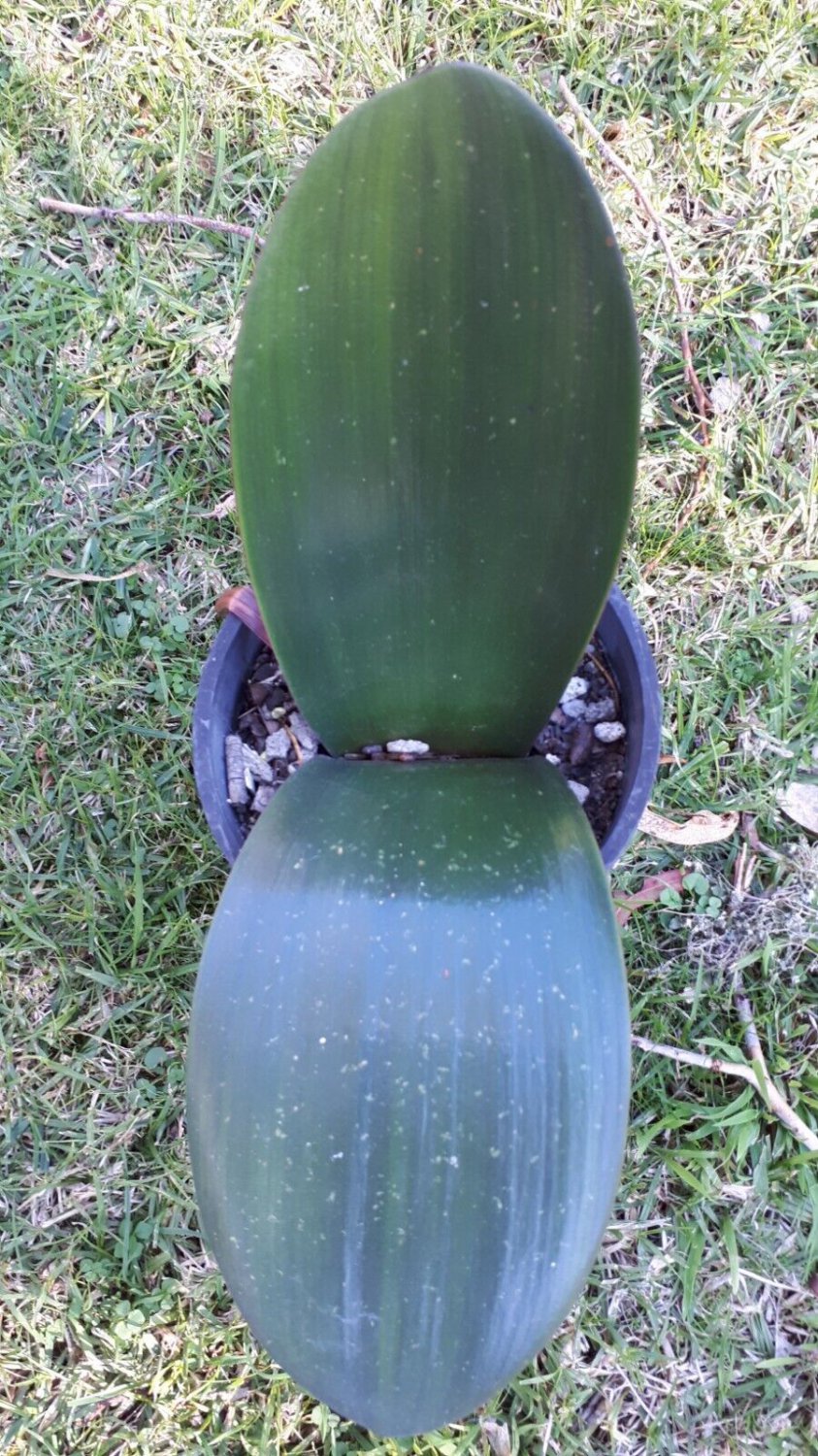
The parent bulb this seed is from is an Australian hybrid developed by the team at Andy's Rare Plants. Both parents, let alone the cross, are rarely grown in Australia. What the resultant bulbs from these seeds will be like is anybody's guess but that's always part of the challenge! Haemanthus nortieri generally grows with a single broad upright paddle shaped leaf. Haemanthus sanguineus on the other hand has a pair of short, wide leaves that grow flat to the ground. The parent has proven to be intermediate with 2 broad semi-upright leaves. The flower that produced these seeds is shown in the first pic. It was quite a late bloomer for an Haemanthus.
The second pic is of the hybrid's leaves, 3rd - 5th H sanguineus leaves and 6th - 8th H nortieri leaves.
The first 7 pics are of the pollen parent (Brunsvigia bosmaniae) and the last 5 are the seed parent (Brunsvigia striata). The latter is one of the smaller growing rare and unusual bulbs from the arid south west of South Africa, with 4-6 leaves laying flat on the ground surface during the winter growth period. It is dormant during summer when it should be kept dry but with the first sign of late summer or autumn showers, this plant sends up a short flower spike from the dormant bulb, topped with an open head of the softest pink flowers, followed by new season's leaves. The former is larger growing with substantially more florets in its dense flower head (umbel) which is approximately 40-50cm across with 30-40 individual soft pink flowers opening progressively over a number of weeks. Even the seed head is fascinating as the older flower heads droop to complete a tumble weed effect. During the growing season, the 6-8 leaves hug the ground like a star fish.
Both species and the hybrid make excellent container plants or can be grown in the garden in an open sunny position in very well drained soils, although I would strongly recomment container growing. Although both are winter growing species, for best display, the plants should be grown in a position protecting the leaves from snails & hail which can both damage the large leaves. Haemanthus won't tolerate damp poorly drained soils.
Bulbs can be relatively slow to mature but with a wait between sowing the seeds and flowering of perhaps 6-8 years, you will need a little patience. Seeds are easily germinated but must be sown immediately - they cannot be stored and they may even commence germination in transit. Simply sow on the surface of a good quality seed raising mix (carefully push them in to the mix to half their depth - don't cover them) and kept moist. They'll start to germinate in just a couple of weeks at the most. Alternatively, sow them on the surface and gently spread course sand or fine gravel around them but still leave the seeds partially exposed. The coarse material will help protect the seeds from disturbance during the germination and watering process.
This sale is for 5 seeds, ready to sow.
The parent bulb this seed is from is an Australian hybrid developed by the team at Andy's Rare Plants. Both parents, let alone the cross, are rarely grown in Australia. What the resultant bulbs from these seeds will be like is anybody's guess but that's always part of the challenge! Haemanthus nortieri generally grows with a single broad upright paddle shaped leaf. Haemanthus sanguineus on the other hand has a pair of short, wide leaves that grow flat to the ground. The parent has proven to be intermediate with 2 broad semi-upright leaves. The flower that produced these seeds is shown in the first pic. It was quite a late bloomer for an Haemanthus.
The second pic is of the hybrid's leaves, 3rd - 5th H sanguineus leaves and 6th - 8th H nortieri leaves.
The first 7 pics are of the pollen parent (Brunsvigia bosmaniae) and the last 5 are the seed parent (Brunsvigia striata). The latter is one of the smaller growing rare and unusual bulbs from the arid south west of South Africa, with 4-6 leaves laying flat on the ground surface during the winter growth period. It is dormant during summer when it should be kept dry but with the first sign of late summer or autumn showers, this plant sends up a short flower spike from the dormant bulb, topped with an open head of the softest pink flowers, followed by new season's leaves. The former is larger growing with substantially more florets in its dense flower head (umbel) which is approximately 40-50cm across with 30-40 individual soft pink flowers opening progressively over a number of weeks. Even the seed head is fascinating as the older flower heads droop to complete a tumble weed effect. During the growing season, the 6-8 leaves hug the ground like a star fish.
Both species and the hybrid make excellent container plants or can be grown in the garden in an open sunny position in very well drained soils, although I would strongly recomment container growing. Although both are winter growing species, for best display, the plants should be grown in a position protecting the leaves from snails & hail which can both damage the large leaves. Haemanthus won't tolerate damp poorly drained soils.
Bulbs can be relatively slow to mature but with a wait between sowing the seeds and flowering of perhaps 6-8 years, you will need a little patience. Seeds are easily germinated but must be sown immediately - they cannot be stored and they may even commence germination in transit. Simply sow on the surface of a good quality seed raising mix (carefully push them in to the mix to half their depth - don't cover them) and kept moist. They'll start to germinate in just a couple of weeks at the most. Alternatively, sow them on the surface and gently spread course sand or fine gravel around them but still leave the seeds partially exposed. The coarse material will help protect the seeds from disturbance during the germination and watering process.
This sale is for 5 seeds, ready to sow.
You may also be interested in:
-
$19.39
-
$38.39
-
$31.31
-
$11.29
-
$12.17

-
$37.64
-
$82.25
-
$446.11
-
$124.07

-
$61.34


 ID, YOGYAKARTA
