
$27.98
Add to Cart
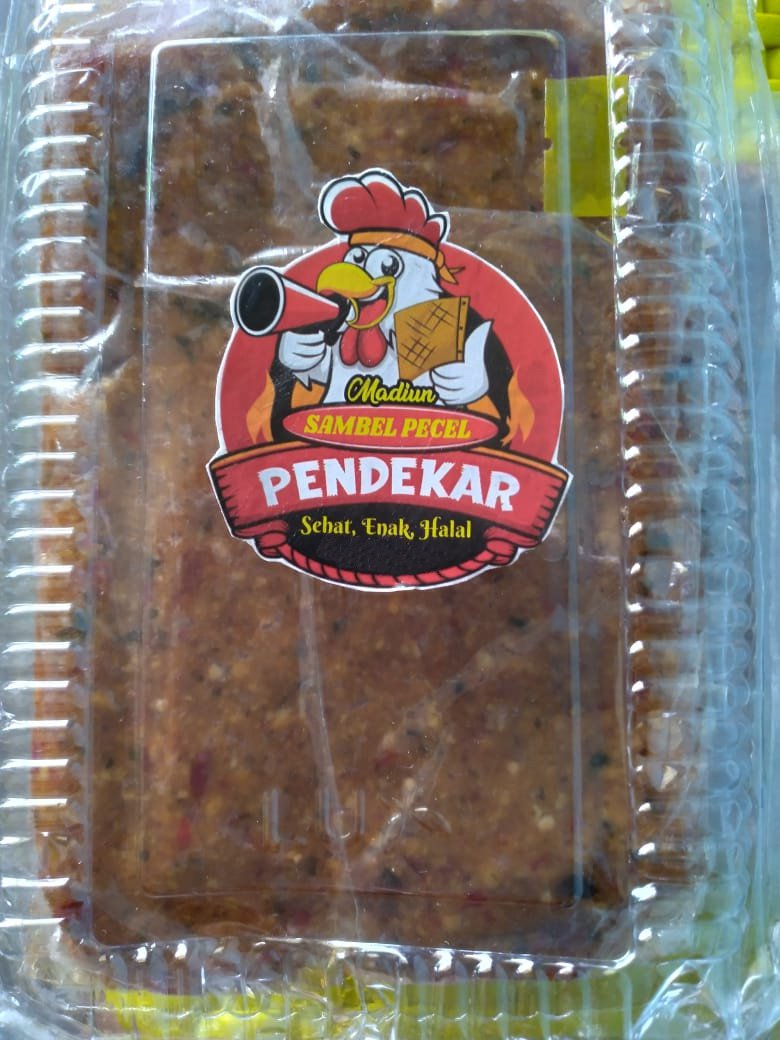
Bumbu Pecel Pendekar Madiun ( Traditional Indonesian Salad Peanut Sauce 20Gr ) ( Free Shipping )
More than 10 available
Details
Shipping: Australia: free (more destinations)
Condition: Brand new
*The store has not been updated recently. You may want to contact the merchant to confirm the availability of the product.
Traditional Indonesian Salad Peanut Sauce or Bumbu Pecel from Madiun Indonesia
Pecel (Indonesian pronunciation: [pət͡ʃəl]), (Javanese:ꦥꦼꦕꦼꦭ꧀) is a traditional Javanese salad, consisting of mixed vegetables in a peanut sauce dressing,[1] usually served with steamed rice, or lontong or ketupat compressed rice cakes.[2][3]
The peanut sauce used in pecel is quite similar to those used in gado-gado, a similar Indonesian traditional salad with slightly different ingredients. Peanut sauce for pecel, however, contains no coconut milk.[2] Pecel has been strongly associated with Javanese cuisine, while gado-gado is usually associated with Betawi and Sundanese cuisine.
Pecel can be homemade, but it is often sold in Javanese restaurants or in warung. It is also sold by Mbok bakul pecel, travelling pecel-selling women that carry pecel ingredients in woven bamboo baskets and frequent residential areas, marketplaces, or train stations to sell their wares. This travelling sales method is similar to Mbok jamu gendong, a method of selling jamu (a traditional medicine).
The simplicity of pecel preparation and its cheap price have contributed to its popularity throughout Java. It has become a food that represents practicality, simplicity, and travel, since the dish is often found along the train journey across Java.[4]
Pecel was introduced to Malaysia, where it is known as pecal,[5] by Javanese immigrants. Pecel is also very popular in Suriname, where it was introduced by the Javanese Surinamese.
Pecel (Indonesian pronunciation: [pət͡ʃəl]), (Javanese:ꦥꦼꦕꦼꦭ꧀) is a traditional Javanese salad, consisting of mixed vegetables in a peanut sauce dressing,[1] usually served with steamed rice, or lontong or ketupat compressed rice cakes.[2][3]
The peanut sauce used in pecel is quite similar to those used in gado-gado, a similar Indonesian traditional salad with slightly different ingredients. Peanut sauce for pecel, however, contains no coconut milk.[2] Pecel has been strongly associated with Javanese cuisine, while gado-gado is usually associated with Betawi and Sundanese cuisine.
Pecel can be homemade, but it is often sold in Javanese restaurants or in warung. It is also sold by Mbok bakul pecel, travelling pecel-selling women that carry pecel ingredients in woven bamboo baskets and frequent residential areas, marketplaces, or train stations to sell their wares. This travelling sales method is similar to Mbok jamu gendong, a method of selling jamu (a traditional medicine).
The simplicity of pecel preparation and its cheap price have contributed to its popularity throughout Java. It has become a food that represents practicality, simplicity, and travel, since the dish is often found along the train journey across Java.[4]
Pecel was introduced to Malaysia, where it is known as pecal,[5] by Javanese immigrants. Pecel is also very popular in Suriname, where it was introduced by the Javanese Surinamese.


 ID, Semarang
