$12.75
On Hold
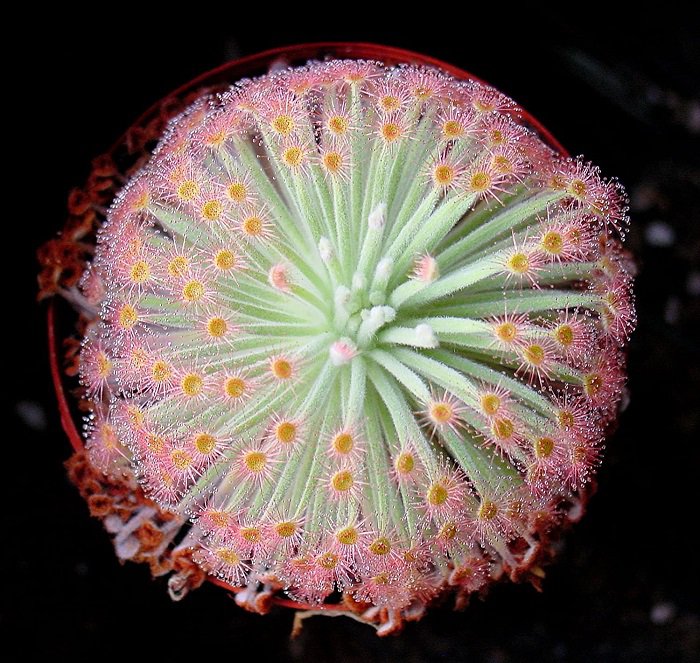
KIMIZA - SUNDEW SEEDS BONSAI INSECT-CATCHING PLANT POTTED CARNIVOROUS 120 PCS SEEDS
More than 10 available
Details
Shipping: Australia: $13.00 (more destinations)
Sales Tax: check
Condition: Brand new
*The store has not been updated recently. You may want to contact the merchant to confirm the availability of the product.
ITEM SPECIFIC
Plant Name: Drosera Capensis
Watering: Always Damp (swamp)
Sunlight: Full Sun
Soil pH: 7
Soil Type: Peat Moss (fertilizer free), Perlite
Planting methods 1.
Place them on top of wet chopped up sphagnum moss and midst them with a water spray. I mix a few drops of plant hormone in water before spraying on the seeds. I guess it still works if you do not have plant hormone. Do not cover the seeds with sphagnum moss. Just place them on top of the media.
I then place them in a very humid environment. For me it would be my covered terrarium. I give them 16 hours of artificial light a day. Humidity is above 80%.
You could use seed trays that you can buy from nurseries and garden centers in Shopping complexes. The trays have a clear plastic cover with some holes on them. This helps to keep the air inside humid.
I also place my pots of seeds on a tray of water so that the sphagnum moss is always very wet. Try to mimic the environment where they came from, and usually where the parent plant is thriving, the seeds will grow. Every once in a while I spray water on the medium and replenish the water in the trays.
You could also grow the seeds on sphagnum peat moss as most sundews are grown in sphagnum peat anyway. If you are using chopped up sphagnum moss on the top, make sure you chop the sphagnum moss really fine or there will be gaps in the soil and the tiny seeds will fall in. When that happens they might not be able to grow out of that hole in time to receive the light that need to grow. The seeds only provide them with limited food to sprout. If they are stuck in the gaps in the moss, they might die.
Once my seeds germinate I usually transplant them to their permanent “home, which is a mixture of one part sphagnum peat and one part perlite.
Always have a tray of water at the bottom of your sundew pots. They need their soil to be very wet. This is especially important for your sundew babies when they are so tiny, not to let the soil dry out. I use distilled or RO water if possible when watering the potting medium for the seeds. I did not carry out an experiment and have a controlled group of plants to see the effects of tap water and distilled/RO on germination rate. This is because the seeds that I have are so precious to me. I don’t want to waste them. So far I’ve been using RO water that I buy from a water dispenser unit near my house to water my seedlings.
If you are placing the seeds under artificial lights, make sure it is only a few inches from the pots.
It is also good to spray the pots with water using a water spray once every 1-2 days. It gives fresh air to the media top and sprays away algae spores. I have a few pots that I did not spray water on and they are place too far from the lighting. A thick layer of algae has grown on the media and I think this blocks the seeds. No germination on those pots.
One more thing. Sundew seeds seems to germinate slower for me compared to nepenthes seeds. Sometimes my nepenthes seeds will sprout within 3 weeks. All my sundew seeds take at least 3 months to germinate.
Planting methods 2.
I used only Sphagnum moss to germinate sundews. Soak chopped sphagnum moss , lay them on a tray (without holes), pour some water until the moss is soaked in water, try to make the surface flat. Sundew seeds are really tiny like powder, just sprinkle the seeds on top of the moss as evenly as you can, or else you will end up plants grow together and you’ll have difficulties in tranplanting them later.
Place them at a bright place. Be patient, after seeds germinated, you may move them under sun, I did that for my sundew and they seem to like it. But be very careful, the media could dry out very fast which I experienced before in one very hot day, luckily still managed to save a few plants.
Remember to also get something to cover on top to prevent rain. Rainwater will flush away everything. But this is only my way, I think the best place to germinate seeds still in terrarium where everything under control.
I have also germinated Sundew seeds with coco peat. Just sow the seeds on top of the wet coco peat in a container, cover with some kind of transparent plastic and avoid direct sunlight. Place then at a bright (not hot) place and wait.
I found seeds being soaked in water germinate faster. Let’s see how true is this.
Information:
Sunlight:
All tropical sundews require a lot of sun to maintain their dewy appearance. Grow them in a location where they can receive partial to full sun. A window that gets four or more hours of direct sunlight and bright filtered sun during the rest of day is ideal. Although tropical sundews can tolerate very warm temperatures, up to 100°F (43°C), dew production will decrease in excessively warm conditions despite being given lots of sunlight. Dew production generally resumes when the temperature drops below 85°F (29°C).
Artificial Lights:
If a sunny window is not possible, use a couple of 40-watt fluorescent tubes or compact fluorescent bulbs of similar output. Keep the light source approximately 8 inches above the plant. If leaves are light green and not dewy, move the lights closer to increase the intensity. The light should be on for 14 hours during spring and summer, and 12 hours during fall and winter. Avoid using incandescent bulbs. They produce too much heat and the wrong type of light spectrum. Even incandescent “grow-lights” are inappropriate for carnivorous plants.
Water:
Set the pot in standing water to keep the soil wet at all times. Never allow the soil to dry out completely. This plant is very sensitive to water with dissolved mineral levels of 50 parts per million or more, so use mineral-free water whenever possible.
Soil:
These plants require nutrient-free soil that provides good drainage and aeration. Use a standard soil mixture of 1 part peat moss and 1 part perlite. Never use potting soil, compost or fertilizer. They will kill your plant.
Feeding:
Although some growers like to feed their sundews, it is not necessary. Insects live in most homes, and they will naturally be attracted to your plant. Keep in mind that carnivorous plants have adapted to survive on miniscule amounts of nutrients. An adult plant needs only a couple insects or so per month. If you choose to feed your plant, use recently killed insects that will fit comfortably on the leaves. Avoid putting too much on the leaves, because the leaves will rot. Do not feed your plant meat. Use insects only. Feeding is not required during the winter months when growth naturally slows down.
Repotting:
Many sundews will rapidly fill any pot when they are placed in proper growing conditions. Clip off dead leaves to stimulate more growth. Change the soil, and if necessary, put your sundew in a larger pot. Changing the soil restores soil acidity, improves root aeration and strengthens the health of your plants. You can repot your plant at any time of the year.
Plant Name: Drosera Capensis
Watering: Always Damp (swamp)
Sunlight: Full Sun
Soil pH: 7
Soil Type: Peat Moss (fertilizer free), Perlite
Planting methods 1.
Place them on top of wet chopped up sphagnum moss and midst them with a water spray. I mix a few drops of plant hormone in water before spraying on the seeds. I guess it still works if you do not have plant hormone. Do not cover the seeds with sphagnum moss. Just place them on top of the media.
I then place them in a very humid environment. For me it would be my covered terrarium. I give them 16 hours of artificial light a day. Humidity is above 80%.
You could use seed trays that you can buy from nurseries and garden centers in Shopping complexes. The trays have a clear plastic cover with some holes on them. This helps to keep the air inside humid.
I also place my pots of seeds on a tray of water so that the sphagnum moss is always very wet. Try to mimic the environment where they came from, and usually where the parent plant is thriving, the seeds will grow. Every once in a while I spray water on the medium and replenish the water in the trays.
You could also grow the seeds on sphagnum peat moss as most sundews are grown in sphagnum peat anyway. If you are using chopped up sphagnum moss on the top, make sure you chop the sphagnum moss really fine or there will be gaps in the soil and the tiny seeds will fall in. When that happens they might not be able to grow out of that hole in time to receive the light that need to grow. The seeds only provide them with limited food to sprout. If they are stuck in the gaps in the moss, they might die.
Once my seeds germinate I usually transplant them to their permanent “home, which is a mixture of one part sphagnum peat and one part perlite.
Always have a tray of water at the bottom of your sundew pots. They need their soil to be very wet. This is especially important for your sundew babies when they are so tiny, not to let the soil dry out. I use distilled or RO water if possible when watering the potting medium for the seeds. I did not carry out an experiment and have a controlled group of plants to see the effects of tap water and distilled/RO on germination rate. This is because the seeds that I have are so precious to me. I don’t want to waste them. So far I’ve been using RO water that I buy from a water dispenser unit near my house to water my seedlings.
If you are placing the seeds under artificial lights, make sure it is only a few inches from the pots.
It is also good to spray the pots with water using a water spray once every 1-2 days. It gives fresh air to the media top and sprays away algae spores. I have a few pots that I did not spray water on and they are place too far from the lighting. A thick layer of algae has grown on the media and I think this blocks the seeds. No germination on those pots.
One more thing. Sundew seeds seems to germinate slower for me compared to nepenthes seeds. Sometimes my nepenthes seeds will sprout within 3 weeks. All my sundew seeds take at least 3 months to germinate.
Planting methods 2.
I used only Sphagnum moss to germinate sundews. Soak chopped sphagnum moss , lay them on a tray (without holes), pour some water until the moss is soaked in water, try to make the surface flat. Sundew seeds are really tiny like powder, just sprinkle the seeds on top of the moss as evenly as you can, or else you will end up plants grow together and you’ll have difficulties in tranplanting them later.
Place them at a bright place. Be patient, after seeds germinated, you may move them under sun, I did that for my sundew and they seem to like it. But be very careful, the media could dry out very fast which I experienced before in one very hot day, luckily still managed to save a few plants.
Remember to also get something to cover on top to prevent rain. Rainwater will flush away everything. But this is only my way, I think the best place to germinate seeds still in terrarium where everything under control.
I have also germinated Sundew seeds with coco peat. Just sow the seeds on top of the wet coco peat in a container, cover with some kind of transparent plastic and avoid direct sunlight. Place then at a bright (not hot) place and wait.
I found seeds being soaked in water germinate faster. Let’s see how true is this.
Information:
Sunlight:
All tropical sundews require a lot of sun to maintain their dewy appearance. Grow them in a location where they can receive partial to full sun. A window that gets four or more hours of direct sunlight and bright filtered sun during the rest of day is ideal. Although tropical sundews can tolerate very warm temperatures, up to 100°F (43°C), dew production will decrease in excessively warm conditions despite being given lots of sunlight. Dew production generally resumes when the temperature drops below 85°F (29°C).
Artificial Lights:
If a sunny window is not possible, use a couple of 40-watt fluorescent tubes or compact fluorescent bulbs of similar output. Keep the light source approximately 8 inches above the plant. If leaves are light green and not dewy, move the lights closer to increase the intensity. The light should be on for 14 hours during spring and summer, and 12 hours during fall and winter. Avoid using incandescent bulbs. They produce too much heat and the wrong type of light spectrum. Even incandescent “grow-lights” are inappropriate for carnivorous plants.
Water:
Set the pot in standing water to keep the soil wet at all times. Never allow the soil to dry out completely. This plant is very sensitive to water with dissolved mineral levels of 50 parts per million or more, so use mineral-free water whenever possible.
Soil:
These plants require nutrient-free soil that provides good drainage and aeration. Use a standard soil mixture of 1 part peat moss and 1 part perlite. Never use potting soil, compost or fertilizer. They will kill your plant.
Feeding:
Although some growers like to feed their sundews, it is not necessary. Insects live in most homes, and they will naturally be attracted to your plant. Keep in mind that carnivorous plants have adapted to survive on miniscule amounts of nutrients. An adult plant needs only a couple insects or so per month. If you choose to feed your plant, use recently killed insects that will fit comfortably on the leaves. Avoid putting too much on the leaves, because the leaves will rot. Do not feed your plant meat. Use insects only. Feeding is not required during the winter months when growth naturally slows down.
Repotting:
Many sundews will rapidly fill any pot when they are placed in proper growing conditions. Clip off dead leaves to stimulate more growth. Change the soil, and if necessary, put your sundew in a larger pot. Changing the soil restores soil acidity, improves root aeration and strengthens the health of your plants. You can repot your plant at any time of the year.
You may also be interested in:
-
$7.87
-
$12.80

-
$13.53
-
$11.85

-
$15.95

-
$14.29

-
$27.94

-
$13.53
-
$11.89

-
$6.53