
$23.00
Add to Cart
Washington Hawthorn, Crataegus phaenopyrum, Tree Seeds (Fall Color, Edible)
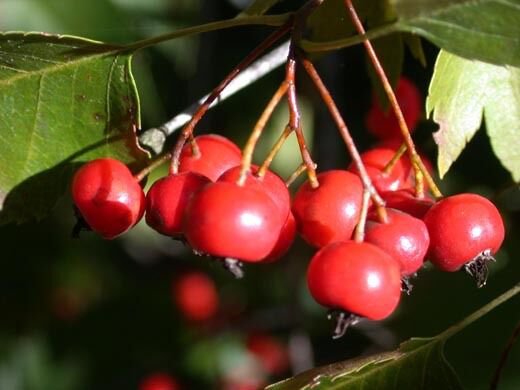
This is a "Multiple Variation" style listing. Use the "Seed Qty" drop-down menu, above, to select quantity/weight. Choose from: 50 Seeds for $2.00 150 Seeds for $4.00 300 Seeds for $6.00 600 Seeds for $10.00 1,800 Seeds for $20.00 5,400 Seeds for $50.00 This item ships free when paid together with any other purchase. U.S Addresses Only. Washington Hawthorn, Crataegus phaenopyrum, Tree Seeds Hardy, Easy to Grow, Showy Fragrant Flowers, Showy Edible Fruit, Fall Colors, Attracts Birds and Butterflies, Wildlife Food/Shelter, Shade Tree, Street Tree, Cold, Heat, Drought and Urban Tolerant, Bonsai Washington Hawthorn is a medium sized, deciduous tree that grows 25 to 30 feet tall with a rounded crown and thorny stems. It is native to the Southeastern United States and popular for its beautiful fragrant flowers, foliage, bright red edible fruits and fall color. The leaves of the Washington Hawthorn are glossy dark green, 2 1/2 inches long and are shallowly lobed and serrate. Leaves turn attractive shades of yellow, orange and red in Autumn. Flowers are white, 5 petaled and fragrant, blooming in clusters (corymbs) in late spring. Flowers are followed by bright red, edible, 1/4 inch globose fruits (pomes) in the fall, that persist through the winter. The fruit is called a haw. The word haw means hedge. Hawthorn therefore being a thorny hedge. Washington Hawthorn is one of the showiest and most desirable Hawthorns for planting. The small red berry-like fruit grow closely together in large clusters and are food for squirrels and birds. They have a mild flavor and can be eaten raw or cooked. As with other species of Hawthorn, the wood is hard and can be used to make tools. Crataegus translates as "strength", in reference to its wood strength. Phaenopyrum translates as "with the appearance of a pear". Reportedly Washington Hawthorn was first grown commercially near Washington, D.C. in the late 1700s, then introduced into Pennsylvania as a hedge plant, giving it the common name of Washington Hawthorn. Leaf: Emerging reddish, but quickly maturing to dark green and shiny on the upper leaf surface, while dull medium green on the lower leaf surface. Alternate, broadly ovate, about 2 inches long with three major lobes, with the terminal lobe being much larger than the basal two lobes. Doubly serrated to incised on the margins, with cordate bases. Fall color can be yellow, orange, burgundy to wine, occurring in late October and into mid November and subtlety attractive. Flower: White inflorescences, about 2 inches wide, blanket the tree in early June. It is the last of the landscape Hawthorns to flower, effective for one to two weeks. Fruit: 1/4 inch green fruits are in pendulous clusters, turning to orange by October then to bright red-orange in November, and often persisting into late January (if not eaten by wildlife before then). The clusters of many pendulous small red fruits make this one of the most attractive ornamental trees in early Winter, with its limbs being blanketed and weighted down in fruits and easily seen from a distance in December and January. The fruits are readily eaten by birds and squirrels. Twig: Flaky, red-brown with a strong horizontal branching habit. The thorniness of the twigs shows great variation within the species, from lightly thorny to densely thorny. Bark: Trunk bark is silvery-gray and scaly. Other Names: Washington Hawthorn, Washington Hawthorne, Washington Thorn, Crataegus cordata Zone: 3 to 8 Growth Rate: Fast to Moderate Plant Type: Medium-sized deciduous tree Family: Rosaceae Native Range: Southeastern United States Height: 25 to 30 feet Spread: 20 to 25 feet Shape: Rounded Bloom Time: June Bloom Color: White Sun: Full Sun Fall Color: Showy Yellow Orange and Red. Drought Tolerance: High Water: Medium Maintenance: Medium Site Requirements /Soil Tolerances: Best grown in moist but well-drained soils in full sun. Tolerates light shade. Uses: Small flowering landscape tree for lawns or streets. Specimen, small groups or screen. May be pruned as a hedge. Sowing Crataegus phaenopyrum Seeds: For best results, please follow the instructions in the order provided. Scarify: Pour Hot water over seed. Soak for 24 hours. Stratify: Cold 120 days, 40 Degrees F in a Moist Medium. Germination: Sow 1/8” DeepFor more information about seed pretreatment and growing trees and shrubs from seed, please download this .pdf:https://www.forestresearch.gov.uk/documents/1449/fcpg018.pdf Germination: Seeds Packets are labeled with seed name and sowing details. Seeds have not been pretreated unless specified in the listing. Seed is not a specific Cultivar (Variety) unless specified in the listing. Due to the many factors involved in successful germination, Seller cannot be responsible for buyers growing methods or mistakes. I have provided what I believe to be a good overview on this page (which you are free to print for further reference), however, it is still recommended to check specialist literature for more details and practices specific to your climate and soil conditions to avoid mistakes in the germination and growing process. Shipping and Discounts: All items are set up to automatically discount as follows: Any promotional offers are discounted by using the "Add to Cart "only.To qualify for any discounts, items must be paid together, on the same eCRATER invoice.If paid separately, no discounts will be applied though seller reserves the right to ship together.If there are any questions or concerns about the amount due, please message me before paying so I can address all of your concerns before there is a problem. Buyer assumes responsibility once payment has been made. International Buyer’s: It is the buyer’s responsibility to know their countries customs laws. Plant and plant materials including seeds may be restricted from importing to your country. Please check with your customs agency and or post office before purchasing. Upon purchasing this item Buyer accepts the risk of item being confiscated and/or destroyed by customs and Seller will not be held liable for this. If you are on my exclusion list it is because: “Plant and plant materials including seeds” are restricted from importing to your country, it is enforced by your country and there is a high rate of customs checking for this.


 ID, Jawa Tengah
