
$121.00
Add to Cart
Chinaberry, Melia azedarach, Tree Seeds (Fast, Showy, Fragrant)
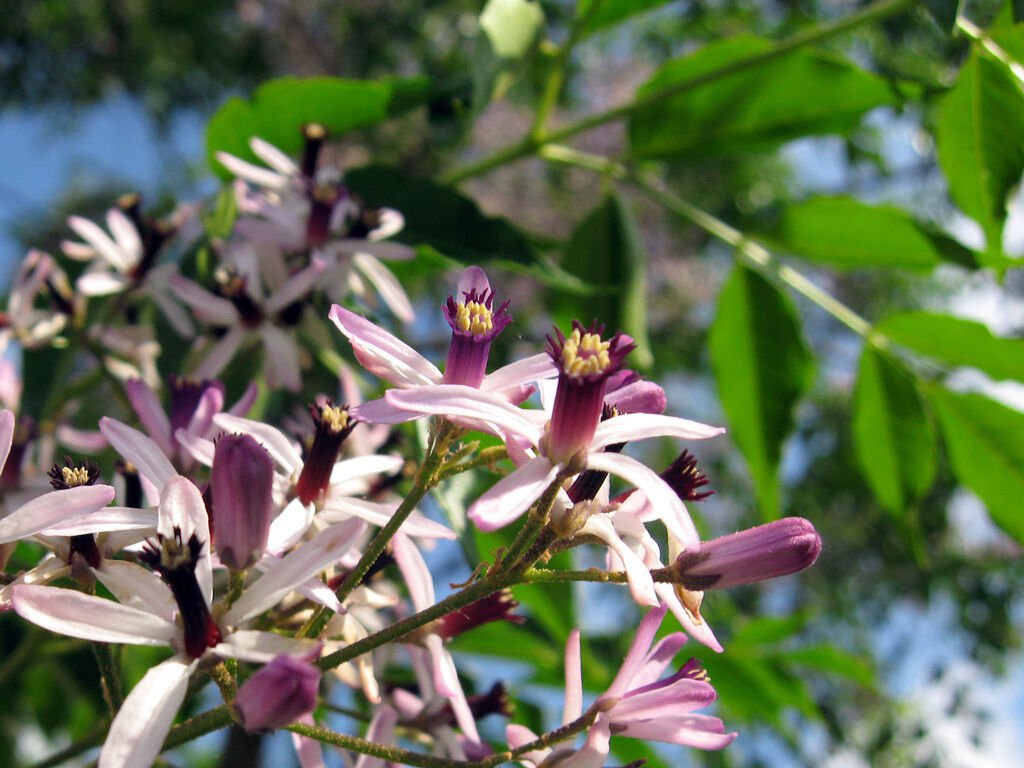


This is a "Multiple Variation" style listing. Use the "Seed Qty" drop-down menu, above, to select quantity/weight. Choose from: 10 Seeds for $2.00 30 Seeds for $4.00 60 Seeds for $6.00 120 Seeds for $10.00 240 Seeds for $18.00 480 Seeds for $34.00 This item ships free when paid together with any other purchase. U.S. addresses only. Chinaberry, Melia azedarach, Tree Seeds Fast Growth, Showy Fragrant Flowers, Showy Fruits, Shade Tree, Street Tree, Heat, Drought and Urban Tolerant Chinaberry is a medium-sized, fast growing tree with a rounded crown that grows to 50 feet tall with a 20 foot spread. In spring and early summer, Chinaberry produces masses of purplish, fragrant, star shaped flowers, each about 3/4 inches in diameter, that arch or droop in 8 inch panicles. They are followed by clusters of spherical, yellow fruits about 3/4 inches in diameter that persist on the trees even after the leaves have fallen. Extracts from the bark and fruit have pharmacological properties and are used in China to kill parasitic roundworms. The bark is reddish brown, becoming fissured on mature trees. The deciduous leaves are bipinnate and 1 to 2 feet long. The individual leaflets, each about 2 inches long and less than half as wide, are pointed at the tips and have toothed edges. In the winter the leaves fall and the masses of cherry-like fruits, which, when ripe and lusciously golden, attract birds in large numbers. The hard seeds of the plant can also be used in art and crafts to make beads for rosaries. Chinaberry produces upward-arching branches and drooping foliage that make it look like an umbrella. The effect is further enhanced by pollarding, or pruning to a pollard, whereby the tree is cut back to its trunk or to main branches near the trunk. Regrowth then results in a thick cluster of branches all arising from where the cuts were made. Native to Northern India, China and the Himalayas, Chinaberry is planted widely in warm climates as an ornamental and shade tree. For more than 200 years it has been popular in the southern US where it is grown for its attractive flowers and for a quick shade tree. Chinaberry is a tough survivor and is sometimes planted as a street tree. In the Deep South, Chinaberry trees are traditionally planted in the yard where they are thought to bring good luck. Homeowners liked the showy lavender flowers in spring and the cool shade provided on hot summer days. Please Note: All parts of Chinaberry tree are poisonous. Leaf: Alternate, single to doubly compound, 10 to 22 inches long, leaflets coarsely toothed or lobed, 1 to 2 inches long, shiny green above and smooth on both surfaces. Flower: Purple, in a loose long cluster, each flower 1/2 to 1 inch across, appearing after the leaves. Fruit: Yellow-brown drupe, up to 3/4 inch in diameter in hanging clusters, ripen in the fall and persist all winter. Twig: Very stout, olive-brown to brown with numerous lighter lenticels, three lobed large leaf scar, pith continuous and white, buds are small, round and fuzzy light brown (nearly white). Bark: Brown to slightly reddish brown, splitting into slightly criss-crossing furrows. Form: Small tree, 20 to 40 feet tall with a spreading crown. Other Names: Bead Tree, Persian Lilac, Chinaberry Tree, Indian Lilac, Pride of India, White Cedar, Vaymboo, Drek, Bakain, Media Nim, Texas Umbrella Chinaberry, Texas Umbrella Tree Zone: 7 to 10 Will tolerate some frost. Growth Rate: Fast Plant Type: Deciduous Fast Growing Tree Family: Meliaceae Native Range: India, China, Australia and the Himalayas Height: 30 to 50 feet Spread: 15 to 25 feet Shape: Rounded Bloom Time: Early Spring Bloom Color: Purplish, fragrant, star shaped flowers Sun: Full Sun to Part Shade Fall Color: None Drought Tolerance: High, once established. Water: Moderate Maintenance: Moderate Site Requirements /Soil Tolerances: Easily grown in average, medium moisture, well-drained soils in full sun. Plant tolerates a number of adverse conditions including poor soils and drought. Thrives in high summer heat. Culture: Proper pruning and pollarding is necessary to produce well-formed trunk and branch structure. Pruning can be done to open up the crown and encourage development of well-spaced limbs. Uses: Shade Tree, Arts and Crafts, Rosary Beads. Sowing Melia azedarach Seeds: For best results, please follow the instructions in the order provided. Scarify: Soak in water for 24 hours Stratify: None Germination: Sow 1/2” Deep, Keep Moist, (Not wet). Expect 1-2 months for germination. For more information about seed pretreatment and growing trees and shrubs from seed, please try the following links: http://www.forestry.gov.uk/pdf/fcpg018.pdf/$file/fcpg018.pdf Germination: Seeds Packets are labeled with seed name and sowing details. Seeds have not been pretreated unless specified in the listing. Seed is not a specific Cultivar (Variety) unless specified in the listing. Due to the many factors involved in successful germination, Seller cannot be responsible for buyers growing methods or mistakes. I have provided what I believe to be a good overview on this page (which you are free to print for further reference), however, it is still recommended to check specialist literature for more details and practices specific to your climate and soil conditions to avoid mistakes in the germination and growing process. Shipping and Discounts: All items are set up to automatically discount as follows: Any promotional offers are discounted by using the "Add to Cart "only.To qualify for any discounts, items must be paid together, on the same eCRATER invoice.If paid separately, no discounts will be applied though seller reserves the right to ship together.If there are any questions or concerns about the amount due, please message me before paying so I can address all of your concerns before there is a problem. Buyer assumes responsibility once payment has been made. International Buyer’s: It is the buyer’s responsibility to know their countries customs laws. Plant and plant materials including seeds may be restricted from importing to your country. Please check with your customs agency and or post office before purchasing. Upon purchasing this item Buyer accepts the risk of item being confiscated and/or destroyed by customs and Seller will not be held liable for this. If you are on my exclusion list it is because: “Plant and plant materials including seeds” are restricted from importing to your country, it is enforced by your country and there is a high rate of customs checking for this.


 ID, Jawa Tengah
