
$9.00
Add to Cart
10 Honeylocust, Gleditsia triacanthos inermis, Tree Seeds (Fast, Hardy, Fall Color)
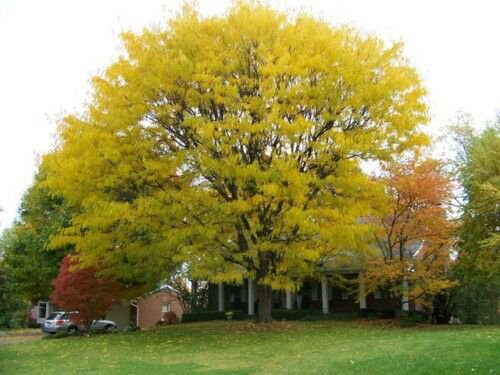


Common Name: Honey Locust, Honeylocust
Zone: 3 to 9
Growth Rate: Fast to Medium
Plant Type: Deciduous Flowering Tree
Family: Fabaceae
Native Range: Central and Eastern North America
Height: 60 to 80 feet
Spread: 60 to 80 feet
Shape: Rounded
Bloom Time: May - June
Bloom Color: Fragrant, Greenish-yellow
Flower/Fruit: Greenish yellow to greenish white flowers appear in racemes in late spring. Flowers are followed by long, twisted and flattened, dark purplish-brown seedpods (to 18” long) which mature in late summer and persist well into winter
Fall Color: Yellow
Sun: Full Sun
Water: Medium
Maintenance: Medium
Drought Tolerance: High
Tolerances: wind, heat, drought, salt, pollution
Site Requirements/ Soil Tolerances: Tolerant of a wide range of soils. Unbelievably durable and will take just about any soil thrown in their general direction. Prefers moist deep soils in full sun, but is very adaptable to many adverse conditions and is very urban tolerant, especially to heat, drought, poor soils, soils of various pH, soil compaction, flooding and winter salt spray.
General Culture: Transplants easily
Uses: Shade or specimen tree, it’s extremely fine-textured, filtered shade allows plants that prefer partial shade conditions to be planted underneath that normally could not grow beneath other shade trees. As a shade tree for extreme urban stress areas (such as parking lot islands and sidewalk tree squares); in these areas, the stresses encountered include restricted root zones, poor rocky clay soils, alkaline soils, intense heat, drought, high light reflectance, Winter salt spray, and trunk/branch wounding.
Sowing Gleditsia triacanthos inermis Seeds:
Honeylocust seeds possess a thick, impermeable seed-coat which prevents or significantly retards germination.
For best results, please follow the instructions in the order provided.
Scarify: Pour boiling water over seed, let stand in water for 24 hours, repeat process on seed that did not imbibe.
Germination: Sow 1/2" to 3/4” Deep
Zone: 3 to 9
Growth Rate: Fast to Medium
Plant Type: Deciduous Flowering Tree
Family: Fabaceae
Native Range: Central and Eastern North America
Height: 60 to 80 feet
Spread: 60 to 80 feet
Shape: Rounded
Bloom Time: May - June
Bloom Color: Fragrant, Greenish-yellow
Flower/Fruit: Greenish yellow to greenish white flowers appear in racemes in late spring. Flowers are followed by long, twisted and flattened, dark purplish-brown seedpods (to 18” long) which mature in late summer and persist well into winter
Fall Color: Yellow
Sun: Full Sun
Water: Medium
Maintenance: Medium
Drought Tolerance: High
Tolerances: wind, heat, drought, salt, pollution
Site Requirements/ Soil Tolerances: Tolerant of a wide range of soils. Unbelievably durable and will take just about any soil thrown in their general direction. Prefers moist deep soils in full sun, but is very adaptable to many adverse conditions and is very urban tolerant, especially to heat, drought, poor soils, soils of various pH, soil compaction, flooding and winter salt spray.
General Culture: Transplants easily
Uses: Shade or specimen tree, it’s extremely fine-textured, filtered shade allows plants that prefer partial shade conditions to be planted underneath that normally could not grow beneath other shade trees. As a shade tree for extreme urban stress areas (such as parking lot islands and sidewalk tree squares); in these areas, the stresses encountered include restricted root zones, poor rocky clay soils, alkaline soils, intense heat, drought, high light reflectance, Winter salt spray, and trunk/branch wounding.
Sowing Gleditsia triacanthos inermis Seeds:
Honeylocust seeds possess a thick, impermeable seed-coat which prevents or significantly retards germination.
For best results, please follow the instructions in the order provided.
Scarify: Pour boiling water over seed, let stand in water for 24 hours, repeat process on seed that did not imbibe.
Germination: Sow 1/2" to 3/4” Deep


 ID, Jawa Tengah
