
$19.98
Add to Cart
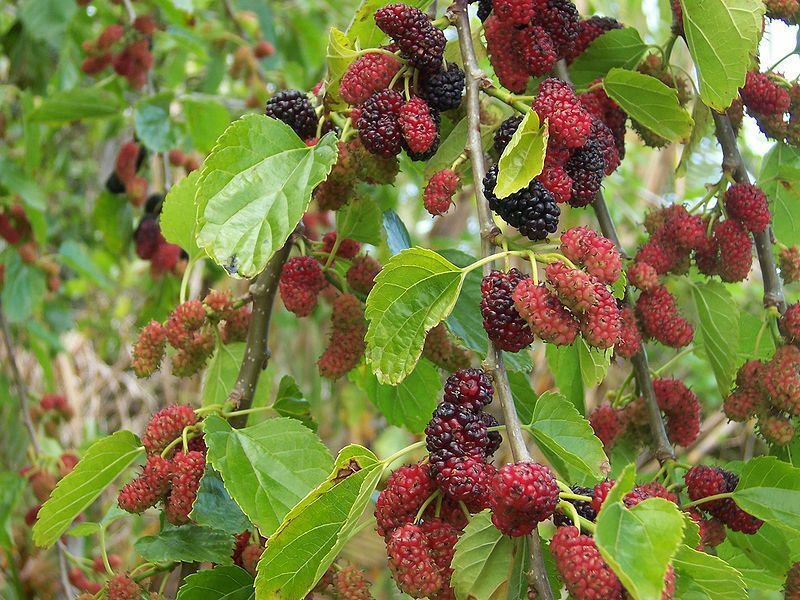
50 Black Mulberry, Morus nigra, Tree Seeds (Hardy, Edible)


Other Names: Black Mulberry
Zone: 6 to 10
Hardiness: Trees are hardy to about 10-20F (it varies tree to tree).
Growth Rate: Slow to Moderate
Plant Type: Medium sized deciduous fruiting tree
Family: Moraceae
Native Range: Western Asia. It has been cultivated in Europe for hundreds of years.
Height: 20 to 30 feet
Spread: 20 feet
Shape: Variable in form, including drooping and pyramidal
Bloom Time: Early spring
Bloom Color: Green, white
Flower/Fruit: Male and female catkins are 1 to 3 inches long, the male flowers being narrower. Dark red, purple, or black fruit to 1 inch
Sun: Full Sun
Fall Color: Yellow
Drought Tolerance: Mildly drought tolerant, but water should be provided during long dry spells.
Water: Medium
Maintenance: Low
Site Requirements/ Soil Tolerances: Trees are fairly adaptable, but grow well in deep, moist soils. Fertilization is generally unnecessary. Mulberries need full sun and also adequate space. The distance between trees should be at least 15 feet. The trees should not be planted near a sidewalk. The fallen fruit will not only stain the walkway, but are likely to be tracked indoors. The trees are quite wind resistant.
Culture: A mulberry tree can be kept to a tidy form by developing a set of main branches. It is not advisable to prune the trees heavily since the plant is inclined to bleed at the cuts. Cuts of more than two inches in diameter generally do not heal and should be avoided at all cost. The bleeding will be less severe if the tree is pruned while it is dormant.
Uses: Fruits are eaten fresh or can be used just like any berry.
Harvest Time: July through September.
Sowing Morus nigra Seeds:
The seeds of Black Mulberry are very small.
For best results, please follow the instructions in the order provided.
Scarify: Soak in water, let stand in water for 24 hours
Stratify: Cold 60 days, 40 Degrees F in a Moist Medium.
Germination: Surface sow indoors. Requires light for germination.
Zone: 6 to 10
Hardiness: Trees are hardy to about 10-20F (it varies tree to tree).
Growth Rate: Slow to Moderate
Plant Type: Medium sized deciduous fruiting tree
Family: Moraceae
Native Range: Western Asia. It has been cultivated in Europe for hundreds of years.
Height: 20 to 30 feet
Spread: 20 feet
Shape: Variable in form, including drooping and pyramidal
Bloom Time: Early spring
Bloom Color: Green, white
Flower/Fruit: Male and female catkins are 1 to 3 inches long, the male flowers being narrower. Dark red, purple, or black fruit to 1 inch
Sun: Full Sun
Fall Color: Yellow
Drought Tolerance: Mildly drought tolerant, but water should be provided during long dry spells.
Water: Medium
Maintenance: Low
Site Requirements/ Soil Tolerances: Trees are fairly adaptable, but grow well in deep, moist soils. Fertilization is generally unnecessary. Mulberries need full sun and also adequate space. The distance between trees should be at least 15 feet. The trees should not be planted near a sidewalk. The fallen fruit will not only stain the walkway, but are likely to be tracked indoors. The trees are quite wind resistant.
Culture: A mulberry tree can be kept to a tidy form by developing a set of main branches. It is not advisable to prune the trees heavily since the plant is inclined to bleed at the cuts. Cuts of more than two inches in diameter generally do not heal and should be avoided at all cost. The bleeding will be less severe if the tree is pruned while it is dormant.
Uses: Fruits are eaten fresh or can be used just like any berry.
Harvest Time: July through September.
Sowing Morus nigra Seeds:
The seeds of Black Mulberry are very small.
For best results, please follow the instructions in the order provided.
Scarify: Soak in water, let stand in water for 24 hours
Stratify: Cold 60 days, 40 Degrees F in a Moist Medium.
Germination: Surface sow indoors. Requires light for germination.


 ID, Jawa Tengah
