
$9.00
Add to Cart
Shining Birch Bark Cherry, Prunus serrula, Tree Seeds (Showy, Fast, Fall Color)
More than 10 available, 8 sold
Details
Shipping: Australia: $13.00 (more destinations)
Condition: Brand new


Shining Birch Bark Cherry, Prunus serrula, Tree Seeds
Showy Shining Paper Red Bark, Showy Flowers and Fruit, Attracts Birds, Cold Tolerant
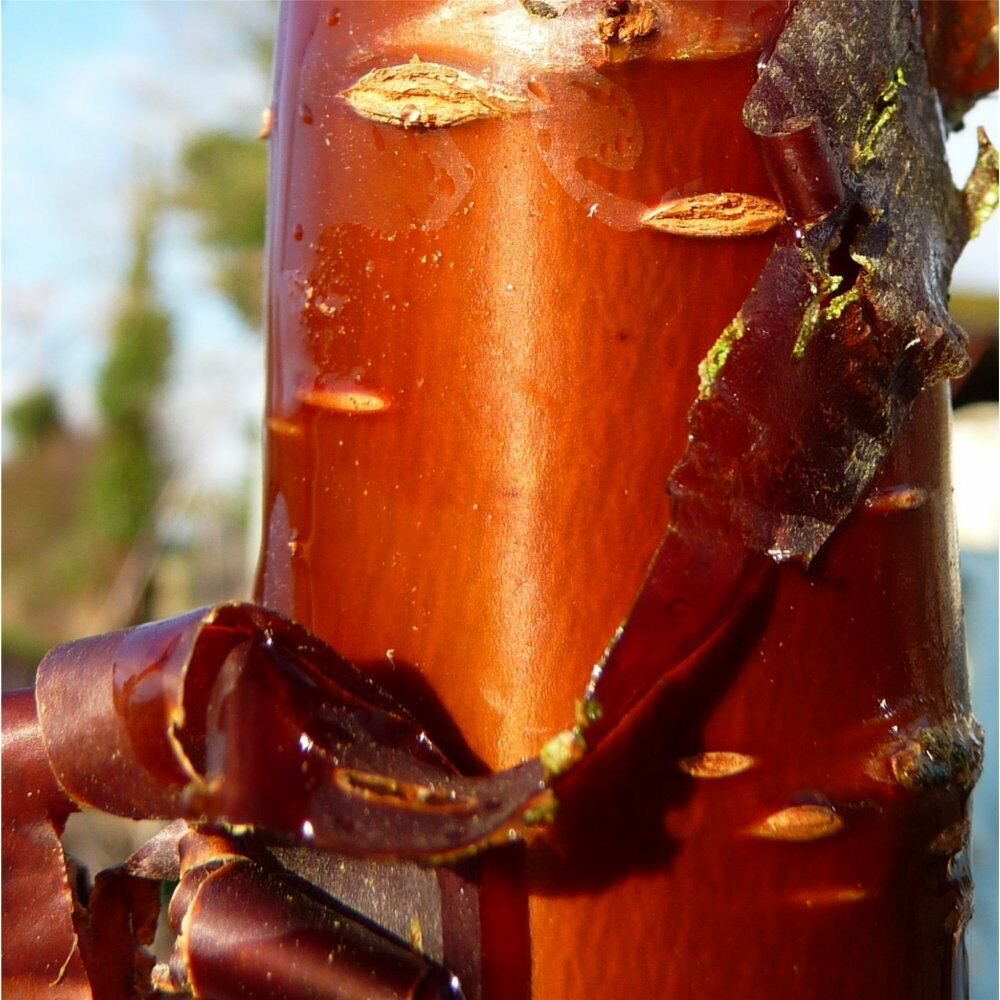
Shining Birch Bark Cherry is most noted for its outstanding glossy reddish-brown bark. Old bark peels somewhat like a birch to reveal a polished sheen that is typically described as being reddish brown, copper brown or mahogany brown. Native to Western China and Tibet, this is a rounded deciduous tree that typically grows to 20 to 30 feet tall. Narrow, lance-shaped, willow like, dark green leaves to 4 inches long are serrated. Small white flowers 3/4 inch across bloom singly or in 2 to 4 flowered umbels in March-April as the foliage emerges. Flowers are followed by cherry like red fruit (1/2 inch diameter drupes), which are not recommended for eating. The leaves turn yellow in autumn and fall away to reveal the tree's skin in all its glory. In the right light, it really does seem to be sculpted from polished copper or bronze but with a richer tone than either. Shining Birch Bark Cherry is not a very big tree and is an excellent choice for a small garden where space and light are limited. The sheer beauty of the bark deserves to be the centre of attention.
Other Names: Paperbark Cherry, Tibetan Birch Bark Cherry, Paper Bark Cherry, Tibetan Birchbark Cherry, Cellophane Bark Cherry, Red Bark Cherry
Zone: 5 to 7
Growth Rate: Fast
Plant Type: Small Deciduous Tree or Shrub
Family: Rosaceae
Native Range: Western China
Height: 20 to 30 feet
Spread: 20 to 30 feet
Shape: Rounded
Bloom Time: March-April
Bloom Color: White
Flower/Fruit: Small white 3/4 inch flowers followed by 1/2 inch red drupes.
Sun: Full Sun to Part Shade
Fall Color: Yellow
Drought Tolerance: Moderate
Water: Medium
Maintenance: Low
Site Requirements /Soil Tolerances: Best grown in moist, organically rich, well-drained soils in full sun to part shade. Good soil drainage is essential.
Culture: Prune as needed after flowering. Top tip for getting the best from the bark: never give into the temptation to peel away the bark yourself. This will actually slow down the tree's shedding cycle and there is a risk of infection. Instead, when the tree starts looking a bit dull, give it a scrub with a non-metallic brush and warm soapy water, or you could use a pressure hose on a very gentle setting. This will brighten up the older bark without affecting the tree.
Uses: Tree bark is the main ornamental feature. Site this tree in a location where the bark can be seen and appreciated. Bark can be particularly noticeable in winter.
Sowing Prunus serrula Seeds:
For best results, please follow the instructions in the order provided.
Scarify: Soak in water for 24 hours
Stratify: Cold 90-120 days, 40 Degrees F in a Moist Medium (Not wet).
Germination: Sow 1/2” Deep, Keep moist, (Not wet).
Showy Shining Paper Red Bark, Showy Flowers and Fruit, Attracts Birds, Cold Tolerant
Shining Birch Bark Cherry is most noted for its outstanding glossy reddish-brown bark. Old bark peels somewhat like a birch to reveal a polished sheen that is typically described as being reddish brown, copper brown or mahogany brown. Native to Western China and Tibet, this is a rounded deciduous tree that typically grows to 20 to 30 feet tall. Narrow, lance-shaped, willow like, dark green leaves to 4 inches long are serrated. Small white flowers 3/4 inch across bloom singly or in 2 to 4 flowered umbels in March-April as the foliage emerges. Flowers are followed by cherry like red fruit (1/2 inch diameter drupes), which are not recommended for eating. The leaves turn yellow in autumn and fall away to reveal the tree's skin in all its glory. In the right light, it really does seem to be sculpted from polished copper or bronze but with a richer tone than either. Shining Birch Bark Cherry is not a very big tree and is an excellent choice for a small garden where space and light are limited. The sheer beauty of the bark deserves to be the centre of attention.
Other Names: Paperbark Cherry, Tibetan Birch Bark Cherry, Paper Bark Cherry, Tibetan Birchbark Cherry, Cellophane Bark Cherry, Red Bark Cherry
Zone: 5 to 7
Growth Rate: Fast
Plant Type: Small Deciduous Tree or Shrub
Family: Rosaceae
Native Range: Western China
Height: 20 to 30 feet
Spread: 20 to 30 feet
Shape: Rounded
Bloom Time: March-April
Bloom Color: White
Flower/Fruit: Small white 3/4 inch flowers followed by 1/2 inch red drupes.
Sun: Full Sun to Part Shade
Fall Color: Yellow
Drought Tolerance: Moderate
Water: Medium
Maintenance: Low
Site Requirements /Soil Tolerances: Best grown in moist, organically rich, well-drained soils in full sun to part shade. Good soil drainage is essential.
Culture: Prune as needed after flowering. Top tip for getting the best from the bark: never give into the temptation to peel away the bark yourself. This will actually slow down the tree's shedding cycle and there is a risk of infection. Instead, when the tree starts looking a bit dull, give it a scrub with a non-metallic brush and warm soapy water, or you could use a pressure hose on a very gentle setting. This will brighten up the older bark without affecting the tree.
Uses: Tree bark is the main ornamental feature. Site this tree in a location where the bark can be seen and appreciated. Bark can be particularly noticeable in winter.
Sowing Prunus serrula Seeds:
For best results, please follow the instructions in the order provided.
Scarify: Soak in water for 24 hours
Stratify: Cold 90-120 days, 40 Degrees F in a Moist Medium (Not wet).
Germination: Sow 1/2” Deep, Keep moist, (Not wet).
Other Products from warsini (View All)
-
$16.00

-
$9.00

-
$9.00

-
$19.98

-
$128.00

-
$19.98

-
$19.98

-
$159.50

-
$128.00

-
$159.50


 ID, Jawa Tengah
