
$19.98
Add to Cart
50 Rosebay Rhododendron, Rhododendron maximum, Shrub Seeds (Showy Evergreen)
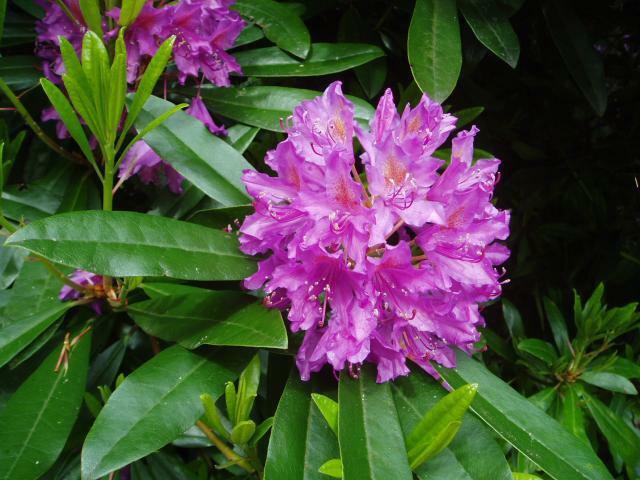


Leaf: Alternate, evergreen, simple, elliptical, 4 to 10 inches long, pinnately veined, entire margins or slightly revolute, leathery, dark green above and paler with rust-colored hair below.
Flower: Monoecious; showy, pale pink or white with a corolla of five rounded petals, occur in large clusters (5 to 8 inches across) in late spring to early summer.
Fruit: Red-brown elongated capsule (1/2 inch long), splitting along five lines, containing many tiny seeds, borne in a long-stemmed cluster, maturing in fall.
Twig: Stout, yellow-green in color, often with reddish brown hair; vegetative buds are small, appearing enclosed in tiny leaves, ovate shaped flower buds are quite large (1/2 inch), enclosed in green rusty, pubescent scales.
Bark: Thin, light brown and smooth when young; broken into thin scales on older stems.
Form: A large shrub or small tree with several twisted stems that may form an impassable, dense thicket up to 20 feet tall.
Other Names: Rosebay Azalea, Great laurel, Great rhododendron, White laurel
Zone: 4 to 6
Growth Rate: Medium
Plant Type: Multi-stemmed, evergreen, large flowering shrub
Family: Ericaceae
Native Range: Eastern North America, from Nova Scotia south to northern Alabama.
Height: 8 to 15 feet
Spread: 8 to 15 feet
Shape: Upright rounded shrub
Bloom Time: Late June
Bloom Color: Rose-pink, pink margined, or nearly white
Flower/Fruit: Individual flowers are 1.5" across and are borne in crowned clusters of up to 25 flowers
Sun: Part Shade
Fall Color: Evergreen
Drought Tolerance: Low
Water: Medium
Maintenance: Medium
Site Requirements /Soil Tolerances: Best grown in acidic, humusy, organically rich, medium moisture, moisture retentive but well drained soils in part shade. Prefers a sun dappled or high open shade. Tolerates a fair amount of sun in cool northern summers, but leaves may scorch in hot afternoon sun. Plant in a location protected from strong winter winds. Good soil drainage is essential (doesn’t like “wet feet”). Poor drainage inevitably leads to root rot, therefore raised beds/plantings should be considered in heavy clay soils. Shallow, fibrous root systems (do not cultivate around plants) will benefit greatly from a mulch (e.g., wood chips, bark or pine needles) to help retain moisture and stabilize soil temperatures. Roots must never be allowed to dry out. Acidify soils as needed.
Culture: Mulch annually with a loose material like pine needles, bark, or chopped oak leaves. Clip off spent flower clusters immediately after bloom as practicable.
Uses: Bonsai, Mass, group or specimen. Shrub borders, mixed borders, woodland gardens and shade gardens. Also effective in foundation plantings or as a hedge.
Sowing Rhododendron maximum Seeds:
For best results, please follow the instructions in the order provided.
The seeds of Rosebay Rhododendron are extremely tiny. Wear your glasses and don’t breath while handling. Sow indoors under a dome lid and grow light.
Germination: Surface sow indoors at 55° to 64°F in acidic potting mix or peat. Keep moist with spray mister.
Flower: Monoecious; showy, pale pink or white with a corolla of five rounded petals, occur in large clusters (5 to 8 inches across) in late spring to early summer.
Fruit: Red-brown elongated capsule (1/2 inch long), splitting along five lines, containing many tiny seeds, borne in a long-stemmed cluster, maturing in fall.
Twig: Stout, yellow-green in color, often with reddish brown hair; vegetative buds are small, appearing enclosed in tiny leaves, ovate shaped flower buds are quite large (1/2 inch), enclosed in green rusty, pubescent scales.
Bark: Thin, light brown and smooth when young; broken into thin scales on older stems.
Form: A large shrub or small tree with several twisted stems that may form an impassable, dense thicket up to 20 feet tall.
Other Names: Rosebay Azalea, Great laurel, Great rhododendron, White laurel
Zone: 4 to 6
Growth Rate: Medium
Plant Type: Multi-stemmed, evergreen, large flowering shrub
Family: Ericaceae
Native Range: Eastern North America, from Nova Scotia south to northern Alabama.
Height: 8 to 15 feet
Spread: 8 to 15 feet
Shape: Upright rounded shrub
Bloom Time: Late June
Bloom Color: Rose-pink, pink margined, or nearly white
Flower/Fruit: Individual flowers are 1.5" across and are borne in crowned clusters of up to 25 flowers
Sun: Part Shade
Fall Color: Evergreen
Drought Tolerance: Low
Water: Medium
Maintenance: Medium
Site Requirements /Soil Tolerances: Best grown in acidic, humusy, organically rich, medium moisture, moisture retentive but well drained soils in part shade. Prefers a sun dappled or high open shade. Tolerates a fair amount of sun in cool northern summers, but leaves may scorch in hot afternoon sun. Plant in a location protected from strong winter winds. Good soil drainage is essential (doesn’t like “wet feet”). Poor drainage inevitably leads to root rot, therefore raised beds/plantings should be considered in heavy clay soils. Shallow, fibrous root systems (do not cultivate around plants) will benefit greatly from a mulch (e.g., wood chips, bark or pine needles) to help retain moisture and stabilize soil temperatures. Roots must never be allowed to dry out. Acidify soils as needed.
Culture: Mulch annually with a loose material like pine needles, bark, or chopped oak leaves. Clip off spent flower clusters immediately after bloom as practicable.
Uses: Bonsai, Mass, group or specimen. Shrub borders, mixed borders, woodland gardens and shade gardens. Also effective in foundation plantings or as a hedge.
Sowing Rhododendron maximum Seeds:
For best results, please follow the instructions in the order provided.
The seeds of Rosebay Rhododendron are extremely tiny. Wear your glasses and don’t breath while handling. Sow indoors under a dome lid and grow light.
Germination: Surface sow indoors at 55° to 64°F in acidic potting mix or peat. Keep moist with spray mister.


 ID, Jawa Tengah
