$167.29
Add to Cart
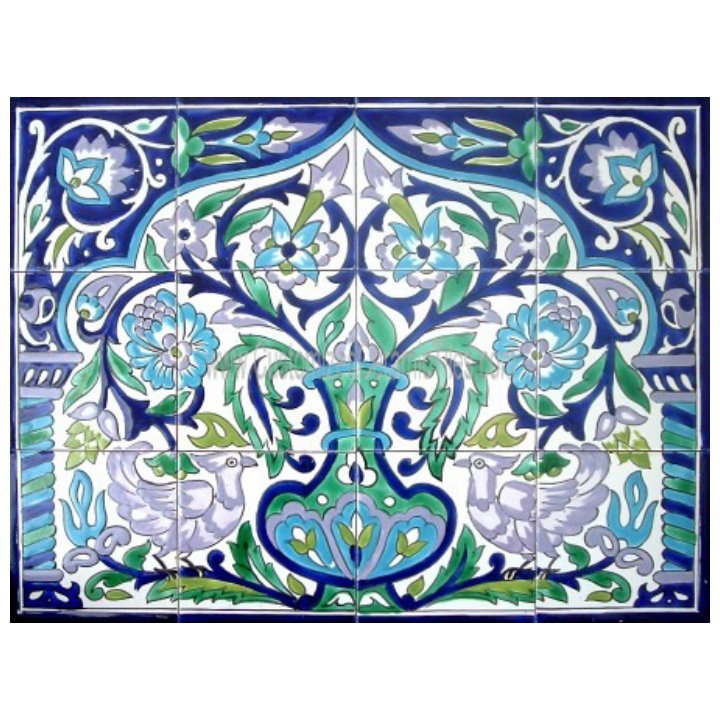
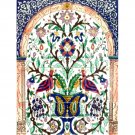
ARABESQUE DESIGN MOSAIC TILES WALL MURAL, 24in X 18in, in Antique Looking Ceramic Tiles Wall Mural
Only 1 available
Details
Shipping: Australia: free (more destinations)
Condition: Brand new
*The store has not been updated recently. You may want to contact the merchant to confirm the availability of the product.
100's of exotic motifs! All unique! Find the right mosaic for your decorating project!
Product type: Ceramic Tile Mosaic Mural - Region: Mediterranean - Method: Hand painted
Dimensions in inches: 24in W x 18in H x 0.25in thick
Tile dimensions in centimeters: 60cm W x 45cm H (0.6cm thick)
Tiles per mosaic: 12 - Ref: CCT1117
Hand painted. Indoor use. Outdoor use. Low cost int'l shipping
Fired twice! Easy set up. Heavy duty. Weather proof. Fade proof. Frost proof. UV proof.
Need resizing? Custom projects? Questions? Contact seller.
How to install? Tiles ship separate. Tiles can be applied using cement for long term permanent mounting, or can be framed for shorter term applications.
Additional information of interest:
- It is a customized ítem.
- The tiles are individually hand painted and fired, they are not screened nor printed.
A BRIEF COMMENT ON THE ARABESQUE DESIGN:
The arabesque is a form of artistic decoration consisting of "surface decorations based on rhythmic linear patterns of scrolling and interlacing foliage, tendrils" or plain lines, often combined with other elements. Another definition is "Foliate ornament, used in the Islamic world, typically using leaves, derived from stylised half-palmettes, which were combined with spiralling stems". It usually consists of a single design which can be 'tiled' or seamlessly repeated as many times as desired.
Within the very wide range of Eurasian decorative art that includes motifs matching this basic definition, the term "arabesque" is used consistently as a technical term by art historians to describe only elements of the decoration found in 2 phases: Islamic art from about the 9th century onwards, and European decorative art from the Renaissance onwards. Interlace and scroll decoration are terms used for most other types of similar patterns.
Arabesques are a fundamental element of Islamic art but they develop what was already a long tradition by the coming of Islam. Some Western arabesques derive from Islamic art, but others are closely based on Ancient Roman decorations. In the West they are essentially found in the decorative arts, but because of the generally non-figurative nature of Islamic art, arabesque decoration is often a very prominent element in the most significant works, and plays a large part in the decoration of architecture.
Product type: Ceramic Tile Mosaic Mural - Region: Mediterranean - Method: Hand painted
Dimensions in inches: 24in W x 18in H x 0.25in thick
Tile dimensions in centimeters: 60cm W x 45cm H (0.6cm thick)
Tiles per mosaic: 12 - Ref: CCT1117
Hand painted. Indoor use. Outdoor use. Low cost int'l shipping
Fired twice! Easy set up. Heavy duty. Weather proof. Fade proof. Frost proof. UV proof.
Need resizing? Custom projects? Questions? Contact seller.
How to install? Tiles ship separate. Tiles can be applied using cement for long term permanent mounting, or can be framed for shorter term applications.
Additional information of interest:
- It is a customized ítem.
- The tiles are individually hand painted and fired, they are not screened nor printed.
A BRIEF COMMENT ON THE ARABESQUE DESIGN:
The arabesque is a form of artistic decoration consisting of "surface decorations based on rhythmic linear patterns of scrolling and interlacing foliage, tendrils" or plain lines, often combined with other elements. Another definition is "Foliate ornament, used in the Islamic world, typically using leaves, derived from stylised half-palmettes, which were combined with spiralling stems". It usually consists of a single design which can be 'tiled' or seamlessly repeated as many times as desired.
Within the very wide range of Eurasian decorative art that includes motifs matching this basic definition, the term "arabesque" is used consistently as a technical term by art historians to describe only elements of the decoration found in 2 phases: Islamic art from about the 9th century onwards, and European decorative art from the Renaissance onwards. Interlace and scroll decoration are terms used for most other types of similar patterns.
Arabesques are a fundamental element of Islamic art but they develop what was already a long tradition by the coming of Islam. Some Western arabesques derive from Islamic art, but others are closely based on Ancient Roman decorations. In the West they are essentially found in the decorative arts, but because of the generally non-figurative nature of Islamic art, arabesque decoration is often a very prominent element in the most significant works, and plays a large part in the decoration of architecture.
Other Products from tunisiandecor (View All)
-
$4.18
-
$4.18
-
$4.18

-
$4.18
-
$4.18
-
$4.18
-
$61.34

-
$294.16
-
$156.14
-
$92.01