
$7.00
Add to Cart
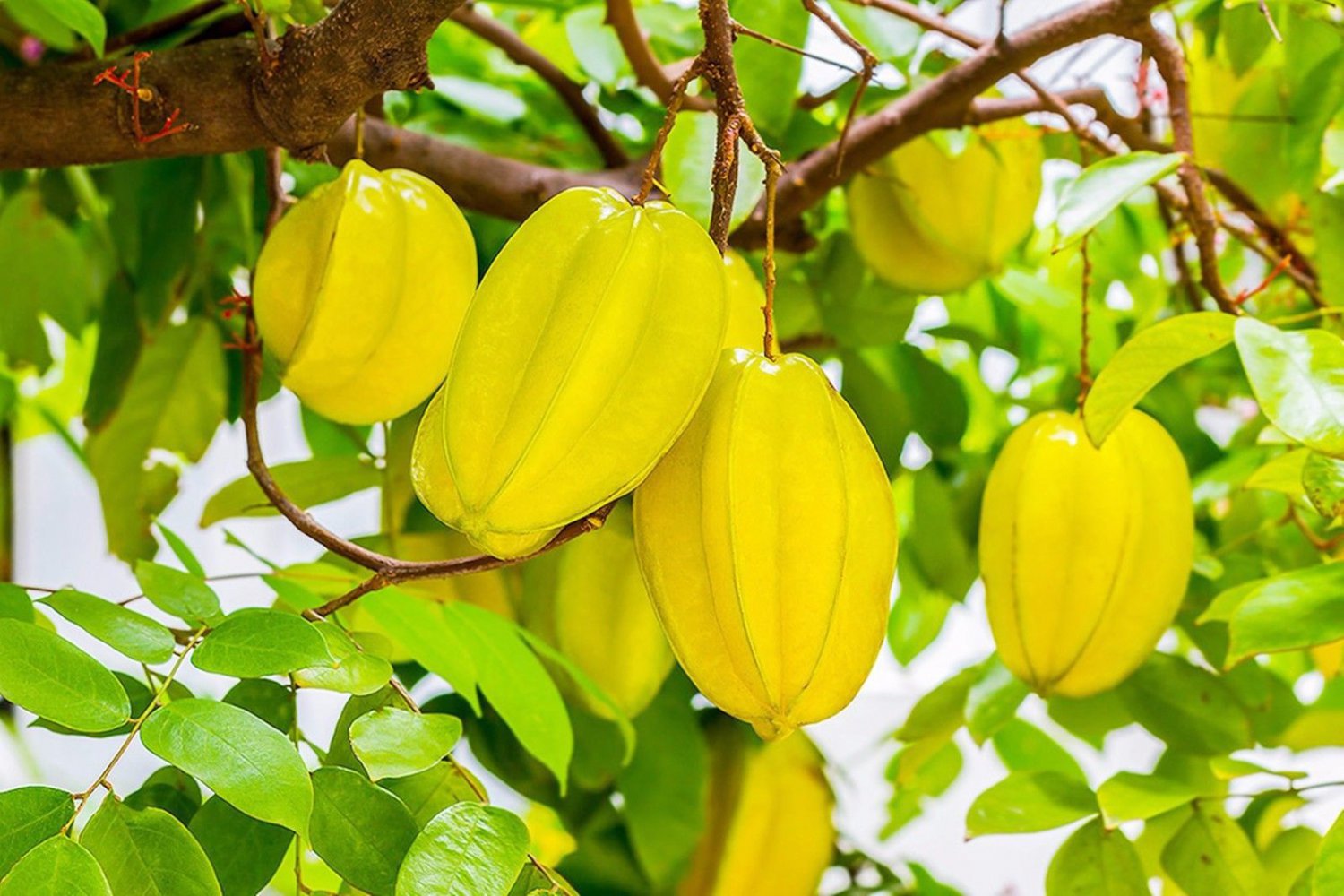
10 Thai Sweet Star Apple Fruit Seeds,Averrhoa Carambola Tropical Exotic Rare
10 available
Details
Shipping: Australia: free (more destinations)
Condition: Brand new
*The store has not been updated recently. You may want to contact the merchant to confirm the availability of the product.


10 Thai Sweet Star Apple Fruit Seeds,
Averrhoa Carambola Tropical Exotic Rare
Carambola is a medium-sized fruit trees. Originated in Asia. The trunk and branches are softwood. Carambola have a licensed green leaves composed of 5-11 leaves. A bouquet of flowers at the ends of branches, eye and the branches and the trunk. With pink - red flowers.
Its deciduous leaves, spirally arranged, are alternate, imparipinnate, 6 to 10 in(15-20 cm) long, with 5 to 11 nearly opposite leaflets, ovate or ovate-oblong, 1 1/2 to 3 1/2 in (3.8-9 cm) long. The leaves are soft, medium-green, and smooth on the upper surface, finely hairy and whitish on the underside. The leaflets are sensitive to light and more or less inclined to fold together at night or when the tree is shaken or abruptly shocked. Small clusters of red-stalked, lilac, purple-streaked, downy flowers, about 1/4 in (6 mm) wide, are borne on the twigs in the axils of the leaves. The showy, oblong, longitudinally 5- to 6-angled fruits, 2 1/2 to 6 in (6.35-15 cm) long and up to 3 1/2 (9 cm) wide, have thin, waxy, orange-yellow skin and juicy, crisp, yellow flesh when fully ripe. Slices cut in cross-section have the form of a star. The fruit has a more or less pronounced oxalic acid odor and the flavor ranges from very sour to mildly sweetish. The so-called "sweet" types rarely contain more than 4% sugar. There may be up to 12 flat, thin, brown seeds 1/4 to 1/2 in (6-12.5 mm) long or none at all.
Growing
Temperature: Thrive in subtropical and tropical climates. Older trees are more tolerant of frost, but growth stops at 55 to 60 degrees and prolonged exposure to temperatures below freezing could kill the tree.
Avg. Height and Width: Varies with the variety, but Carambola trees range from about 12 to 30 feet tall. They are a smaller tree perfect for the average homeowner’s yard.
Native Range: Native to Malaysia, Indonesia and Southern China. Commercial production now occurs in Hawaii, Florida and other tropical regions of the world.
Fertilize: 4 to 5 times a year with balanced liquid fertilizer or use a slow release granular fertilizer several times during the growing season.
Water: Star Fruit does well with regular watering. Additional watering is not needed during the rainy season.
Plant in full sun. Trees will do better in an area that is protected or sheltered from the wind.
Soil: Carambola are not too particular of soil of types, but grow faster and produce more fruit in a soil with more organic matter. Needs good drainage and does not like wet feet.
Averrhoa Carambola Tropical Exotic Rare
Carambola is a medium-sized fruit trees. Originated in Asia. The trunk and branches are softwood. Carambola have a licensed green leaves composed of 5-11 leaves. A bouquet of flowers at the ends of branches, eye and the branches and the trunk. With pink - red flowers.
Its deciduous leaves, spirally arranged, are alternate, imparipinnate, 6 to 10 in(15-20 cm) long, with 5 to 11 nearly opposite leaflets, ovate or ovate-oblong, 1 1/2 to 3 1/2 in (3.8-9 cm) long. The leaves are soft, medium-green, and smooth on the upper surface, finely hairy and whitish on the underside. The leaflets are sensitive to light and more or less inclined to fold together at night or when the tree is shaken or abruptly shocked. Small clusters of red-stalked, lilac, purple-streaked, downy flowers, about 1/4 in (6 mm) wide, are borne on the twigs in the axils of the leaves. The showy, oblong, longitudinally 5- to 6-angled fruits, 2 1/2 to 6 in (6.35-15 cm) long and up to 3 1/2 (9 cm) wide, have thin, waxy, orange-yellow skin and juicy, crisp, yellow flesh when fully ripe. Slices cut in cross-section have the form of a star. The fruit has a more or less pronounced oxalic acid odor and the flavor ranges from very sour to mildly sweetish. The so-called "sweet" types rarely contain more than 4% sugar. There may be up to 12 flat, thin, brown seeds 1/4 to 1/2 in (6-12.5 mm) long or none at all.
Growing
Temperature: Thrive in subtropical and tropical climates. Older trees are more tolerant of frost, but growth stops at 55 to 60 degrees and prolonged exposure to temperatures below freezing could kill the tree.
Avg. Height and Width: Varies with the variety, but Carambola trees range from about 12 to 30 feet tall. They are a smaller tree perfect for the average homeowner’s yard.
Native Range: Native to Malaysia, Indonesia and Southern China. Commercial production now occurs in Hawaii, Florida and other tropical regions of the world.
Fertilize: 4 to 5 times a year with balanced liquid fertilizer or use a slow release granular fertilizer several times during the growing season.
Water: Star Fruit does well with regular watering. Additional watering is not needed during the rainy season.
Plant in full sun. Trees will do better in an area that is protected or sheltered from the wind.
Soil: Carambola are not too particular of soil of types, but grow faster and produce more fruit in a soil with more organic matter. Needs good drainage and does not like wet feet.


 TH, Bangkok
