
$15.74
Add to Cart
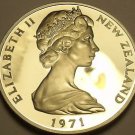
Large Gem Unc Roger Bannister Miracle Mile Medallion~1st To Break 4 Minutes~F/S


COIN5555 U.S. AND FOREIGN RARE COINS~SPECIAL OFFERING~* Large 34mm Gem Unc British Commonwealth Games Medallion FeaturingGreat Britain'sHero Roger Bannister. His History Is As Follows;Sir Roger Gilbert Bannister, CBE (born 23 March 1929) is an English former middle-distance athlete, physician and academic, who ran the first sub-four-minute mile.In the 1952 Olympics in Helsinki, Bannister set a British record in the 1500 metres but finished fourth. This strengthened his resolve to be the first 4-minute miler.[citation needed]He achieved this feat on 6 May 1954 at Iffley Road track in Oxford, with Chris Chataway and Chris Brasher providing the pacing. When the announcer declared "The time was three...", the cheers of the crowd drowned out Bannister's exact time, which was 3 min 59.4 sec.Bannister's record lasted just 46 days. He had reached this record with minimal training, while practising as a junior doctor.Bannister went on to become a distinguished neurologist and Master of Pembroke College, Oxford, before retiring in 1993. When asked whether the 4-minute mile was his proudest achievement, he said he felt prouder of his contribution to academic medicine through research into the responses of the nervous system. Bannister is patron of the MSA Trust. He was diagnosed with Parkinson's disease in 2011.[2]Contents [hide]1 Early life and education2 Early running career3 1952 Olympics4 New goal5 Sub-4-minute mile6 Sports Council and knighthood7 Personal life8 Legacy9 Memorabilia10 Honours11 References12 Notes13 External linksEarly life and education[edit]Bannister was born in Harrow, England. He went to Vaughan Primary School in Harrow and continued his education at City of Bath Boys' School and University College School, London; followed by medical school at the University of Oxford (Exeter College and Merton College[3]) and at St Mary's Hospital Medical School (now part of Imperial College London).Early running career[edit]Bannister was inspired by miler Sydney Wooderson's remarkable comeback in 1945. Eight years after setting the mile record and seeing it surpassed during the war years by the great Swedish runners Arne Andersson and Gunder Hägg, Wooderson regained his old form and challenged Andersson over the distance in several races. Wooderson lost to Andersson but set a British record of 4:04.2 in Gothenburg on 9 September.Like Wooderson, Bannister would ultimately set a mile record, see it broken, and then set a new personal best slower than the new record.Bannister started his running career at Oxford in the autumn of 1946 at the age of 17. He had never worn running spikes previously or run on a track. His training was light, even compared to the standards of the day, but he showed promise in running a mile in 1947 in 4:24.6 on only three weekly half-hour training sessions.He was selected as an Olympic "possible" in 1948 but declined as he felt he was not ready to compete at that level. However, he was further inspired to become a great miler by watching the 1948 Olympics. He set his training goals on the 1952 Olympics in Helsinki.In 1949, he improved in the 880 yards to 1:52.7 and won several mile races in 4:11. Then, after a period of six weeks with no training, he came in third at White City in 4:14.2.The year 1950 saw more improvements as he finished a relatively slow 4:13 mile on 1 July with an impressive 57.5 last quarter. Then, he ran the AAA 880 in 1:52.1, losing to Arthur Wint, and then ran 1:50.7 for the 800 m at the European Championships on 26 August, placing third. Chastened by this lack of success, Bannister started to train harder and more seriously.His increased attention to training paid quick dividends, as he won a mile race in 4:09.9 on 30 December. Then in 1951 at the Penn Relays, Bannister broke away from the pack with a 56.7 final lap, finishing in 4:08.3. Then, in his biggest test to date, he won a mile race on 14 July in 4:07.8 at the AAA Championships at White City before 47,000 people. The time set a meet record and he defeated defending champion Bill Nankeville in the process.Bannister suffered defeat, however, when Yugoslavia's Andrija Otenhajmer, aware of Bannister's final-lap kick, took a 1500 m race in Belgrade 25 August out at near-record pace, forcing Bannister to close the gap by the bell lap. Otenhajmer won in 3:47.0, though Bannister set a personal best finishing second in 3:48.4. Bannister was no longer seen as invincible.His training was a very modern individualised mixture of interval training influenced by Franz Stampfl with elements of block periodisation, fell running and anaerobic elements of training which were later perfected by Arthur Lydiard.[4]1952 Olympics[edit]Bannister avoided racing after the 1951 season until late in the spring of 1952, saving his energy for Helsinki and the Olympics. He ran an 880 on 28 May in 1:53.00, then a 4:10.6 mile time-trial on 7 June, proclaiming himself satisfied with the results. At the AAA championships, he skipped the mile and won the 880 in 1:51.5. Then, 10days before the Olympic final, he ran a ¾ mile time trial in 2:52.9, which gave him confidence that he was ready for the Olympics as he considered the time to be the equivalent of a four-minute mile.His confidence soon dissipated as it was announced there would be semifinals for the 1500 m (equal to 0.932 miles) at the Olympics, and he knew that this favoured runners who had much deeper training regimens than he did. When he ran his semifinal, Bannister finished fifth and thereby qualified for the final, but he felt "blown and unhappy."The 1500 m final on 26 July would prove to be one of the more dramatic in Olympic history. The race was not decided until the final metres, Josy Barthel of Luxembourg prevailing in an Olympic-record 3:45.28 (3:45.1 by official hand-timing) with the next seven runners all under the old record. Bannister finished fourth, out of the medals, but set a British record of 3:46.30 (3:46.0) in the process.New goal[edit]After his relative failure at the 1952 Olympics, Bannister spent two months deciding whether to give up running. He set himself on a new goal: to be the first man to run a mile in under four minutes. Accordingly, he intensified his training and did hard intervals.On 2 May 1953, he made an attempt on the British record at Oxford. Paced by Chris Chataway, Bannister ran 4:03.6, shattering Wooderson's 1945 standard. "This race made me realise that the four-minute mile was not out of reach," said Bannister.On 27 June, a mile race was inserted into the programme of the Surrey schools athletic meeting. Australian runner Don Macmillan, ninth in the 1500 m at the 1952 Olympics, set a strong pace with 59.6 and 1:59.7 for two laps. He gave up after 21⁄2 laps, but Chris Brasher took up the pace. Brasher had jogged the race, allowing Bannister to lap him so he could be a fresh pace-setter. At ¾ mile, Bannister was at 3:01.8, the record—and first sub-four-minute mile—in reach. But the effort fell short with a finish in 4:02.0, a time bettered by only Andersson and Hägg. British officials would not allow this performance to stand as a British record, which, Bannister felt in retrospect, was a good decision. "My feeling as I look back is one of great relief that I did not run a four-minute mile under such artificial circumstances," he said.But other runners were making attempts at the four-minute barrier and coming close as well. American Wes Santee ran 4:02.4 on 5 June, the fourth-fastest mile ever. And at the end of the year, Australian John Landy ran 4:02.0.Then early in 1954, Landy made some more attempts at the distance. On 21 January, he ran 4:02.4 in Melbourne, then 4:02.6 on 23 February, and at the end of the Australian season on 19 April he ran 4:02.6 again.Bannister had been following Landy's attempts and was certain his Australian rival would succeed with each one. But knowing that Landy's season-closing attempt on 19 April would be his last until he travelled to Finland for another attempt, Bannister knew he had to make his attempt soon.Sub-4-minute mile[edit] Blue plaque recording the first sub-4-minute mile run by Roger Bannister on 6 May 1954 at Oxford University's Iffley Road Track.This historic event took place on 6 May 1954 during a meet between British AAA and Oxford University at Iffley Road Track in Oxford. It was watched by about 3,000 spectators. With winds up to 25 miles per hour (40km/h) prior to the event, Bannister had said twice that he favoured not running, to conserve his energy and efforts to break the 4-minute barrier; he would try again at another meet. However, the winds dropped just before the race was scheduled to begin, and Bannister did run. The pace-setters from his major 1953 attempts, future Commonwealth Games gold medallist Chris Chataway from the 2 May attempt and future Olympic Games gold medallist Chris Brasher from the 27 June attempt, combined to provide pacing on this historic day. The race[5] was broadcast live by BBC Radio and commented on by 1924 Olympic 100 metres champion Harold Abrahams, of Chariots of Fire fame.Bannister had begun his day at a hospital in London, where he sharpened his racing spikes and rubbed graphite on them so they would not pick up too much cinder ash. He took a mid-morning train from Paddington Station to Oxford, nervous about the rainy, windy conditions that afternoon.[6] Being a dual-meet format, there were 7 men entered in the Mile: Alan Gordon, George Dole and Nigel Miller from Oxford University and four British AAA runners - Bannister, his two pacemakers Brasher and Chataway and Tom Hulatt. Nigel Miller arrived as a spectator and he only realised that he was due to run when he read the programme. Efforts to borrow a running kit failed and he could not take part, thus reducing the field to 6.[7]The race went off as scheduled at 6:00 pm, and Brasher and Bannister went immediately to the lead. Brasher, wearing No. 44, led both the first lap in 58 seconds and th
Other Products from coin5555 (View All)
-
$12.95
-
$27.73
-
$7.24
-
$10.72
-
$12.53
-
$9.19

-
$6.82

-
$22.99

-
$11.14

-
$18.81


