
$23.03
Add to Cart
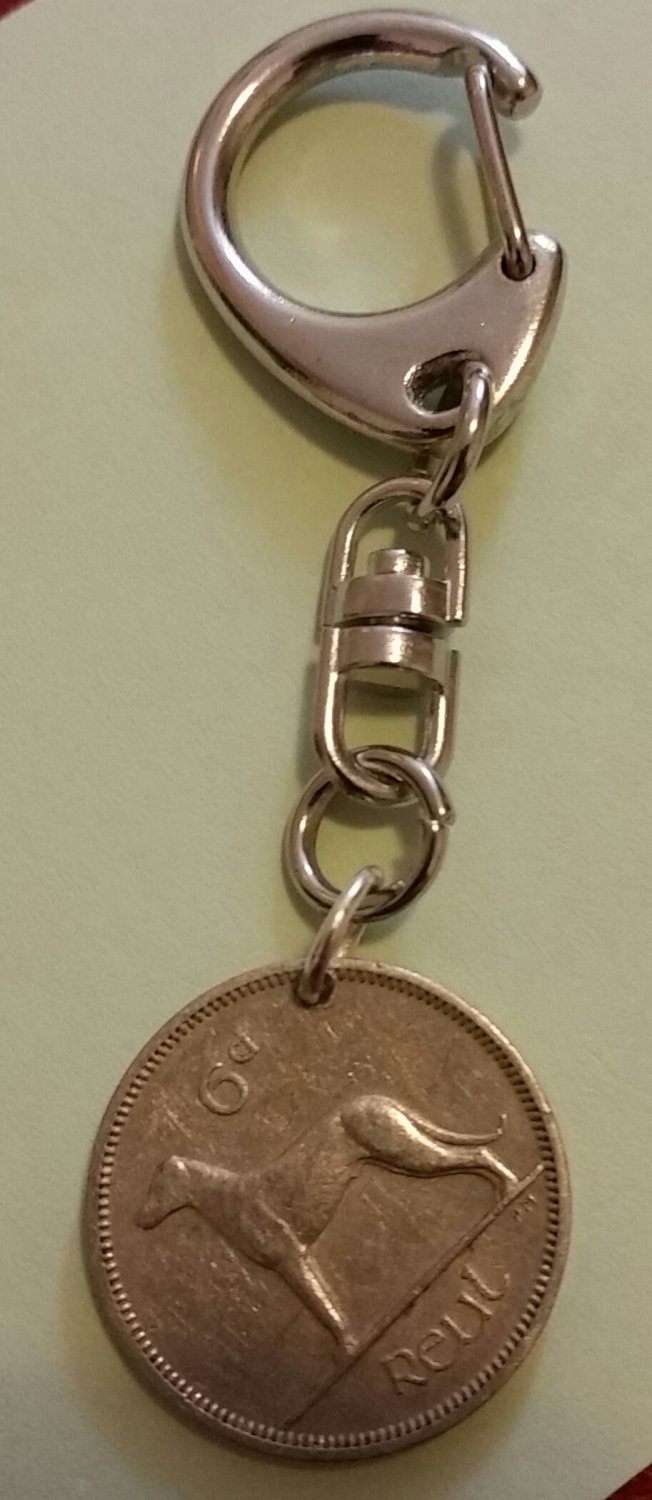
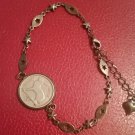
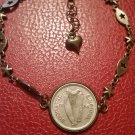
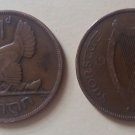
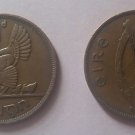
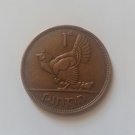
Irish pre-decimal " Reul" keyring, Irish gift
More than 10 available
Details
Shipping: Australia: free (more destinations)
Condition: Brand new
*The store has not been updated recently. You may want to contact the merchant to confirm the availability of the product.


This coin " Reul" in particular and in this condition is a highly sought after collectable.
The "Irish Wolfhound" proudly displayedon this coin is one of the world's most recognisable dogs, (even if he is far to big for the usual house or family).
The Irish wolfhound was regularly mentioned in Irish mythology especially in the time of "Na Fianna" (famed warriors, hunters and ptotectors of Ireland, Tara and it's high king) in hunting and protection. Some of these famed dogs are and have been houseshold name in Ireland for a few thousand years; thus showing it's connection with the Irish people and reason for its commemoration here.
Sixpence / Reul
Ireland
Value 6 pence
Mass 4.53 g
Diameter 21.0 mm
Thickness 1.9 mm
Edge Plain
Composition Nickel (1928–1942)
Cupronickel (1942–1969)
Years of minting 1928–1969
Catalog number —
Obverse
Design Irish harp
Design date 1928
Reverse
Irish sixpence coin.png
Design Greyhound
Designer Percy Metcalfe
Design date 1928
The sixpence (6d, Irish: reul) coin was a subdivision of the pre-decimal Irish pound, worth 1⁄40 of a pound or 1⁄2 of a shilling. The Irish name (reul) is derived from the Spanish real.
The coin was originally struck in nickel, like the threepence coin, and was very well wearing. The metal was changed to cupronickel in 1942 as nickel increased in value; this coin, which consisted of 75% copper and 25% nickel, was not as well-wearing. The coin measured 0.825 inches (21.0 mm) in diameter and a weighed 4.53593 grams.
Five early coins were minted featuring a design by Publio Morbiducci, which depict the Wolfhound's head looking back; these coins are quite valuable, estimated at several thousand euro – they remain in the hands of collectors and were never released to circulation.
The general design of the coin was by English artist Percy Metcalfe. The obverse featured the Irish harp. From 1928 to 1937 the date was split either side of the harp with the name Saorstát Éireann circling around. From 1938 to 1969 the inscription changed to Éire on the left of the harp and the date on the right.[1] It has been suggested by some that the greyhound depicted is Master McGrath, a famous coursing greyhound raised in County Waterford. Although the freeze of Master McGrath on the Master McGrath monument in Waterford, the only public monument in Ireland to a greyhound,[2] does bear some similarity to Metcalfe's design, there is no evidence to suggest that the animal on the coin is anything other than a generic depiction.
It was expected that this coin would circulate alongside the new decimal coins, with a value of 2 1⁄2 new pence as in the United Kingdom. With this in mind the Central Bank of Ireland continued to have the coin minted, last dated 1969, while minting decimal coins. However, the coin ended up being withdrawn instead, never to become a decimal-based coin; it remains the last pre-decimal coin to come off the production run.
The "Irish Wolfhound" proudly displayedon this coin is one of the world's most recognisable dogs, (even if he is far to big for the usual house or family).
The Irish wolfhound was regularly mentioned in Irish mythology especially in the time of "Na Fianna" (famed warriors, hunters and ptotectors of Ireland, Tara and it's high king) in hunting and protection. Some of these famed dogs are and have been houseshold name in Ireland for a few thousand years; thus showing it's connection with the Irish people and reason for its commemoration here.
Sixpence / Reul
Ireland
Value 6 pence
Mass 4.53 g
Diameter 21.0 mm
Thickness 1.9 mm
Edge Plain
Composition Nickel (1928–1942)
Cupronickel (1942–1969)
Years of minting 1928–1969
Catalog number —
Obverse
Design Irish harp
Design date 1928
Reverse
Irish sixpence coin.png
Design Greyhound
Designer Percy Metcalfe
Design date 1928
The sixpence (6d, Irish: reul) coin was a subdivision of the pre-decimal Irish pound, worth 1⁄40 of a pound or 1⁄2 of a shilling. The Irish name (reul) is derived from the Spanish real.
The coin was originally struck in nickel, like the threepence coin, and was very well wearing. The metal was changed to cupronickel in 1942 as nickel increased in value; this coin, which consisted of 75% copper and 25% nickel, was not as well-wearing. The coin measured 0.825 inches (21.0 mm) in diameter and a weighed 4.53593 grams.
Five early coins were minted featuring a design by Publio Morbiducci, which depict the Wolfhound's head looking back; these coins are quite valuable, estimated at several thousand euro – they remain in the hands of collectors and were never released to circulation.
The general design of the coin was by English artist Percy Metcalfe. The obverse featured the Irish harp. From 1928 to 1937 the date was split either side of the harp with the name Saorstát Éireann circling around. From 1938 to 1969 the inscription changed to Éire on the left of the harp and the date on the right.[1] It has been suggested by some that the greyhound depicted is Master McGrath, a famous coursing greyhound raised in County Waterford. Although the freeze of Master McGrath on the Master McGrath monument in Waterford, the only public monument in Ireland to a greyhound,[2] does bear some similarity to Metcalfe's design, there is no evidence to suggest that the animal on the coin is anything other than a generic depiction.
It was expected that this coin would circulate alongside the new decimal coins, with a value of 2 1⁄2 new pence as in the United Kingdom. With this in mind the Central Bank of Ireland continued to have the coin minted, last dated 1969, while minting decimal coins. However, the coin ended up being withdrawn instead, never to become a decimal-based coin; it remains the last pre-decimal coin to come off the production run.
Other Products from headorharp (View All)
-
$71.96
-
$71.96
-
$57.57
-
$57.57
-
$122.33
-
$122.33
-
$128.09
-
$266.25
-
$151.12
-
$79.16


 IE, Éire
