
$4.23
Add to Cart
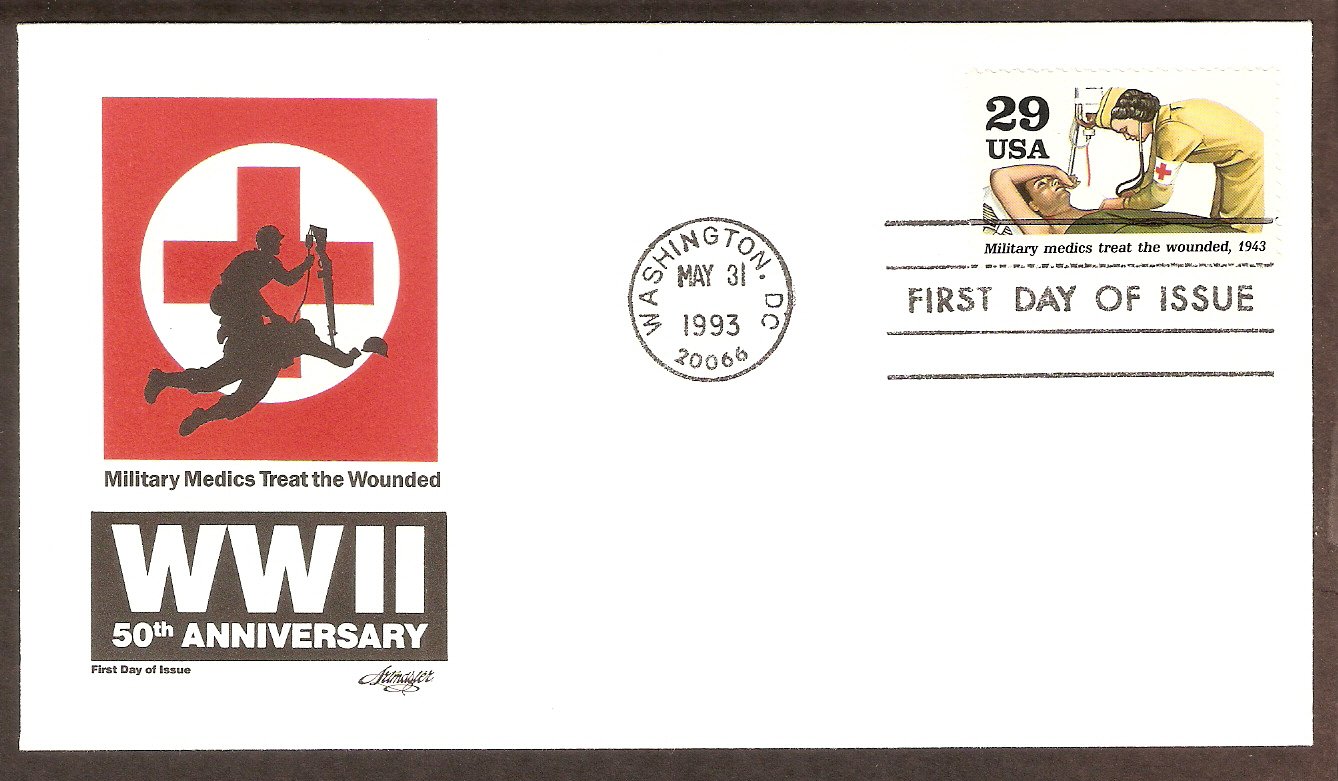
50th Anniversary World War II, 1943 Military Medics Treat the Wounded FDC USA
Only 1 available
Details
Shipping: Australia: $5.00 (more destinations)
Condition: Brand new
*The store has not been updated recently. You may want to contact the merchant to confirm the availability of the product.
United States Commemorative Postage Stamp, 50th Anniversary World War II, 1943, Military Medics Treat the Wounded,
By World War II, advances in science and medicine helped to greatly reduce the mortality rates of the wounded. For example, during the Civil War 50 percent of the men admitted to hospitals died, but in World War II that number dropped to 4 percent. While much of this improvement was due to scientific discoveries such as the antibiotic penicillin and the insecticide DDT (which eliminated the lice and mosquitoes that caused outbreaks of typhus and malaria), some of it was undoubtedly caused by how quickly and how well the wounded were treated on the battlefield and in frontline hospitals. In World War II, medics advanced with attacking troops so they could tend to the wounded and then drag or carry them away from combat, often under enemy fire. Many soldiers considered medics the bravest men on the field, because they faced fire without the means to return it. During the war, women also served as medics and nurses in all branches of the armed forces and in all combat theatres, providing aid and comfort to the wounded while themselves enduring hardships, deprivation, and enemy fire.
Issued May 31, 1993 in Washington, DC,
First Day of Issue Cover, Artmaster Cachet, Unaddressed,
Cover in Removable Transparent Poly Sleeve and Mailed With Protection,
Made in the USA
Genuine First Day of Stamp Issued Cover Cancelled on the First Day of Issue Date by the U.S. Postal Service,
By World War II, advances in science and medicine helped to greatly reduce the mortality rates of the wounded. For example, during the Civil War 50 percent of the men admitted to hospitals died, but in World War II that number dropped to 4 percent. While much of this improvement was due to scientific discoveries such as the antibiotic penicillin and the insecticide DDT (which eliminated the lice and mosquitoes that caused outbreaks of typhus and malaria), some of it was undoubtedly caused by how quickly and how well the wounded were treated on the battlefield and in frontline hospitals. In World War II, medics advanced with attacking troops so they could tend to the wounded and then drag or carry them away from combat, often under enemy fire. Many soldiers considered medics the bravest men on the field, because they faced fire without the means to return it. During the war, women also served as medics and nurses in all branches of the armed forces and in all combat theatres, providing aid and comfort to the wounded while themselves enduring hardships, deprivation, and enemy fire.
Issued May 31, 1993 in Washington, DC,
First Day of Issue Cover, Artmaster Cachet, Unaddressed,
Cover in Removable Transparent Poly Sleeve and Mailed With Protection,
Made in the USA
Genuine First Day of Stamp Issued Cover Cancelled on the First Day of Issue Date by the U.S. Postal Service,


