$111.51
Add to Cart
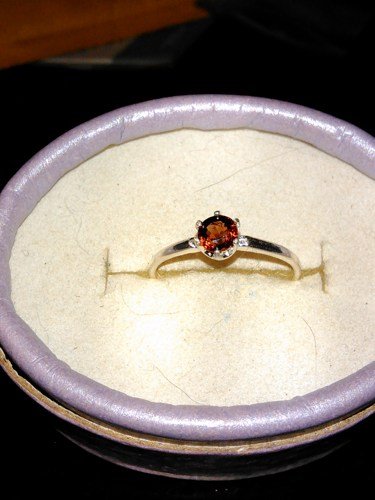
Natural Merlot Spinel Sterling Silver Engagement Ring
Only 1 available
Details
Shipping: Australia: $10.00 (more destinations)
Condition: Brand new
*The store has not been updated recently. You may want to contact the merchant to confirm the availability of the product.
Amazing sparkly natural diamond cut merlot Spinel (.65ct, VS, Burmese) hand set in a 925 sterling silver solitaire ring. Do you love red diamonds, but not the diamond price! Ouch! Let me introduce you to Burmese Spinel. Both diamonds and Spinel are singularly refractive, both are very hard,(diamonds a 10, spinel is 8) and Spinel is far more rare then the common diamond. Yes diamonds are very common, they're controlled by a cartel who artificially keeps the price high!!Naturally beautiful spinel suffers as a result of its own beauty and rarity. Because they were so vibrantly red, many spinels were believed to be rubies, so true spinel has an unfortunately brief history and is still often considered a "substitute" for ruby. Ironically, fine spinel is rarer than the ruby it "imitates" but is less expensive. Because it is so rare, it has hardly had a chance to become popular, and that lack of demand has kept the price low--for now. Alternately, spinel's affordability has led to the misconception that it isn't as valuable as it truly is, and once again spinel ends up being used as a substitute. Spinel is one of few gemstones that require no special treatments; their beautiful, vivid colors and clarity are entirely natural. Diamonds are treated to produce their wide array of colors.
Spinel has only been recognized as such since around 1850. Before that, spinels--like most red stones--were considered rubies, because early gemology classified stones only by color. Consequently, spinel has an unclear, unfortunately limited history. Many of the world's historically famous "rubies" are actually ruby-red spinels, including the 170-carat Black Prince's Ruby, currently set in the Imperial Crown of England, and the Timur Ruby, now adorning Queen Elizabeth's crown and weighing more than 350 carats. Lending it an undeniable provenance, the Timur Ruby is engraved with names of the emperors who have owned it in the past. Those famous spinels were probably mined in the legendary Badakhshan mines, likely located on the present-day border of Afghanistan and Tajikistan and the source of many large, fine spinels between 1000 and 1900 AD. There are no definitive records about the Badakhshan mines, other than the numerous legends about the gems history.
This item can be precious metal wrapped, charges apply.
Please ask questions.
Size 6, can be resized
Spinel has only been recognized as such since around 1850. Before that, spinels--like most red stones--were considered rubies, because early gemology classified stones only by color. Consequently, spinel has an unclear, unfortunately limited history. Many of the world's historically famous "rubies" are actually ruby-red spinels, including the 170-carat Black Prince's Ruby, currently set in the Imperial Crown of England, and the Timur Ruby, now adorning Queen Elizabeth's crown and weighing more than 350 carats. Lending it an undeniable provenance, the Timur Ruby is engraved with names of the emperors who have owned it in the past. Those famous spinels were probably mined in the legendary Badakhshan mines, likely located on the present-day border of Afghanistan and Tajikistan and the source of many large, fine spinels between 1000 and 1900 AD. There are no definitive records about the Badakhshan mines, other than the numerous legends about the gems history.
This item can be precious metal wrapped, charges apply.
Please ask questions.
Size 6, can be resized
You may also be interested in:
-
$72.41
-
$836.45
-
$836.45
-
$697.05

-
$66.92
-
$111.53
-
$76.68
-
$697.05

-
$153.35
-
$79.46