
$282.31
Add to Cart
Antique Old Asian Bronze Buddha #4
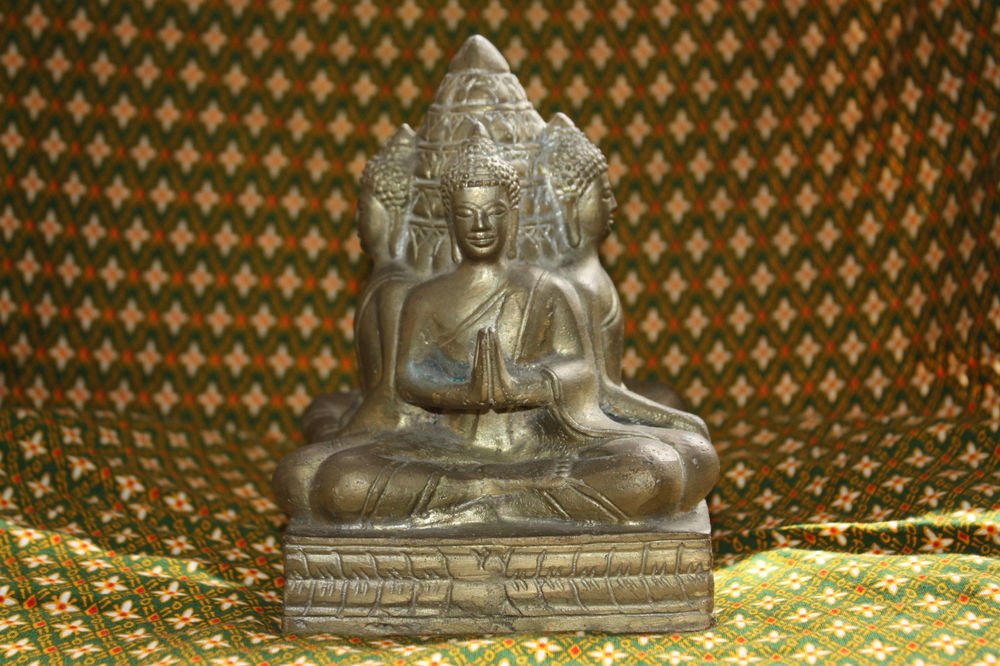
Only 1 available
Details
Shipping: Australia: free (more destinations)
Condition: Used
*The store has not been updated recently. You may want to contact the merchant to confirm the availability of the product.


b1store Store Asian Bronze BuddhaAn Exquisite Antique Asian Buddha, featuring a wonderful attention to detail. It is an exceptional handcrafted piece made from Bronze. Height: 14.5 cm Length: 11 cm Width: 11 cm Weight: 1.030 kgDetails of the four Mudra's shown in the Buddha statue:Bhumisparsha mudra statues symbolize the Buddha's enlightenment beneath a bodhi tree. In this statue, the fingers on the right hand reach toward Earth, representing the solitary nature of the Buddha's meditation. The only being present at his awakening was the Earth.One of the most common mudras is the Abhaya mudra. In this statue, the Buddha has his right hand raised and his palm faces outward. The left hand hangs down by the hips. This mudra represents peaceful intentions and protection.Namaskara, or Anjali mudra, is the hand gesture that evokes greeting another being with the utmost respect and adoration for the Divine in all. As you can see, the greeting is expressed in a form of prayer coming from one's heart or the third eye. The Namaskara Mudra can be expressed with palms at the heart level or at the forehead. Why? Because only with the heart, or with a deeper spiritual insight (third eye) can one truly see that we are all expressions of the same lightDhyana can refer to a form of meditation or to an absorbed state of mind brought about by meditation. In particular, dhyana refers to the four states of absorption, sometimes called the "four dhyanas."When the meditator reaches the first dhyana, passions, desires and unwholesome thoughts are released, and the meditator feels joyful interest and a sense of well-being.In the second dhyana, intellectual activity fades and is replaced by tranquility and one-pointedness of mind. Joyful interest and sense of well-being are still present.In the third dhyana, joy fades and is replaced by equanimity.In the fourth dhyana, all sensation ceases and only mindful equanimity remains.
You may also be interested in:
-
$18.05
-
$174.26

-
$460.05
-
$2,174.78
-
$829.81
-
$608.93

-
$1,957.30
-
$100.36

-
$2,066.04
-
$216.09


 KH, Phnom Penh
