$139.41
Add to Cart
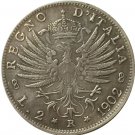
Defeat at Hadrianopolis 2 Bronze Coin Collection

10 available
Details
Shipping: Australia: free (more destinations)
Condition: Brand new
*The store has not been updated recently. You may want to contact the merchant to confirm the availability of the product.
Valens became the Eastern Roman Emperor in 364 CE. Although a fine administrator, Valens
was not an effective military man, leading a series of unsuccessful campaigns against the Goths.
In 378, at Hadrianopolis, he stubbornly refused to wait for reinforcements led by his nephew
Gratian, hoping not to share the glory of victory. Instead, Valens’ attacking army was
slaughtered, and he perished.
Gratian ascended to the throne of the Western Empire in 375 CE. An able military leader in his
youth, he lost the faith of the army soon after the disaster at Hadrianopolis. He was killed in a
coup in 383.
The decisive defeat at Hadrianopolis heralded the disintegration of the Empire, which continued
to lose territory and influence until the city of Rome was finally sacked by the Visigoths in 410.
Like most ancient Roman bronze coins, these late fourth century coins were crudely struck by
hand. Both coins show a bust of the respective Emperor on the obverse, with his Latinized name
and abbreviated titles. The reverse inscriptions and iconography are varied. Military and
political themes predominate—most frequently the coins feature the winged goddess Victory,
holding a wreath and palm or the Emperor, standing, in full battle regalia, holding the labarum
and dragging a captive. Mint marks in the form of letters are often found below the reverse
image.
Data:
Weight range: 1.5-3.5g; Diameter range: 15-19.5mm
Box measures: 3.87” x 3.87” x 1.25”
Order code: 2HADRIANOPOLISBOX
All coins in each set are protected in an archival capsule and beautifully displayed in a mahogany-like box.
The box set is accompanied with a story card, certificate of authenticity, and a black embossed gift box.
Coin type and grade may vary somewhat from image
was not an effective military man, leading a series of unsuccessful campaigns against the Goths.
In 378, at Hadrianopolis, he stubbornly refused to wait for reinforcements led by his nephew
Gratian, hoping not to share the glory of victory. Instead, Valens’ attacking army was
slaughtered, and he perished.
Gratian ascended to the throne of the Western Empire in 375 CE. An able military leader in his
youth, he lost the faith of the army soon after the disaster at Hadrianopolis. He was killed in a
coup in 383.
The decisive defeat at Hadrianopolis heralded the disintegration of the Empire, which continued
to lose territory and influence until the city of Rome was finally sacked by the Visigoths in 410.
Like most ancient Roman bronze coins, these late fourth century coins were crudely struck by
hand. Both coins show a bust of the respective Emperor on the obverse, with his Latinized name
and abbreviated titles. The reverse inscriptions and iconography are varied. Military and
political themes predominate—most frequently the coins feature the winged goddess Victory,
holding a wreath and palm or the Emperor, standing, in full battle regalia, holding the labarum
and dragging a captive. Mint marks in the form of letters are often found below the reverse
image.
Data:
Weight range: 1.5-3.5g; Diameter range: 15-19.5mm
Box measures: 3.87” x 3.87” x 1.25”
Order code: 2HADRIANOPOLISBOX
All coins in each set are protected in an archival capsule and beautifully displayed in a mahogany-like box.
The box set is accompanied with a story card, certificate of authenticity, and a black embossed gift box.
Coin type and grade may vary somewhat from image
You may also be interested in:
-
$27.87

-
$22.01
-
$22.01
-
$3.49
-
$34,852.50

-
$22.01
-
$9.74

-
$22.29
-
$20.90
-
$22.29