
$11.14
Add to Cart
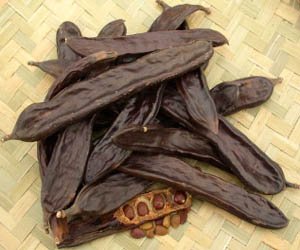
CAROB TREE (Ceratonia siliqua) 30 seeds Bonsai or outdoor draught and cold hardy


More than 10 available, 1 sold
Details
Shipping: Australia: free (more destinations)
Condition: Brand new
*The store has not been updated recently. You may want to contact the merchant to confirm the availability of the product.
you need plenty of seeds to try to germinate, the rate of germination of carob tree's seeds is very low, that is why i sell packets of 30 seeds, not less.
the carob is a very nice bonsai species easy to grow and shape as a bonsai tree. as outdoor tree it does not need any special care and after it is established no irrigation is needed.
The seed of the Carob Tree contains galactomannon, a commercially valuable carbohydrate that is used as a thickener, emulsifier and stabilizer in many products.
ISRAEL, SOUTHERN CALIFORNIA . . . THE CAROB TREE LIKES A DRY CLIMATE.
It has a very deep tap root and can live in areas with low rainfall. It does not do well in wet, poorly drained soil. During a drought the tree can still produce fruit. Its fruit can be valuable famine food for people and animals.
It can live in temperatures that range from 20 degrees F (-6 degrees C) to 122 degrees F (50 degrees C.)
It grows well in poor, salt-rich, rocky, sandy and heavy loam soils.
The Carob Tree is a member of the Pea Family (Leguminosae or Fabaceae). A few of its many family members are sweet peas, peanuts, soy beans and garden peas.
Although originally from the Middle East or the Horn of Arabia, the Carob Tree will grow wherever the soil and climate are suitable. It now grows in Australia, California, Arizona, Mexico, South America, Spain, Portugal, France, Italy and Africa.
The Carob Tree is evergreen. It grows to a height of about 50 to 60 feet (15 to 17 metres).
The Carob Tree begins to produce fruit when it is 6 to 15 years old. It can live and produce fruit until it is 100 years old.
Unlike many other members of its family it does not have colourful big flowers. It has very tiny flowers on a stalk that is attached directly to the trunk and limbs of the tree. The flowers take 11 months to develop into a pod that is 4 to 12 inches long.
The Carob Tree grows wild but it can also be farmed on plantations.
The Carob Tree requires little or no pruning and can produce fruit without fertilization and irrigation.
Charred Carob Tree wood and seeds have been found in Israel. Their age shows that the tree was growing there before 4000 B.C.
Carob beans were known by the people of Pompeii. Carob beans were found in a house which had been buried in the ash from Vesuvius, 79 AD.
Biblical scholars believe that Jesus referred to the fruit of the Carob Tree in His parable of the Prodigal Son, who, after squandering his inheritance, was reduced to eating the husks given to animals for fodder.
"And he fain would have filled his belly with the husks that the swine did eat: and no man gave unto him." Luke XV:16
The Greek word used for husks in Luke 15:16 was "kerati'n" which means "little horn". The fruit or pod of the Carob Tree, a common plant in Bible lands, is often curved like animal horns. In modern Greek the word "keration" means carob pod.
It is also popularly believed that John the Baptist, later known as Saint John, sustained himself in his desert life by eating carob pods. The belief is so well-established that a common name for the Carob Tree is Saint John's Bread.
There is no specific reference in the Bible linking Saint John to the Carob Tree although it would be reasonable to assume that anyone living in the deserts of Israel would eagerly avail themselves of the Carob Tree's nutritious and high energy fruit. However, the reports in the Gospels of Matthew and Mark say that Saint John subsisted on "locusts and wild honey".
"And the same John had his rainment of camel's hair and a leathern girdle about his loins, and his meat was locusts and wild honey." Matthew III:4
Carob Trees, along with related species in North America, are also called Locust Trees. But does the Bible verse refer to the fruit of the Carob Tree or to locusts, the insects?
In the Old Testament book of Leviticus, the Lord gave Moses clearance to eat "the locust after his kind, and the bald locust after his kind and the beetle after his kind and the grasshopper after his kind." Leviticus XI:21,22. Chapter XI is devoted in its entirety to instructions from the Lord to Moses and Aaron, to be passed on to the Children of Israel, regarding what beasts, fishes and fowls may and may not be eaten. Among a host of unclean animals that may not be eaten (including bats), locusts are approved exceptions.
It seems possible that John the Baptist had both foods, locust insects and Locust Tree or Carob Tree fruit. Locust insects, high in fat and protein, a concentrated source of calories, are excellent nutrition. This fact is supported by many humans who eat them and their relatives with enjoyment. Honey and syrupy sweet carob pods would have been a better balanced diet for John the Baptist when teamed up with crisp, savoury, nourishing locust insects.
Locusts; insect and fruit
some seeds, because of their consistent weight, were used as weights by early merchants to determine the value of precious gems and gold dust. These seeds included carob seeds and wheat grains. The Greek word for the carob pod, "keration" became "carat" and "karat". Weigh terms in grains still exist also. A grain is 1/7000 of a pound, the pound's smallest fraction.
Galactomannan is a complex carbohydrate contained in the endosperm or food bank portion of the carob seed. It is the part of the seed that is processed to become Carob Bean Gum (CBG), also known as Locust Bean Gum (LBG).
That gum is a thickener, emulsifier or stabilizer for many everyday products. It is a very important commercial item.
the word "carob". It first appeared in an English dictionary in 1870 and was defined as "to grind coarsely". It is used to describe the grinding of carob pods and grains such as wheat. The machine that performs the kibbling is a kibbler.
The washed carob pod is kibbled to separate the pod from the 5 to 15 seeds in each pod. When the seeds are removed, the pod is kibbled to various grades for animal feed and even more finely to produce very fine chocolate-like flour that is used in all sorts of carob preparations including expensive biscuit bones for your dog, a beautifying mask for your face or a bar of carob "chocolate".
The real money for the carob pod processor is in the seed. First, the tiny seeds have to be peeled, a difficult process as the seed skins are very tough. That accomplished by acid, roasting or abrasion, the seeds are split. With milling the tiny plant embryo or germ fractures and is separated from the endosperm by sieving. The embryos are ground in a separate process to make a high-protein carob germ.
The endosperm, source of the valuable sugar or carbohydrate, galactomannan, is further processed to produce various grades of the thickener known as Locust Bean Gum or Carob Bean Gum. Spain is the main producer of Carob Bean Gum. Other commercial producers are Portugal, Morocco and Italy.
CAROB BEAN GUM USED IN PRODUCTS As a thickener.
the carob is a very nice bonsai species easy to grow and shape as a bonsai tree. as outdoor tree it does not need any special care and after it is established no irrigation is needed.
The seed of the Carob Tree contains galactomannon, a commercially valuable carbohydrate that is used as a thickener, emulsifier and stabilizer in many products.
ISRAEL, SOUTHERN CALIFORNIA . . . THE CAROB TREE LIKES A DRY CLIMATE.
It has a very deep tap root and can live in areas with low rainfall. It does not do well in wet, poorly drained soil. During a drought the tree can still produce fruit. Its fruit can be valuable famine food for people and animals.
It can live in temperatures that range from 20 degrees F (-6 degrees C) to 122 degrees F (50 degrees C.)
It grows well in poor, salt-rich, rocky, sandy and heavy loam soils.
The Carob Tree is a member of the Pea Family (Leguminosae or Fabaceae). A few of its many family members are sweet peas, peanuts, soy beans and garden peas.
Although originally from the Middle East or the Horn of Arabia, the Carob Tree will grow wherever the soil and climate are suitable. It now grows in Australia, California, Arizona, Mexico, South America, Spain, Portugal, France, Italy and Africa.
The Carob Tree is evergreen. It grows to a height of about 50 to 60 feet (15 to 17 metres).
The Carob Tree begins to produce fruit when it is 6 to 15 years old. It can live and produce fruit until it is 100 years old.
Unlike many other members of its family it does not have colourful big flowers. It has very tiny flowers on a stalk that is attached directly to the trunk and limbs of the tree. The flowers take 11 months to develop into a pod that is 4 to 12 inches long.
The Carob Tree grows wild but it can also be farmed on plantations.
The Carob Tree requires little or no pruning and can produce fruit without fertilization and irrigation.
Charred Carob Tree wood and seeds have been found in Israel. Their age shows that the tree was growing there before 4000 B.C.
Carob beans were known by the people of Pompeii. Carob beans were found in a house which had been buried in the ash from Vesuvius, 79 AD.
Biblical scholars believe that Jesus referred to the fruit of the Carob Tree in His parable of the Prodigal Son, who, after squandering his inheritance, was reduced to eating the husks given to animals for fodder.
"And he fain would have filled his belly with the husks that the swine did eat: and no man gave unto him." Luke XV:16
The Greek word used for husks in Luke 15:16 was "kerati'n" which means "little horn". The fruit or pod of the Carob Tree, a common plant in Bible lands, is often curved like animal horns. In modern Greek the word "keration" means carob pod.
It is also popularly believed that John the Baptist, later known as Saint John, sustained himself in his desert life by eating carob pods. The belief is so well-established that a common name for the Carob Tree is Saint John's Bread.
There is no specific reference in the Bible linking Saint John to the Carob Tree although it would be reasonable to assume that anyone living in the deserts of Israel would eagerly avail themselves of the Carob Tree's nutritious and high energy fruit. However, the reports in the Gospels of Matthew and Mark say that Saint John subsisted on "locusts and wild honey".
"And the same John had his rainment of camel's hair and a leathern girdle about his loins, and his meat was locusts and wild honey." Matthew III:4
Carob Trees, along with related species in North America, are also called Locust Trees. But does the Bible verse refer to the fruit of the Carob Tree or to locusts, the insects?
In the Old Testament book of Leviticus, the Lord gave Moses clearance to eat "the locust after his kind, and the bald locust after his kind and the beetle after his kind and the grasshopper after his kind." Leviticus XI:21,22. Chapter XI is devoted in its entirety to instructions from the Lord to Moses and Aaron, to be passed on to the Children of Israel, regarding what beasts, fishes and fowls may and may not be eaten. Among a host of unclean animals that may not be eaten (including bats), locusts are approved exceptions.
It seems possible that John the Baptist had both foods, locust insects and Locust Tree or Carob Tree fruit. Locust insects, high in fat and protein, a concentrated source of calories, are excellent nutrition. This fact is supported by many humans who eat them and their relatives with enjoyment. Honey and syrupy sweet carob pods would have been a better balanced diet for John the Baptist when teamed up with crisp, savoury, nourishing locust insects.
Locusts; insect and fruit
some seeds, because of their consistent weight, were used as weights by early merchants to determine the value of precious gems and gold dust. These seeds included carob seeds and wheat grains. The Greek word for the carob pod, "keration" became "carat" and "karat". Weigh terms in grains still exist also. A grain is 1/7000 of a pound, the pound's smallest fraction.
Galactomannan is a complex carbohydrate contained in the endosperm or food bank portion of the carob seed. It is the part of the seed that is processed to become Carob Bean Gum (CBG), also known as Locust Bean Gum (LBG).
That gum is a thickener, emulsifier or stabilizer for many everyday products. It is a very important commercial item.
the word "carob". It first appeared in an English dictionary in 1870 and was defined as "to grind coarsely". It is used to describe the grinding of carob pods and grains such as wheat. The machine that performs the kibbling is a kibbler.
The washed carob pod is kibbled to separate the pod from the 5 to 15 seeds in each pod. When the seeds are removed, the pod is kibbled to various grades for animal feed and even more finely to produce very fine chocolate-like flour that is used in all sorts of carob preparations including expensive biscuit bones for your dog, a beautifying mask for your face or a bar of carob "chocolate".
The real money for the carob pod processor is in the seed. First, the tiny seeds have to be peeled, a difficult process as the seed skins are very tough. That accomplished by acid, roasting or abrasion, the seeds are split. With milling the tiny plant embryo or germ fractures and is separated from the endosperm by sieving. The embryos are ground in a separate process to make a high-protein carob germ.
The endosperm, source of the valuable sugar or carbohydrate, galactomannan, is further processed to produce various grades of the thickener known as Locust Bean Gum or Carob Bean Gum. Spain is the main producer of Carob Bean Gum. Other commercial producers are Portugal, Morocco and Italy.
CAROB BEAN GUM USED IN PRODUCTS As a thickener.
You may also be interested in:
-
$8.35
-
$13.05
-
$7.08
-
$12.45
-
$11.71

-
$17.33
-
$10.47
-
$8.89
-
$16.21

-
$18.54


 IL, israel
